

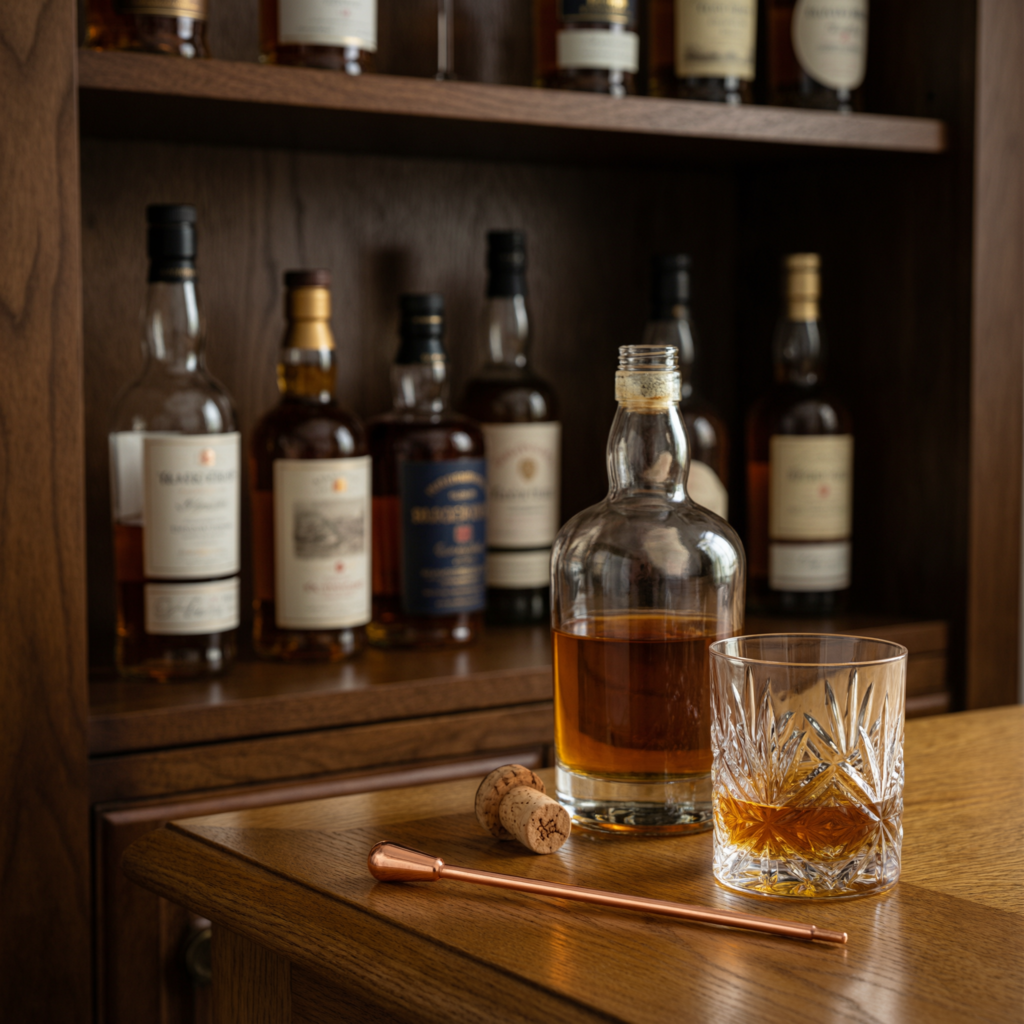
A whisky collection looks after itself right up until the day you open a bottle and it tastes flat, or you notice a label peeling, or a cork crumbling into the neck. The difference between a collection that holds its quality (and its value) for decades and one that quietly deteriorates on a shelf comes down almost entirely to storage and handling. None of it is complicated, but it does reward a bit of consistency.
I have been collecting for years, and most of my expensive mistakes were not bad purchases. They were good bottles kept in bad conditions. This guide covers the practical side: where to keep your whisky, how to look after bottles once they are open, how to keep track of what you own, and how to protect the whole lot with insurance and sensible records.
Getting Storage Right
Storage is where most collections are won or lost. Whisky is sturdy, but it is not indestructible, and heat, light, and swings in temperature do slow, cumulative damage that you only notice once it is too late.
Temperature. Aim for a steady, cool room, roughly 15 to 20°C. Consistency matters more than the exact number. A cupboard that sits at 18°C all year beats a warmer spot that swings between 12°C in January and 28°C in July. Repeated expansion and contraction stresses the liquid and the seal, and it speeds up evaporation. A basement, an interior closet, or a dedicated wine and whisky fridge set to a cool, steady temperature all work.
Humidity. Keep the room around 50 to 60 percent relative humidity. Too dry and corks shrink and crack, letting air in and spirit out. Too damp and you risk mould on labels and corroded capsules, which hurts both the drink and the resale value. A simple hygrometer costs very little and removes the guesswork.
Light. Keep bottles out of direct sunlight and away from strong artificial light. Ultraviolet light breaks down compounds in the spirit and fades labels. A dark cupboard or a cabinet with UV-filtered glass is the safest home. If you display bottles, keep them out of any sun that crosses the room.
Orientation. Store whisky upright, not on its side the way you would wine. The high alcohol content slowly attacks a cork that sits in constant contact with it, degrading the seal and tainting the spirit. Upright keeps the cork dry on top and the spirit off it. For a sealed bottle you never intend to open, upright is still the safer default over many years.
If you are setting up a dedicated space or weighing a climate-controlled cabinet, our guide to storing whisky properly goes into the options in more detail.
Looking After Opened Bottles
An unopened, well-stored bottle can last for decades. An opened one is on a clock, because oxygen starts changing the flavour the moment air hits the spirit. This oxidation is the main reason a half-finished bottle never tastes quite as good six months later.
The single biggest factor is how much air is in the bottle. A bottle that is three-quarters full has very little headspace and will stay close to its original character for a year or more. A bottle down to the last few fingers has a large pocket of air and can turn noticeably flat within weeks. If you have a special bottle you only pour occasionally, decant the remainder into a smaller clean glass bottle so the liquid nearly fills it. Less headspace means slower oxidation.
A few more habits help:
- Reseal tightly after every pour, and store upright so the spirit is not sitting against the cork.
- Keep opened bottles in the same cool, dark conditions as sealed ones. Heat and light speed up oxidation.
- For bottles you want to stretch out over a long time, an inert gas wine preserver (argon-based sprays are common and inexpensive) blankets the surface and slows oxidation further.
- Write the date you opened a bottle on a small tag. It sounds fussy, but it stops you wondering whether that two-year-old half-bottle is still worth pouring.
None of this turns whisky into wine. A good Scotch or Canadian whisky is forgiving, and you do not need to rush a bottle. But if a dram tastes thin or sharp compared with how you remember it, oxidation is almost certainly why.
Keeping an Inventory
The more bottles you own, the easier it is to lose track of what you have, what you paid, and what is worth drinking versus holding. A simple inventory solves all three problems and makes insurance far less painful if you ever need it.
You do not need anything fancy. The goal is a running record you actually update. A few ways to organize it:
- By region and style. Group Scotch (Islay, Highland, Speyside), Japanese, Canadian, and American bourbon and rye separately. It makes it fast to find a bottle and easier to see gaps in your collection.
- By age and strength. Keep no-age-statement bottles, standard-age expressions, and cask-strength releases in their own groups.
- With a live spreadsheet. A Google Sheet or Excel file with the name, distillery, bottling date, what you paid, and the purchase date covers most needs. Add a drinking-versus-holding flag so you know which bottles are investments and which are for Friday night.
- Or a dedicated app. Apps built for whisky collectors, with Whiskybase the best-known, let you log bottles, store tasting notes and photos, and see community valuations alongside your own records.
A good inventory also stops you buying duplicates by accident, and it gives you a clear picture of where your money has gone. If you are still in the early stages and building the shelf from zero, our guide to building a collection from scratch lays out a sensible order of operations.
Growing Your Palate and Knowledge
A collection gets more interesting when you actually understand what is in it. Tasting widely is the fastest way to learn, and pairing whisky with food is an underrated shortcut: a little dark chocolate, a piece of smoked salmon, or a sharp cheddar can pull flavours out of a dram that you would miss drinking it neat.
Regional tasting is the other great teacher. Once you have tried a peaty Islay malt next to a sherry-cask Speyside and a clean, rye-spiced Canadian whisky, the differences stop being abstract and start being obvious. Distilleries in each region tend to share house techniques, water sources, and cask preferences, so tasting by region builds a mental map quickly.
This is a good moment to look closer to home. Canadian whisky has had a genuine renaissance over the past decade, with distilleries like Shelter Point on Vancouver Island, Forty Creek in Niagara, and Dillon’s in Ontario pushing the category well past its old blending reputation. Older domestic bottlings from Crown Royal and JP Wiser’s have also developed a real collector following. If you want to understand what makes the domestic bottles different, our primer on what sets Canadian whisky apart is the place to start.
Trading and Sharing
At some point a collection outgrows one person. You will have bottles you would rather trade than drink, and duplicates you do not need. That is when swapping with other collectors becomes fun rather than just a way to acquire more glass.
Sample swaps are the easiest entry point: you trade small samples rather than full bottles, which keeps risk and shipping costs low. Tasting clubs and local whisky societies are the other main route. They give you access to bottles you would never buy yourself, and the people in them tend to know their stuff. A friendly argument over whether a particular cask-strength release lives up to the hype is one of the better parts of the hobby.
If you do trade full bottles, agree on condition and value in writing first, use tracked and insured shipping, and pack well (more on that below). Most bad trading experiences come from skipped steps, not bad faith.
Frequently Asked Questions
How do I work out what a bottle is worth?
Start with recent auction results, not the asking price on a listing. Houses publish past hammer prices, and databases like Whiskybase show community-tracked market values. Rarity, age, condition (fill level, label, box), and whether the distillery is still operating all move the number. A bottle that is common and still in production is worth roughly retail; a closed-distillery bottling in good condition can be worth many times that. For anything you think is genuinely valuable, get a professional appraisal before you insure or sell it. Our whisky auction guide explains how saleroom pricing actually works, and our overview of whisky investing covers when a bottle makes sense as an asset rather than a drink.
What are the signs of a damaged or off bottle?
Whisky does not spoil the way wine can; the high alcohol keeps microbes at bay. What it does suffer from is evaporation, oxidation, and physical damage. Watch for a low fill level (some loss over many years is normal, but a dramatic drop is a warning), a cracked or sunken cork, a capsule that is corroded or sticky, and any seepage around the neck. Discolouration or cloudiness can mean the bottle was stored badly or contaminated. On the outside, check that labels and seals are intact; a faded or torn label does not hurt the liquid, but it does hurt resale value. If a bottle smells sharp, overly solvent-like, or just flat when you open it, that is usually heat or oxidation rather than anything dangerous, but it is a sign the storage failed at some point.
Can I keep my collection in a display cabinet?
Yes, with caveats. A cabinet is fine as long as it sits away from direct sunlight, radiators, and strong spotlights, and the room stays a steady, moderate temperature. Glass-front cabinets look great but can turn into greenhouses if the sun hits them, so UV-filtered glass or a location out of the light path matters. Avoid cabinets with built-in halogen spots that bake the bottles. If the cabinet is in a room that gets hot in summer, keep your long-term holdings somewhere cooler and put only your current drinkers on display.
How do I insure a whisky collection?
A standard home policy usually will not cover a serious collection adequately, and most have low limits on collectibles. The first step is a current appraisal or a documented inventory with values, ideally with receipts and photos. From there you have two common routes: schedule the collection as an endorsement on your home insurance, or use a specialist insurer that covers wine and spirits collections. In Canada, a few brokers specialize in high-value collectibles, and your provincial liquor rules can affect how certain bottles are treated, so it is worth a conversation with a broker who knows spirits. Update the coverage as the collection grows; an appraisal from five years ago is probably out of date.
How do I move or ship a collection safely?
Pack each bottle individually in bubble wrap or foam, use dividers so bottles cannot knock together, and ship in sturdy double-walled boxes marked fragile and this-side-up. Keep bottles upright. The bigger risk on a long move is temperature, not impact: a truck sitting in summer heat or a freezing winter load can damage bottles, so climate-controlled transport is worth paying for if the collection is valuable. For cross-border moves, check the liquor shipping rules for each province or country, since they vary and some carriers will not ship spirits at all. Insure the shipment for full replacement value, and photograph the bottles before they go into the boxes so you have proof of condition if a claim is needed.
Maintaining a collection is mostly about removing the things that quietly ruin it: heat, light, air, and poor records. Get storage steady, reseal and track your opened bottles, keep an inventory you update, and insure the lot properly, and the whisky will take care of itself. The reward is a shelf that still tastes the way it should ten years from now, whether the bottles end up poured or passed on.