

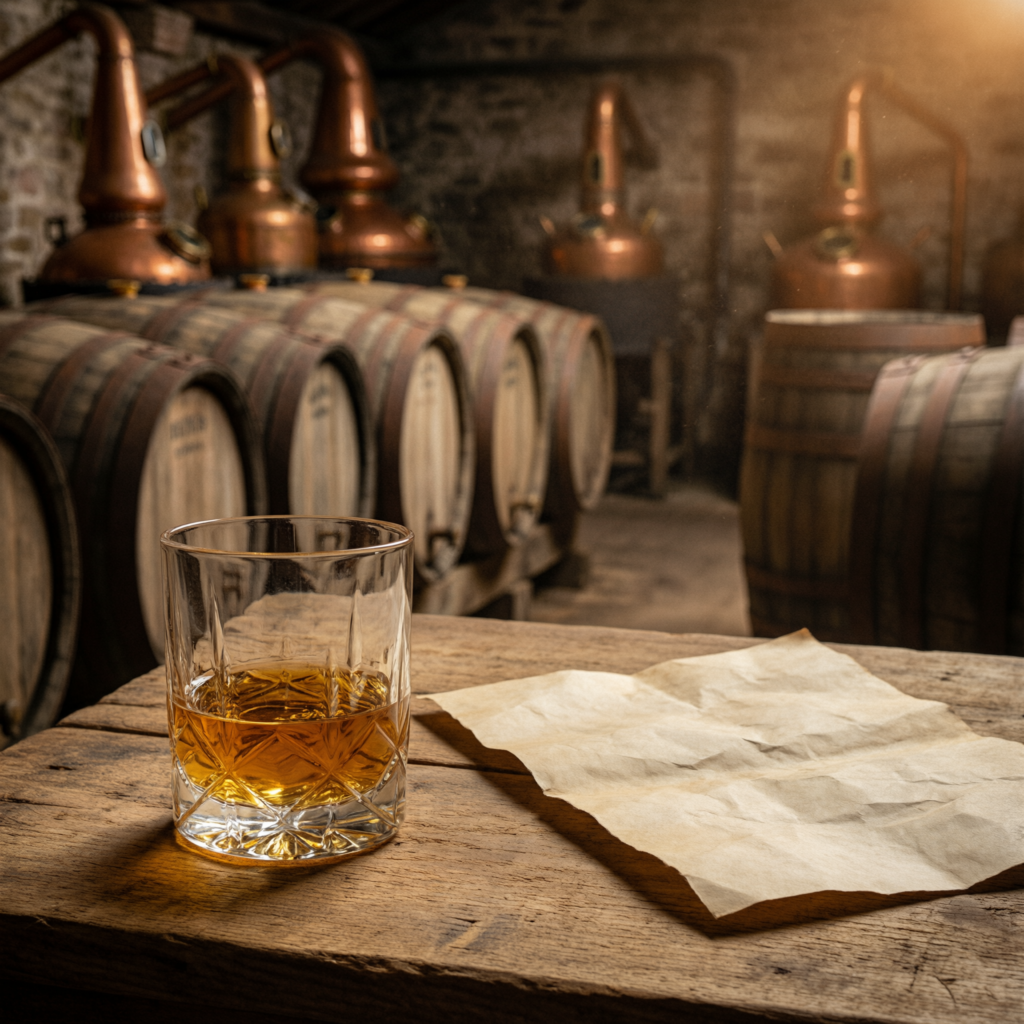
Pour a glass of Scotch and look at where it came from, and you are already thinking like an investor. The region on a label is not just scenery. It signals scarcity, demand, and how easily you can sell the bottle five or ten years down the road. A peated single malt from Islay and a Speyside sherry cask from the same year can move in completely different directions at auction, and a Canadian buyer paying in dollars that have weakened against the pound feels that gap even more.
This guide breaks the main producing regions down by how they actually behave as assets. We will cover the blue-chip names, the ones that are overhyped, and the ones a collector based in Toronto or Vancouver should be watching. If you are brand new to putting money into spirits, start with the fundamentals of whisky investing first, then come back for the regional detail.
Why Region Matters to an Investor
Two things drive a bottle’s resale value: how many people want it and how hard it is to get. Region shapes both. Some areas have a handful of distilleries with cult followings and tiny output, which keeps supply tight. Others produce millions of cases a year and trade mostly on brand and age rather than place.
Single malt Scotch remains the backbone of the collectible market. The biggest auction results in history almost all trace back to a handful of Scottish distilleries, and the secondary market for those names is deep enough that you can usually find a buyer. That liquidity matters. A rare bottle is only an investment if you can eventually turn it back into cash at a fair price.
How Whisky Investment Actually Works
There are two broad ways to put money into whisky, and they behave very differently.
- Bottles. You buy sealed, limited, or discontinued bottles and hold them. Value comes from scarcity, condition, provenance, and the distillery’s reputation. Storage, fill level, and an intact box and label all affect what you get at resale.
- Casks. You buy a whole barrel of new-make or young spirit and let it age in a bonded warehouse. Value can rise as the spirit matures, but casks carry extra moving parts: insurance, storage fees, the angel’s share (the whisky that evaporates each year), and the question of who eventually bottles it.
For most Canadian collectors, bottles are the practical entry point. You can buy through an agent, a specialty retailer, or an auction house, and you do not need to manage a warehouse relationship. Casks suit patient investors with larger budgets who understand the logistics. We go deep on that side in our cask investing guide and our rundown of rare bottles and casks.
Market Reality in 2024 and 2025
Let’s be honest about the timing. The years around 2020 to 2022 were a frenzy. Rare whisky prices climbed fast, new buyers piled in, and a lot of people assumed the line only went up. It did not. Through 2023 and 2024 the secondary market cooled, and many bottles that spiked during the boom settled back toward earth. Tracking platforms such as Whiskybase and Whisky.Auction have shown softer realised prices across a lot of mid-tier bottles compared with the pandemic-era peaks.
That cooling is not the same as a collapse. Over a longer horizon, rare whisky has repeatedly appeared among the stronger collectible categories in the Knight Frank Wealth Report’s Luxury Investment Index, sitting alongside or ahead of items like classic cars, art, and watches over the past decade. The headline takeaway for a Canadian buyer: this is a cyclical market, and buying at the top of a hype cycle is how you lose money. The best returns have generally gone to people who bought patiently during quiet stretches and stuck with proven names.
On the demand side, industry data from the IWSR has shown single malt Scotch continuing to grow in value ahead of volume in recent years, which is a useful signal. When value rises faster than volume, buyers are trading up to more expensive bottles, and that is exactly the behaviour that supports the collectible end of the market. Treat any specific annual-return percentage you see quoted online with suspicion; the honest answer is that returns vary enormously by bottle, by year bought, and by when you sell.
Region by Region: Where Canadian Money Goes
Here is how the main regions stack up for an investor, with the names that actually move at auction.
Scotland: Speyside, the Blue-Chip Core
Speyside holds the heavyweight names: the Macallan, Glenfiddich, and the Glenlivet. The Macallan in particular is the closest thing the whisky market has to a reserve currency. Old Macallan bottlings set the records everyone else chases. In November 2023 a bottle of the Macallan 1926 (the Valerio Adami single cask) sold at Sotheby’s in London for about £2.19 million, roughly US$2.7 million, a record price for a single bottle of whisky at auction. That is the top of the market, and almost nobody will ever touch it, but it shows where serious money concentrates.
For everyday investors, Speyside sherry-cask malts from respected distilleries tend to hold value well because demand is broad and global. You are rarely stuck with a bottle nobody wants.
Scotland: Islay, the Peated Cult
Islay malts are defined by peat smoke, brine, and a devoted following. Lagavulin, Ardbeg, Laphroaig, Bowmore, and Bruichladdich (including its heavily peated Octomore line) all command loyalty. The investment story here leans on scarcity and closure: the island’s famous Port Ellen distillery sat silent for decades before reopening, and old Port Ellen and Brora bottlings trade at steep premiums because the original stock is finite. Peated whisky is polarizing, which is part of what keeps the collector base tight and committed.
Scotland: Highlands, Lowlands, and Campbeltown
The Highlands are the largest region by area and span many styles, from the rich, sherry-laden Dalmore to the elegant Glenmorangie and waxy Clynelish. Dalmore in particular shows up often at auction with older, high-value bottlings. The Lowlands, once thin on distilleries, have seen a wave of new openings, though few carry real resale clout yet. Campbeltown is tiny but punchy: Springbank has become one of the most sought-after allocation malts in the world, and its limited releases frequently trade above retail almost immediately.
Japan: Allocation and Scarcity
Japanese whisky built its reputation on precision and scarcity. Suntory’s Yamazaki, Hakushu, and Hibiki and Nikka’s Yoichi and Miyagikyo are the names to know. Aged Japanese stock is genuinely limited, and bottles like the Yamazaki 55 Year Old have fetched six-figure sums at houses such as Bonhams, while closed-distillery bottles from Karuizawa have reached similar heights. The caution for a Canadian buyer: the Japanese market got white-hot and then cooled alongside the wider market, and fakes are a real problem, so provenance and buying through reputable channels matter more here than almost anywhere.
United States: Bourbon and the Rise of American Single Malt
American whiskey is its own beast, and we cover the styles in our American whiskey guide. The collectible end of bourbon is dominated by scarcity names: Pappy Van Winkle, the Buffalo Trace Antique Collection, and Weller’s top tiers. During 2020 and 2021 the secondary premiums on these bottles were extreme; by 2024 and 2025 those markups had come down from the peak, though the most sought-after bottles still trade well above retail. American single malt, led by distilleries like Westland and Stranahan’s, is a newer category to watch, but it does not yet have the decades of auction history that Scotch does. Buy it because you love it, with upside as a bonus.
Ireland: Quietly Holding Value
Irish whiskey rarely grabs the auction headlines that Scotch and Japan do, but it has steady names. Redbreast and Midleton Very Rare from the Midleton distillery are the standouts, with the oldest Midleton bottlings and the Powers and Green Spot single pot still releases holding a loyal base. Teeling and the Method and Madness range add some modern interest. Irish tends to reward drinkers more than speculators, so approach it with that expectation.
Emerging Regions: The Long Game
Outside the big four, distilleries in India (Amrut, Paul John), Taiwan (Kavalan), Australia (Sullivan’s Cove, Starward), and Sweden (Mackmyra) are earning real respect. Some, like Kavalan and Sullivan’s Cove, have already won major international awards and built collector interest. These are higher-risk, higher-upside plays with thinner secondary markets, so they suit people who already own a solid core of proven names. Our guide to emerging whisky regions digs into which ones are worth your attention.
The Canadian Collector’s Angle
Being based in Canada changes the math in a few ways that American and British guides tend to skip.
- Currency. Most investment-grade whisky is priced in pounds, euros, or US dollars. A weaker Canadian dollar raises your entry cost and can either help or hurt you when you sell, depending on where the loonie sits at each end. Build currency risk into your expectations rather than ignoring it.
- Where the money is. For a CAD-based buyer, Scotland and Japan are the regions that matter most for resale liquidity. Speyside blue-chips and peated Islay cults are the easiest to buy and sell internationally. Domestic Canadian whisky, from names like Crown Royal, JP Wiser’s, Forty Creek, Shelter Point, and Dillon’s, is enjoying a genuine renaissance, but most of it is drinking whisky rather than an investment asset. Buy Canadian for pleasure and to support the local whisky scene, not expecting a resale windfall. See what makes Canadian whisky distinct for the background.
- Storage and access. Many Canadian investors store bottles or casks in bonded warehouses in the UK to defer duty and taxes until sale, which also keeps provenance clean. Importing bottles into Canada through the LCBO or a private agent adds duties, taxes, and paperwork, so factor that into your cost basis. A reputable auction house such as Whisky.Auction or a UK-based specialist is often the cleanest route for buying and buying and selling at auction.
- Taxes. How the Canada Revenue Agency treats whisky you hold for investment can get complicated, and collectibles and personal-use property have their own rules. Speak with a tax professional who understands collectibles before you build a serious position, rather than guessing at capital gains treatment. The rules deserve expert eyes.
Risks Worth Respecting
- Liquidity. A bottle can take months to sell, and auction houses charge commissions on both ends. Whisky is not a cash equivalent.
- Condition and provenance. Low fill levels, damaged labels, missing boxes, or a shaky ownership history can crater a bottle’s value. Fake bottles, especially in Japanese and old Scotch categories, are a real threat. Buy from reputable sources and keep records.
- Cycles and fashion. The market cooled after the 2020 to 2022 boom. Tastes shift, and a category that is hot today can be quiet tomorrow.
- Costs. Storage, insurance, auction fees, duties, and currency swings all eat into returns. A bottle that appreciated on paper can still disappoint once the costs are settled.
None of this is a reason to avoid the market. It is a reason to go in clear-eyed, buy what you understand, and never put money in that you might need back soon.
Frequently Asked Questions
What Whisky Is Best for Investment?
Limited and discontinued single malt Scotch from established distilleries is the safest general answer. Names like the Macallan, Ardbeg, Springbank, and old Port Ellen bottlings have the deepest demand and the cleanest resale history. The best buy for you still depends on your budget, how long you plan to hold, and whether you can source the bottle at a sensible price.
What Is the Trend in Whisky Investment?
The market ran hot through roughly 2020 to 2022 and has since cooled, with many mid-tier bottles settling back from pandemic-era highs. At the same time, single malt Scotch has kept growing in value ahead of volume, which points to buyers continuing to trade up. The current mood favours patience and proven names over chasing hype.
What Are the Five Whisky Regions of Scotland?
Scotch is traditionally divided into five regions: Speyside, the Highlands, the Lowlands, Islay, and Campbeltown. Each has a loose house style. Speyside leans fruity and often sherried, Islay is famously peated and smoky, the Highlands span a wide range, the Lowlands tend toward lighter and gentler malts, and Campbeltown sits somewhere in between with a briny, oily character.
What Is the Average Return on Whisky Investment?
There is no single honest number, and you should distrust anyone who quotes one. Returns swing wildly with the bottle, the year you bought, and the year you sell. Over long stretches rare whisky has kept pace with or beaten many traditional collectibles, but the market also went through a real cooling in 2023 and 2024. Treat whisky as a long-hold passion asset, not a guaranteed yield.