

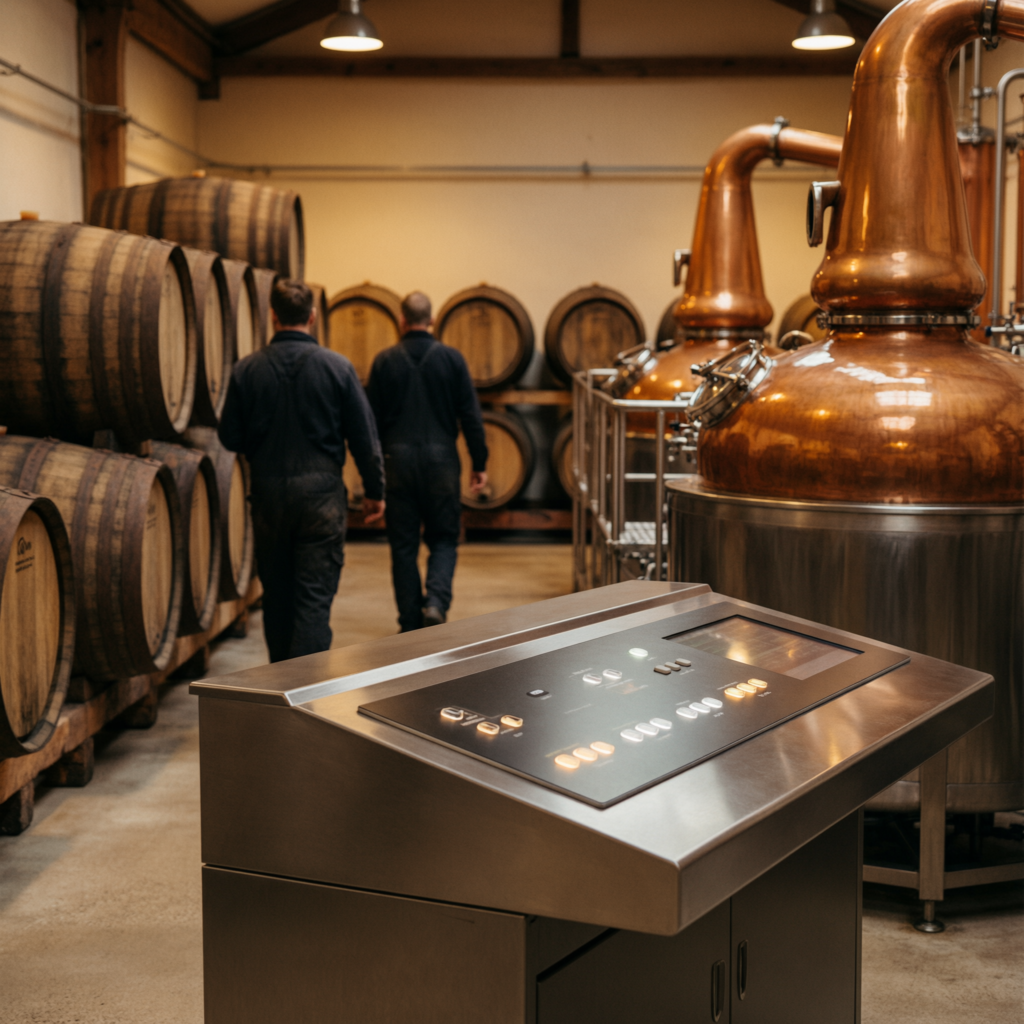
Picture a master blender leaning over a nosing glass, working out which casks will marry well. Now imagine software doing part of that job. That used to sound like science fiction, but it is quietly becoming normal in the whisky business. Copper pot stills are still the soul of the distillery, yet today many of them sit alongside smart sensors, cloud databases, and machine-learning models. The question worth asking is not whether technology belongs in whisky. It clearly does. The better question is what all this new kit actually changes in your glass.
For a long time, tech in the distillery was mostly marketing. That has shifted. Producers now use software and hardware for jobs that humans once handled entirely by feel and memory, from tracking fermentation to predicting how a cask will taste in a decade. None of this replaces the craft. It gives the people with the craft better information to work with.
For Canadian drinkers and collectors, this matters more than it might seem. Distilleries that run tighter, cleaner operations tend to make more consistent whisky, and consistency is one of the things that protects value when you are buying bottles to hold. If you are thinking about that side of the hobby, our guide to the Canadian whisky scene is a good place to see how the local industry is developing.
Automation on the Distillery Floor
Start with the unglamorous parts of making whisky. Milling grain, mashing, pumping wort, monitoring wash stills: these are repetitive jobs where small variations add up. Automation handles the repetition so the distiller can focus on the decisions that actually shape flavour.
Sensors connected to a central system now track temperature, gravity, and flow in real time. If a fermentation starts running hot at three in the morning, the system logs it and can flag it before a batch drifts off target. That sounds minor, but for a distillery running hundreds of fermentations a year, catching problems early is the difference between consistency and a string of off casks.
The payoff shows up in two places. First, consistency: a computer does not have an off day, so the wash that goes into the still on Monday matches the one that goes in on Friday. Second, efficiency: fewer stuck mashes, less wasted grain, lower energy bills. Neither of those makes for a romantic story, but both of them keep a distillery in business long enough to age interesting whisky.
The interesting tension is where you draw the line. Most of the best houses automate the boring, repeatable steps and keep humans firmly in charge of distillation cuts and cask selection. That is the sensible division of labour, and it is the one most Scottish and Canadian producers have landed on.
Rethinking How Whisky Ages
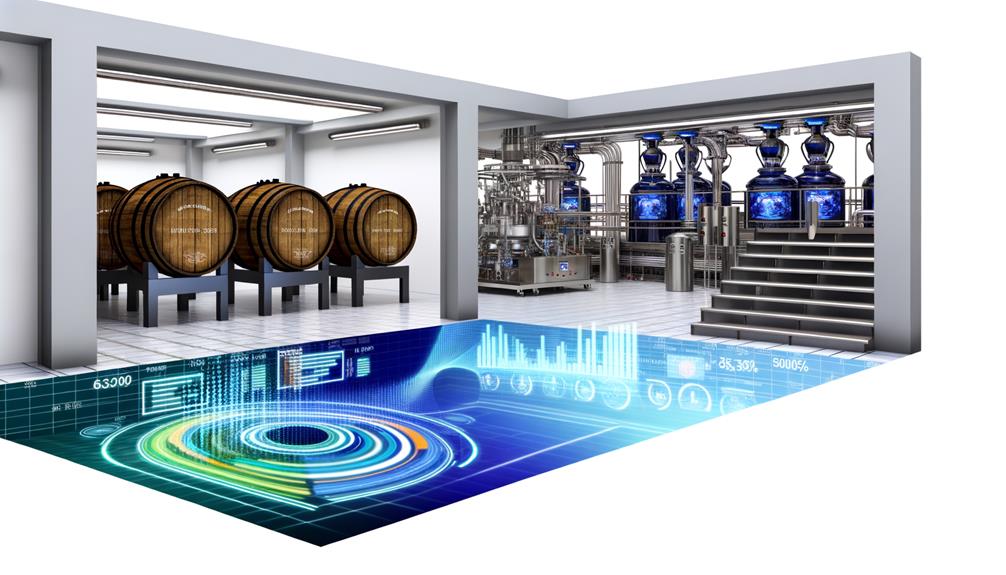
Ageing is where tradition holds on tightest, and for good reason. Time in oak is what turns raw new-make into something worth drinking, and you cannot rush chemistry. That said, a handful of producers are experimenting with ways to influence that process, and the results range from genuinely useful to frankly gimmicky.
A few examples worth knowing:
- Bespoken Spirits ages spirit using thousands of small toasted oak staves rather than a single barrel. The company says the approach uses far less wood and energy than conventional cooperage, and it has picked up medals at major spirits competitions.
- Cleveland Whiskey presses spirit into oak inside stainless-steel tanks using varying pressure, aiming to pull flavour from the wood faster than a static cask would.
- Endless West takes a different route entirely, building “molecular whiskey” from flavour compounds found in aged spirits rather than ageing anything at all.
- Controlled-warehouse technology, including the kind of forming and materials research run out of the UK’s Advanced Forming Research Centre, is quietly helping larger producers cut costs and tighten quality control.
Here is the honest read. Accelerated ageing can produce pleasant, affordable whisky, and it is a fine option for cocktails. But it has not displaced the character that long cask maturation builds, and serious collectors still pay a premium for genuine age statements. If you are buying to hold rather than to mix, that distinction matters, and our notes on investing in rare whiskey and casks explain why time in barrel still drives value.
AI at the Blending Desk
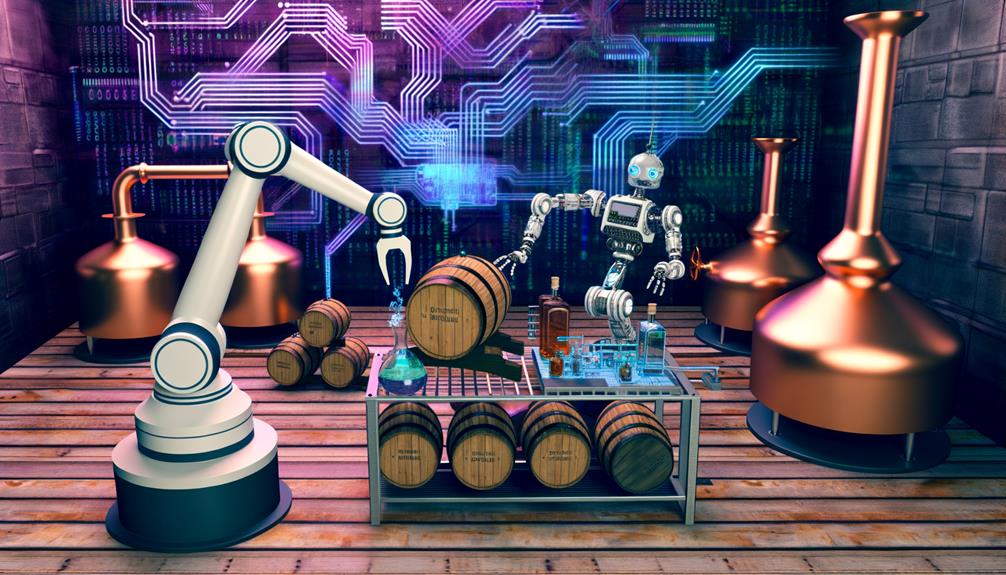
Artificial intelligence has moved from a press-release buzzword to a working tool. The Swedish distillery Mackmyra released one of the first AI-assisted whiskies back in 2019, built with a recipe model that suggested cask combinations from existing stock. It was a proof of concept more than a masterpiece, but it opened the door.
Since then the uses have grown more practical. Blenders now use software to model how different casks will combine, predicting the flavour of a blend before a single bottle is filled. That saves a huge amount of trial-and-error work and reduces the number of sample batches that get made and poured down the drain. Some producers also use machine learning to watch casks as they mature, flagging ones that are developing unexpectedly so they can be blended out or bottled at the right moment.
The realistic view is that AI assists rather than replaces. A model can crunch through thousands of cask combinations faster than any human, but it still needs a trained palate to judge whether the result is actually good. The distilleries getting this right treat the software like a very fast junior blender, not a substitute for the person signing off on the final recipe.
| What the tech does | Where it helps | The payoff |
|---|---|---|
| Models cask combinations | Faster blending trials | Less waste, quicker releases |
| Tracks cask maturation | Predicts flavour development | Bottled at the right time |
| Analyses production data | Spots inefficiencies | Lower cost, cleaner output |
Data Analytics Behind the Scenes
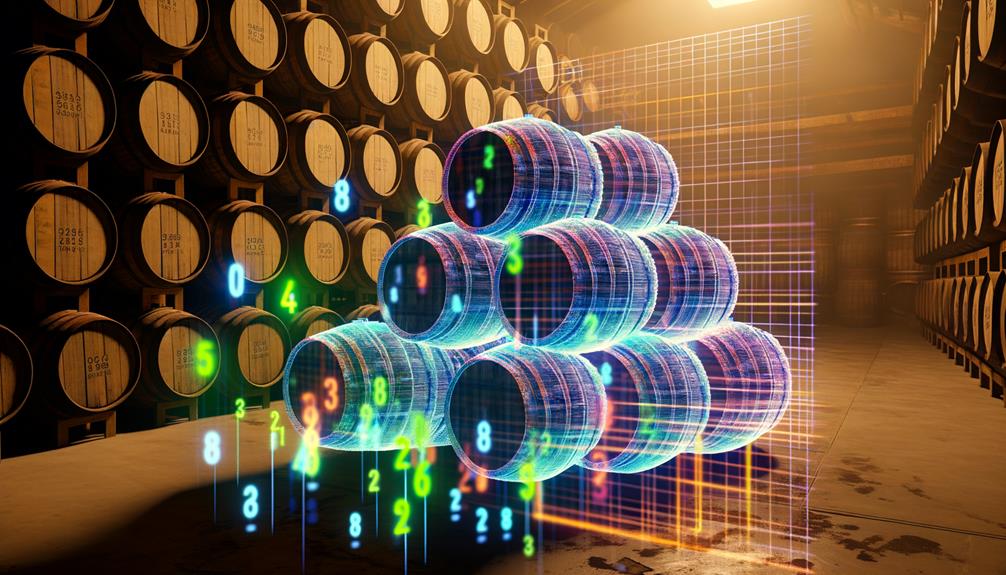
The least glamorous and arguably the most useful technology in the modern distillery is plain data analytics. Every step of production now generates numbers, and the producers who actually read them run better businesses.
Here is where that data earns its keep:
- Reading the market. Sales and search data help producers spot which styles and regions are gaining interest, so they can plan releases that people actually want to buy.
- Watching the casks. Tracking warehouse conditions and sampling results over years builds a picture of how whisky matures in different spots, which feeds directly into blending decisions.
- Tightening inventory. Knowing exactly what is in the warehouse, and when each cask will be ready, keeps cash flow healthy and prevents the nasty surprise of running short on a core expression.
- Cutting waste. Energy and water data pinpoints where a distillery is spending too much, which saves money and lowers its environmental footprint at the same time.
For anyone following whisky as an investment, the rise of better data is a quiet positive. Producers with cleaner operations make more dependable whisky, and dependable whisky holds its value. That is one reason why the broader case for holding bottles and casks keeps getting stronger, something we dig into in our piece on whisky investing.
Sustainability Meets Technology
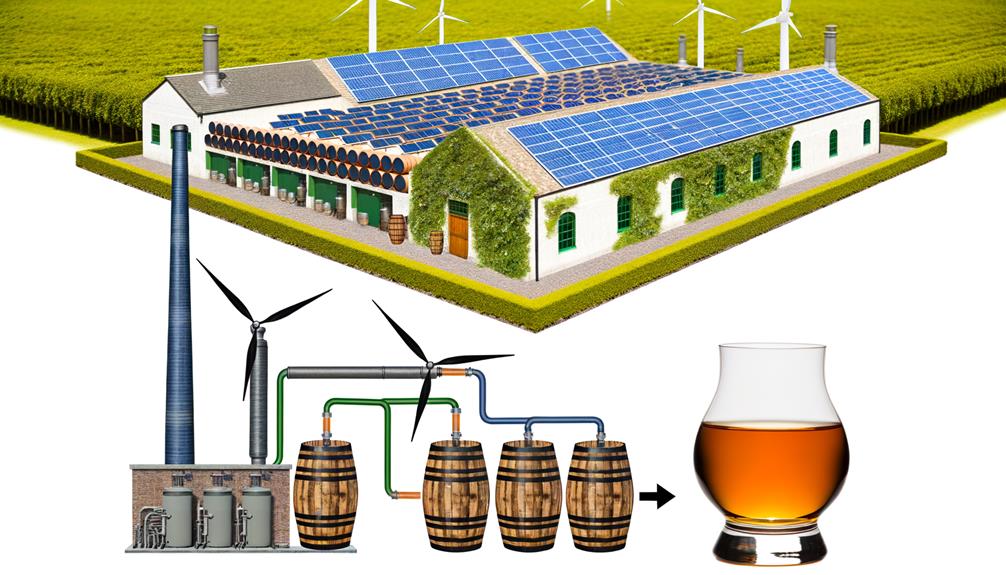
Sustainability used to be a line in a press release. For a growing number of distilleries it is now an operating priority, and technology is doing most of the heavy lifting. The Scotch Whisky Association has committed the industry to a net-zero target by 2040, which has pushed producers to take energy and waste seriously rather than treating them as afterthoughts.
Some houses have gone further. Scotland’s Nc’nean, on the Morvern peninsula, has built its reputation around low-impact production, running on renewable electricity and bottling in fully recycled glass. It is a small distillery, but it shows what a new-build operation looks like when sustainability is designed in from the start rather than bolted on.
The practical tools are everywhere once you look. Anaerobic digestion turns spent wash and draff into biogas that can power parts of the site. Heat exchangers capture energy that used to be lost from stills and reuse it. Advanced filtration lets distilleries recycle process water, which matters a lot in a business that uses water at every stage.
Canadian producers are part of this too. Several newer distilleries across the country have built energy efficiency into their design from day one, and estate-grown operations keep more of the supply chain local. For a closer look at how home-grown producers are positioning themselves, our overview of what Canadian whisky actually is is worth a read.
Frequently Asked Questions
What Is the Future of the Whisky Industry?
Expect a genuine split. Traditional cask ageing is not going anywhere, and demand for properly aged single malts keeps climbing. Alongside it, faster and more experimental methods will keep finding a market among people who want interesting whisky at a lower price. The producers who do best will use technology to improve consistency and cut waste without pretending a six-month cask is a twelve-year-old single malt.
What Is the Outlook for the Whisky Industry?
Broadly positive. Global interest in premium spirits has held up, and the rise of new whisky regions outside Scotland and the US has given drinkers far more choice than they had a decade ago. Technology is helping newer distilleries reach a respectable quality faster, which keeps the whole category competitive. If you want to see where the next wave is coming from, our guide to emerging world whisky regions covers the places to watch.
What Is a Still Used to Make Whisky?
A still separates alcohol from water and flavour compounds using heat. The fermented liquid, called wash, is heated until the alcohol turns to vapour. That vapour rises, cools, and condenses back into liquid, now carrying much more alcohol than before. The shape of the still matters too: a tall, narrow still tends to make a lighter spirit, while a short, fat one keeps more of the heavier flavours. That is why two distilleries using the same recipe can produce very different whisky.
How Is Whisky Artificially Aged?
Accelerated ageing uses controlled conditions to speed up the interaction between spirit and wood. Common methods include smaller casks or oak staves, which increase the surface area the spirit touches, along with pressure and temperature swings that push liquid in and out of the grain. Some producers also add wood-derived flavour compounds directly. The goal is to approximate the effect of years in a barrel in a fraction of the time. The results can be pleasant for mixing, though they rarely match the depth and balance that slow ageing produces.