

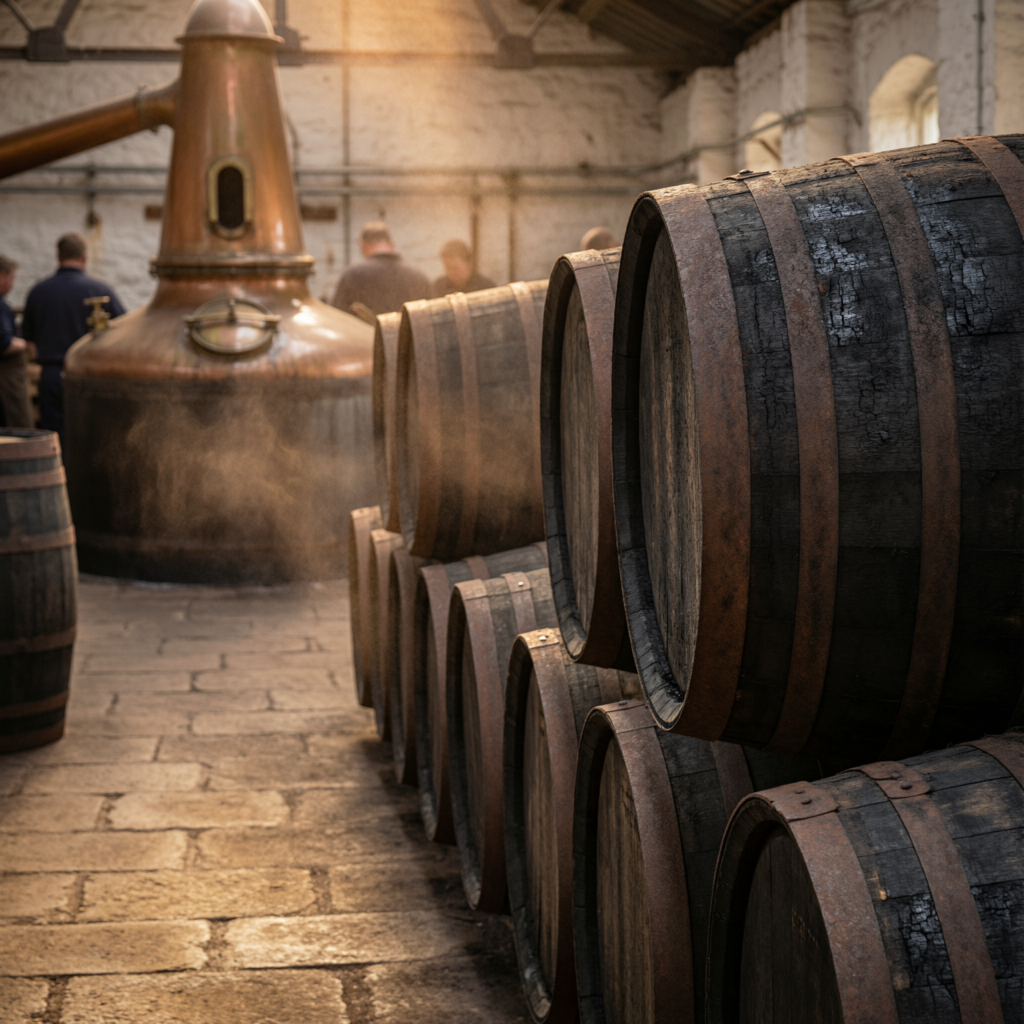
Whisky tourism has quietly become one of the more interesting corners of alternative investing. Distillery trails in Scotland and bourbon country in Kentucky have drawn visitors for decades, but the scale has shifted. Tourism boards and distillers now treat the visitor experience as a serious revenue stream, and where capital flows, investment opportunities tend to follow. For Canadian investors, the connection between tourism growth and cask ownership offers a less obvious path to diversification.
Why Whisky Tourism Matters to Investors
The growth of whisky tourism is not just about tasting rooms and gift shops. It signals broader demand for aged spirits, which directly affects cask values. When a distillery invests in a visitor centre, it is betting on brand awareness translating into bottle sales and, eventually, secondary market demand. That chain of events makes tourism a useful leading indicator for anyone considering a cask investment.
Platforms like CaskX let investors buy whole barrels of bourbon or Scotch, with storage, insurance, and eventual sale handled for you. The tourism angle adds a layer most people miss: cask owners often receive invitations to distillery tours and events, which deepens their connection to the asset. It is a small perk, but it shows how tightly tourism and investment have become linked in this space.
If Scotland is on your radar, our guides to planning a bucket-list Scotch whisky tour and the Flying Scotsman whisky journey break down what a well-planned distillery trip looks like on the ground.
Distillery Investments and Cask Ownership

Buying into a distillery does not mean you need to purchase the building. Most retail investors enter through cask ownership: you buy a filled barrel from a working distillery and hold it while the spirit matures. The cask appreciates as the whisky ages, and you sell when the timing and market conditions suit you.
A few things matter if you go this route:
- Work with established distilleries or reputable brokers who provide clear title and ownership documentation.
- Confirm where the cask will be stored and whether it sits in a government-bonded warehouse.
- Understand the fee structure. Storage, insurance, and brokerage commissions all eat into returns.
- Treat it as a physical asset. Unlike a stock, you own a tangible thing sitting in a warehouse, which carries its own risks and rewards.
For a closer look at how barrel investing works in practice, our barrel investing guide walks through the mechanics from purchase to exit.
Managing a Barrelled Spirits Portfolio
A single cask is a starting point. A portfolio is where the real work begins. Cask management platforms span several spirit types: single malt Scotch, American bourbon, rye, and Japanese whisky. Each carries different ageing timelines, demand profiles, and liquidity characteristics.
| Type of Whisky | Origin |
|---|---|
| Single Malt Scotch Whisky | Scotland |
| Bourbon Whiskey | USA |
| Rye Whiskey | USA |
| Japanese Whisky | Japan |
The management side matters as much as the purchase. Someone needs to monitor the cask through its ageing cycle, track angel’s share losses, and time the exit. CaskX and similar firms position themselves as full-service operators, handling everything from acquisition to final sale. Whether you use a managed service or go it alone, the principle is the same: whisky in a barrel is a slow asset, and patience is the primary input.
The Irish Whiskey Opportunity
Irish whiskey has staged a genuine comeback over the past two decades. Production volumes have climbed steadily, and new distilleries have opened across Ireland at a pace not seen in generations. The category has gained ground in North American and European markets, though it still trails Scotch by a wide margin in overall volume and value.
Some industry commentators have suggested Irish whiskey could narrow the gap with Scotch in the coming years. That remains to be seen. What is clearer is the supply situation: demand for aged Irish whiskey has outpaced the available stock in several markets, which supports pricing for well-matured casks.
For an investor, the dynamics are straightforward. Limited aged supply, growing brand recognition, and a relatively small number of established producers create conditions where quality casks can hold or gain value. The risk is equally clear: Irish whiskey is still a smaller market than Scotch, and liquidity in the secondary market is thinner.
Canadian Distillery Tourism: A Growing Draw
Canada’s whisky story has shifted noticeably in the past decade. Distilleries like Shelter Point on Vancouver Island, Dillon’s in Niagara, and Forty Creek in Grimsby have built visitor experiences that stand alongside anything in more established whisky regions. Crown Royal’s operation in Gimli, Manitoba, draws tourists to the shores of Lake Winnipeg, while JP Wiser’s in Windsor, Ontario, carries a history stretching back to the 1850s.
For investors, the Canadian angle is worth watching. The domestic whisky renaissance has brought new craft producers online, and several offer cask purchase programs or distillery shares. Tourism revenue strengthens these businesses and, by extension, the value of the whisky they produce. If you want context on where the Canadian market stands, our overview of the Canadian whisky scene covers the current producers and trends.
What Returns Actually Look Like
The honest answer about whisky investment returns is that they vary widely and depend on factors you cannot fully control. A cask of single malt Scotch held for ten years in a bonded warehouse might appreciate significantly, or it might not. The spirit’s quality, the distillery’s reputation, market demand at the time of sale, and the buyer you find all shape the outcome.
A few general truths hold:
- Whisky is a tangible asset, which can provide a hedge during periods of equity market volatility.
- Ageing improves the spirit, and older whisky typically commands higher prices.
- Liquidity is low. Selling a cask takes time, and the secondary market is not as transparent as a stock exchange.
- Storage, insurance, and brokerage fees reduce net returns.
You may see tables of expected returns on other whisky investment sites. Treat them with caution. Most are not backed by audited data, and presenting them as guidance is misleading. If you are evaluating a specific cask investment, ask the broker for verified performance figures, not marketing projections.
For a broader framework on how to think about whisky as an asset class, our whisky investing primer covers the fundamentals. For those focused on higher-end assets, our guide to rare whisky and cask investing goes further.
Frequently Asked Questions
What Is the Trend in Whisky Investment?
The clearest trend in recent years is the shift from collecting rare bottles to buying whole casks. Bottle collecting still exists, of course, but cask investment has grown as more platforms make it accessible. The logic is simple: whisky gains character and value as it ages in wood, so buying young and selling old captures that appreciation.
What Whisky Will Go Up in Value?
No one can say with certainty. That said, aged Irish whiskey has been in short supply relative to demand, and well-regarded Scotch from closed or limited-production distilleries tends to hold value. Canadian whisky is also gaining attention as craft producers build their reputations. The safest approach is to buy quality from established producers and hold with a long time horizon.
What Is the ROI on Whisky Investment?
Returns vary too much for a single number. A well-chosen cask from a respected distillery, held for eight to twelve years, has historically outperformed many traditional assets in certain periods. But that is not a guarantee. Fees, storage costs, and market timing all affect your net result. Do your homework, ask for audited data, and treat any projected return with appropriate scepticism.
Can You Make Money on Whisky Investment?
Yes, people do. But treating it as a pure financial play misses half the point. You are buying a physical thing that improves with time, and many cask owners take genuine pleasure in visiting their barrel, sampling the spirit at various ages, and following its progress. The financial return is one part of a broader engagement with the craft.