

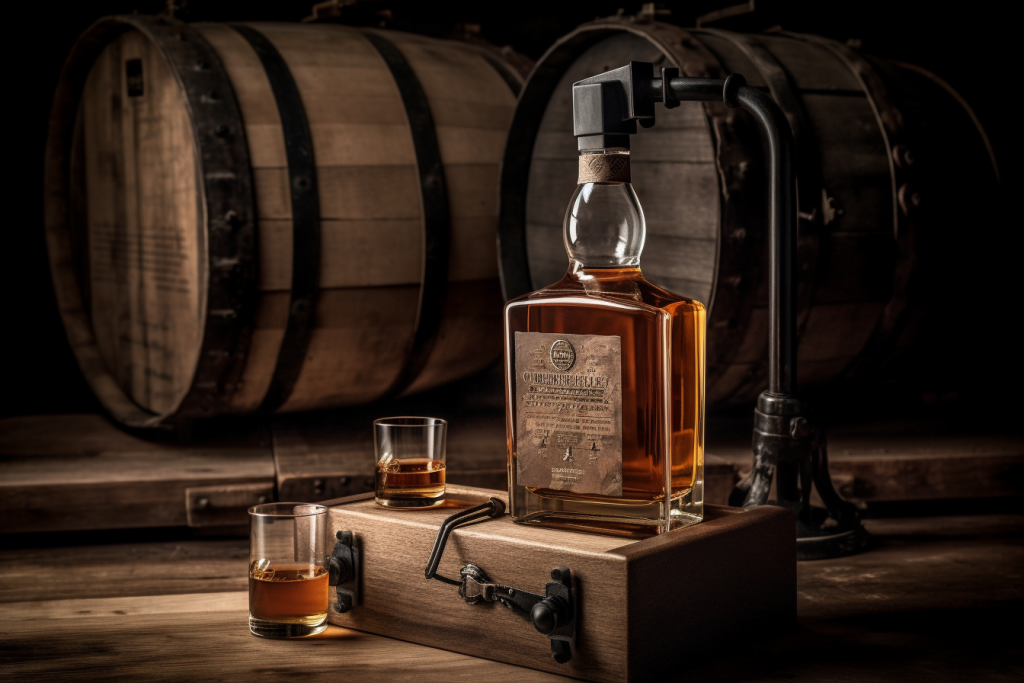
Few spirits carry as much history in the glass as whisky. It started as a rough farm distillate made from leftover grain and ended up in auction rooms, where rare casks trade for serious money. Along the way it picked up a few hundred years of technique, regulation, and rivalry between Scotland, Ireland, the United States, and Canada.
The spirit rewards curiosity. Drink it neat, pour it into a cocktail, or buy a cask and wait a decade. Every route leads somewhere interesting, and the learning curve is half the pleasure.
Ancient origins of whisky
The story begins with distillation itself, which reached the British Isles centuries ago. Monks were among the first to distil grain spirit, and the first written record of Scotch distillation dates to 1494, when the Scottish Exchequer Rolls logged eight bolls of malt given to Friar John Cor “to make aquavitae.” The Scots called the spirit uisge beatha and the Irish uisce beatha, both meaning “water of life.” The word we use today is a lazy shortening of those Gaelic phrases.
Early distillers worked with small pot stills and matured their spirit in whatever casks were to hand, often old sherry or wine barrels. Over time, Scotland and Ireland split into distinct traditions. Scotch single malt is made entirely from malted barley, while Irish pot still whiskey mixes malted and unmalted barley. Spelling divided too. Scotland and Canada mostly dropped the “e”, while Ireland and the United States kept it. Our piece on whisky versus whiskey explains how that happened.
How whisky spread around the world
For a long time, whisky was a regional drink. Scotch and Irish emigrants carried their stills and their habits to North America, where local grain and climate pushed the spirit in new directions. American distillers leaned on corn and rye, and ageing in new, charred oak barrels gave bourbon its colour and sweetness.
The last two decades have been a growth story. American whiskey rode a wave of popularity, with exports climbing steadily through the 2010s and into the 2020s. Canada had its own renaissance. Crown Royal became one of the best-selling Canadian whiskies on the continent, and heritage and craft names like JP Wiser’s, Forty Creek, Shelter Point, and Dillon’s gave the category real depth. If you want the full picture north of the border, read our guide to what Canadian whisky actually is.
The boom is no longer just about the old guard, either. Japan built a world-class whisky industry in barely a century, and producers in India, Australia, and Scandinavia now turn out serious bottles. We round up the regions worth watching in our guide to emerging world whisky regions. More competition usually means better whisky for the rest of us.
The styles worth knowing
The big three give you the map. Scotch whisky tends toward malt, oak, and, in Islay’s case, heavy peat smoke. Irish whiskey is usually triple distilled and lighter on the palate. American whiskey runs from sweet, corn-heavy bourbon to spicy rye.
Canada sits alongside all three. Canadian whisky is typically a blended style built on rye grain, lighter and very mixable, which is exactly why it dominated cocktails for so long.
Beyond the classics, cask-strength bottlings and flavour finishes have multiplied, and releases without an age statement give distillers room to blend for character rather than a number on the label. A distillery visit is still the best way to get your bearings, since a tasting flight beats any note on a screen. If American styles are your thing, our breakdown of what American whiskey is covers bourbon, rye, and the rest.
Distilling techniques, old and new
Distillation looks simple on paper: heat a fermented wash, collect the alcohol, age it. The craft lives in the details, and distillers have been adjusting those details for centuries.
Barrel ageing
Most of a whisky’s flavour comes from the cask, not the still. The wood species, whether the barrel is new or a refill, the level of char or toast, and what the barrel held before (bourbon, sherry, port, wine) all leave a mark. Ageing in smaller casks speeds up that exchange, which is why many craft distillers can release good whisky young.
For investors, the cask is the whole game. Our whiskey barrel investing guide covers how cask choice, fill strength, and warehouse conditions drive value over time.
Blending
Blending happens at two stages. Some producers marry different whiskeys after ageing to build a house style. Others blend casks of different ages or wood types into a single bottling for added complexity. Blended whisky gets dismissed by some single-malt purists, but the great blends are genuinely hard to make and easy to drink.
Experimentation
Modern distillers are pushing harder than at any point in recent memory. Distillers are trialling new grain varieties, unusual cask finishes, accelerated ageing, and different yeast strains. Some of it is gimmick. The best of it produces whisky you cannot get any other way.
Whisky culture
Whisky culture has grown up. The old image of a quiet gentlemen’s club has given way to tasting festivals, online communities, and bars with shelves deep enough to get lost in.
Cocktails pulled a lot of new drinkers into the category. A properly made Old Fashioned or Manhattan introduces people to bourbon and rye faster than any lecture, and home bartending took off in the last few years. Collectors, meanwhile, trade tips and bottles in forums that move markets almost as fast as auction houses do.
Frequently asked questions
How should I store whisky at home?
Store bottles upright, not on their side. Unlike wine, whisky’s high alcohol content will eat through a cork that sits in constant contact. Keep it out of direct sunlight and away from heat, at a steady temperature, ideally around 15 to 20 C. A cool, dark cupboard does the job. Once a bottle is open, drink it within a year or two for the best flavour, since oxygen slowly flattens the aromatics. If you are holding bottles as an investment rather than a drink, provenance and fill level matter more than anything else.
What’s the difference between whisky and bourbon?
Bourbon is a type of American whiskey, so every bourbon is whiskey but not every whiskey is bourbon. Under United States law, bourbon must be made from a grain mix of at least 51 percent corn and aged in new, charred oak barrels. It has no minimum ageing period, though “straight” bourbon must age for at least two years.
Scotch and Irish whisky work by different rules: both must age for at least three years in oak. Flavour-wise, bourbon leans sweet, with vanilla, caramel, and oak spice from the new barrels, while Scotch tends toward malt, fruit, and sometimes smoke.
What’s the most popular whisky brand?
It depends on how you measure and where you stand. By volume, blended Scotch has historically dominated global sales, and Johnnie Walker has long sat at the top of the Scotch rankings. In North America, Crown Royal regularly leads the Canadian category. Popularity and quality do not always travel together, though. Some of the most sought-after bottles on the secondary market come from small distilleries most people have never heard of.
How much does a bottle of whisky cost?
The range is enormous, and that’s part of the fun. Grocery-shelf blends sit at the bottom, age-stated single malts sit in the middle, and limited releases and rare casks climb into auction territory. Age, rarity, distillery reputation, and the condition of the bottle all push the price up. If you are thinking about whisky as an asset rather than a drink, rarity and provenance matter more than the liquid alone.
Does whisky have any health benefits?
Tread carefully here. Moderate whisky consumption has been linked in some studies to certain cardiovascular outcomes, but the evidence is mixed, and newer research has cast doubt on older, rosier claims. No medical body recommends taking up drinking for your health, and alcohol carries real risks, including a higher cancer risk, that rise with intake. Canada’s updated alcohol guidance, released in 2023, frames low risk as no more than one or two standard drinks per week. Enjoy whisky because you like it, not because of a health halo.
A spirit that keeps moving
Whisky has survived tax collectors, prohibition, world wars, and shifting tastes, and come out the other side bigger than ever. The thread connecting a 15th-century Scottish friar to a modern cask investor is simple: this spirit improves with patience, and rewards people who pay attention.
Drink or invest, the next step is the same. Open something new, take notes, and follow your curiosity. If you are ready to put money behind it, our overview of investing in rare whiskey and casks shows how collectors think about rarity, provenance, and timing.