

You might be surprised to learn how much rare whisky has appreciated over the past decade. I’ve been tracking whisky as an investment for years, and it’s clear this spirit is no longer just something you pour at a celebration. Tight supply, steady demand, and the appeal of owning a piece of consumable history have turned whisky from a collector’s hobby into a genuine asset class. That said, there’s more to it than buying a bottle and waiting for the price to climb. You need to understand the market, manage the risks, and have a plan. That’s exactly what I want to walk through here.
Understanding Whisky’s Investment Appeal
When you start treating whisky as an investment, its appeal becomes obvious. It offers a way to diversify a portfolio away from stocks and bonds, and rare bottles from categories like single malt Scotch, American bourbon, and blended Scotch have historically rewarded patient owners.
To understand why whisky holds its value, you have to look at what drives the market. Scarcity matters. Limited releases, closed distilleries, and brand reputation all push prices up. Cask whisky has also drawn serious attention in recent years. The catch is picking the right distillery and cask type, since the ageing process is what builds much of the value. If you want a deeper primer on the fundamentals, our guide to the fundamentals of whisky investing covers the groundwork.
Single malt tends to lead the way. Its depth of flavour and strong collector following mean top bottles regularly command high prices at auction. When you buy a single malt, you’re paying for the craft, the history, and the years of skill behind it.
None of this is guaranteed, though. Whisky investment carries real risk. Age, rarity, provenance, and brand strength all shape an outcome, and getting advice from people who know the market can save you costly mistakes.
The Rise of Whisky Collecting
The interest in whisky collecting has grown steadily, and it’s not hard to see why. More enthusiasts and investors are building serious collections, driven by a love of the spirit and the chance of a financial return.
A few forces sit behind this shift:
- Diversification: Whisky moves differently from stocks and bonds, which can cushion a portfolio when traditional markets wobble.
- Scarcity and rarity: Limited bottles and aged releases are finite, and finite things tend to hold value.
- Maturation value: Cask whisky generally gains character, and often value, as it ages.
- Brand reputation: Bottles from storied distilleries usually fetch more at resale.
- Expert guidance: Advice from experienced brokers and auction houses can steer you toward sounder buys.
This is not a passing fad. Whisky has grown into an established alternative asset, and collecting is only becoming more popular. If you’re thinking about building your own lineup, our piece on kickstarting a whisky collection is a practical place to start.
Evaluating Whisky’s Market Performance
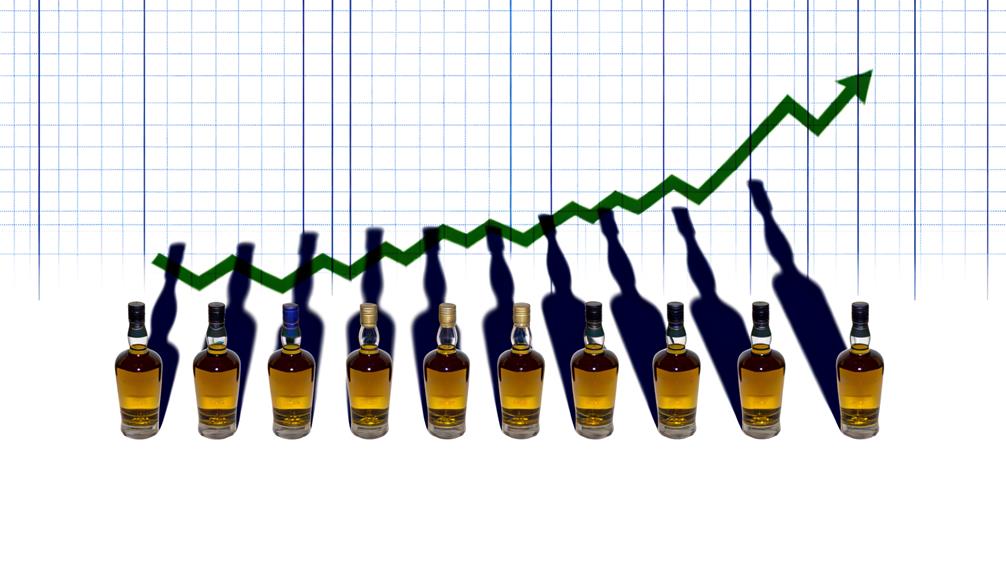
A few factors do the heavy lifting when you assess how a whisky investment will perform: age, rarity, and the strength of the brand. Over the decade leading into the early 2020s, rare whisky appreciated sharply. The Knight Frank Luxury Investment Index tracked the category for years and recorded gains of several hundred percent across that stretch. More recently the market has cooled, and Knight Frank reported that rare whisky values eased in 2023 after a long run of gains. The lesson is that timing and selection matter as much as the category itself.
Cask whisky can outperform bottled whisky over time, which is why it attracts longer-horizon investors. Our guide to investing in rare whiskey and casks breaks down the trade-offs between bottles and barrels. Patience is essential either way. Whisky is not a quick flip. It rewards people who understand the market and who can hold a position for years.
From my own experience, working with reputable dealers and auction houses matters. Do your homework before you buy, and you’ll sidestep most of the common traps. Investing in rare whisky is also about joining a community of people who know and love this market. That network, and the knowledge it brings, is part of the return.
Strategies for Whisky Investment
Once you understand the appeal, it helps to have a method. Whisky investors are buying more than a bottle. They’re buying a story, a lineage, and a craft.
A few strategies that hold up over time:
- Research: Learn the labels, the distilleries, and the styles. The more you know, the fewer mistakes you make.
- Diversify: Don’t put everything into one bottle or one region. Spread your money across brands, ages, and styles.
- Patience: Value builds over years, not weeks.
- Rarity: Limited editions and scarce releases tend to command higher prices. Watch for them.
- Condition: The state of the bottle, the fill level, and the packaging all affect value. Keep everything pristine.
If you’d rather follow a structured approach than make ad hoc buys, our guide to building a whisky investment strategy lays out a framework you can adapt to your own goals and budget.
Storing and Maintaining Whisky Investments

Owning the whisky is only half the job. Storing it properly protects your money.
That means a steady temperature, protection from UV light, and the right insurance. Keep bottles upright, away from direct sun, and in a stable environment. Heat swings and sunlight degrade the spirit and the label over time, which dents value.
Insurance buys peace of mind against damage, loss, or theft. If you hold casks, check in on them regularly so you can track maturation and catch problems early.
Storing whisky in a bonded warehouse can carry tax advantages. In many cases you can defer certain duties and taxes until the whisky is sold or removed from bond. The rules vary by jurisdiction, so it pays to get advice specific to your situation.
A good broker or storage specialist can help here too. Their guidance on condition and provenance can make a real difference to your eventual return.
A Canadian Angle
For Canadian readers, there’s a home-grown story worth knowing. Distilleries like Crown Royal, J.P. Wiser’s, Forty Creek, and newer names such as Shelter Point and Dillon’s have raised the profile of Canadian whisky, and limited releases from these producers are starting to attract collector interest. Our overview of the Canadian whisky scene is a good entry point.
On the tax side, the CRA generally treats whisky held for investment as a collectible, a form of listed personal property, which means capital gains rules apply when you sell. There are quirks, including minimum cost thresholds that apply to collectibles, so talk to a tax professional before you assume how a sale will be taxed. This is general information, not tax advice.
Take the Next Step
If whisky’s potential has your attention, the smartest move is to keep learning before you commit capital. Read our barrel investing guide to understand how cask ownership actually works, then take a look at how rare bottles change hands at auction so you know what a fair price looks like. And if you’d like to talk through your first purchase, get in touch with the Modern Whisky team. We’re happy to point you in the right direction.
Frequently Asked Questions
What is the trend in whisky investment?
Whisky investment has matured into an established alternative asset class. It’s no longer just about enjoying a fine Scotch. Collectors are also chasing financial returns, and that shift has brought more money and attention into the market.
Is whisky still a good investment?
In my view, whisky can still be a worthwhile holding, especially rare single malts, which have tended to appreciate over long periods. Just remember it’s an unregulated market with real risks, including illiquidity and the ongoing cost of storage and insurance. Go in with your eyes open.
What whisky should you invest in?
Rare, well-aged bottles from respected houses such as Macallan or Glenfiddich have historically held strong demand, which supports their resale value. That said, do your homework. Provenance, condition, and release scarcity matter as much as the name on the label.
What is the most sought-after whisky right now?
Demand at the top end is driven by age, scarcity, and brand reputation. Houses such as Macallan, Glenfiddich, and Ardbeg consistently rank among the most valuable at auction, which makes them a common choice for investors focused on the premium end of the market.