

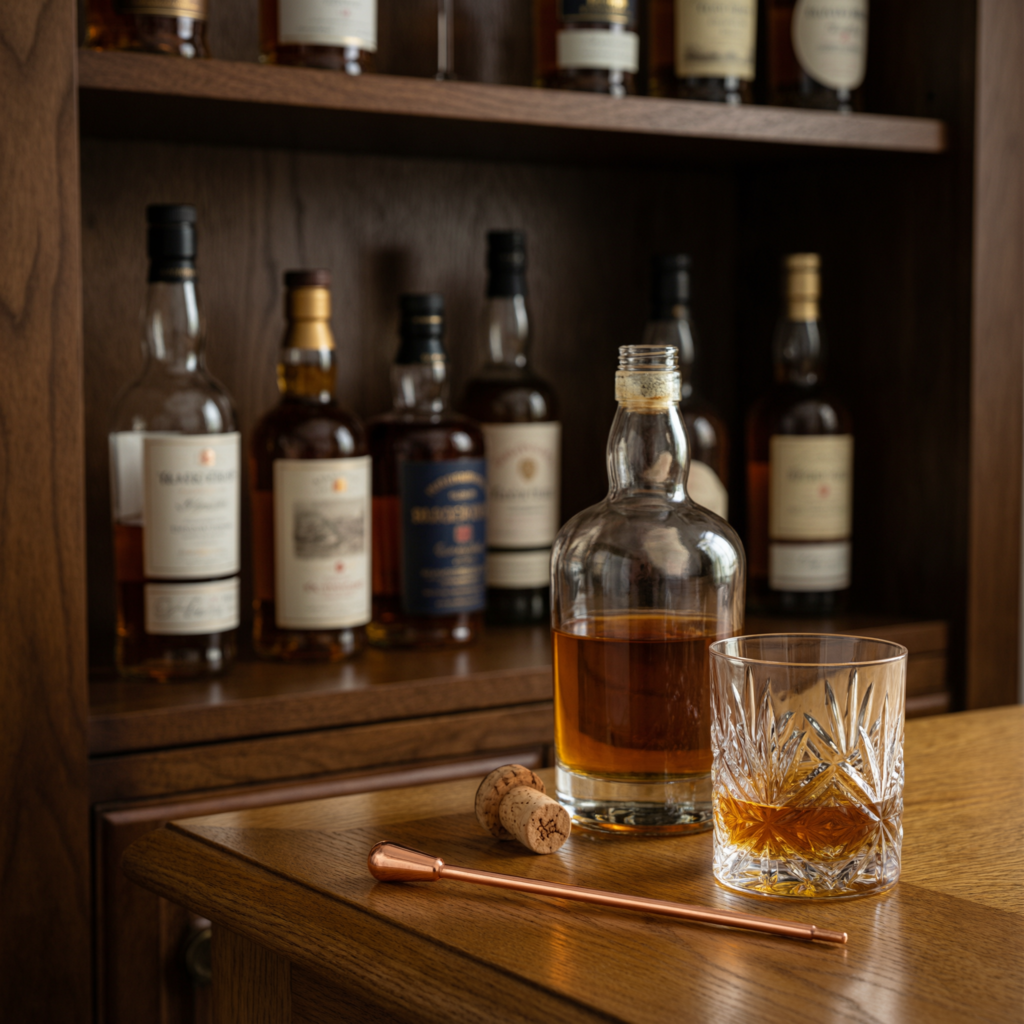
Canadian whisky has a reputation problem that is mostly undeserved, and the best Canadian whisky distilleries are not the ones most people can name. Buyers reach for Crown Royal because it sits on every shelf, or they assume the interesting bottles are expensive and import them instead, or they simply do not know what to ask the guy behind the counter. None of those instincts is a good guide.
The country has more distilleries than most people realise, and the gap between a competent bottle and a genuinely interesting one has narrowed a great deal in the last decade. You do not need to know anything technical to start. You need a shortlist and a reason to choose between the bottles on it.
This is that shortlist, arranged by what each distillery actually does well rather than by fame. If you want the legal definition first, our primer on what Canadian whisky actually is covers the rules: made from fermented grain, mashed and distilled in Canada, and aged in wood for at least three years. Two minutes of that is worth it before you go further.
The three tiers of Canadian whisky distilleries, and why they taste different
Canadian whisky splits cleanly into three groups, and the difference between them is mostly about scale and attitude rather than law.
The big houses make millions of cases a year. Their job is consistency, so expect a smooth, predictable, well-built whisky that tastes the same in every province and every year. That is not a criticism. A blend that is identical across a million bottles is a real achievement, and it is why the category found its footing in the first place.
The mid-size distilleries are where the traditional work is happening. They have real warehouses, real cask inventory, and the scale to run single-cask and vintage programmes without charging you through the nose for the privilege.
The craft wave is small, often single-digit in staff, and frequently releases only when a cask is ready. This is where local grain and local water genuinely change the glass, and where most of the exciting releases of the past five years have come from.
- Big houses. Millions of cases a year, built for consistency and available in any province. Crown Royal, J.P. Wiser’s, Forty Creek, Alberta Premium.
- Mid-size. Large enough to run vintage and single-cask programmes without charging a premium for the privilege.
- Craft. Small teams, released only when a cask is ready. Shelter Point, Okanagan Spirits, Dillon’s, Lost Lantern.
Keep the framework loose. The tiers overlap more than the labels suggest, and some craft distilleries now move more single cases than the big houses do. What the tier reliably tells you is what kind of bottle you are holding and roughly what it costs, not whether it is good. A $35 rye and a $100 single cask are answering different questions.
The big houses, and what each one is for
Crown Royal. Distilled in Manitoba, owned by Diageo, and the single most important name in Canadian whisky by sheer visibility. Built from a blend of corn and wheat whiskies rather than rye, it is notably soft and lightly sweet, with no peat and a short, clean finish. It is not a challenging whisky. It is also the bottle most likely to be within walking distance of you, and it holds up well enough in a mixed drink that it is a legitimate base for an Old Fashioned when you want something that will not argue with the recipe.
J.P. Wiser’s. The other name you will meet in every provincial store, and the best place to start if what you want is to understand Canadian rye properly. More spice and structure than Crown Royal, with real cereal and orchard fruit underneath. The spiced and vanilla expressions are sweetened and remain divisive; the straight rye and the older age statements are the ones worth your attention.
Forty Creek. Built in the Niagara region, now owned by Sazerac. Sharper and drier than its two big rivals, with a distinctly tart edge from the rye and from a warmer maturation climate than Scotland offers. Also the most useful of the group for mixing, because that dryness stands up to ice and sugar without turning flat.
Alberta Premium. Made in Clive, Alberta, from prairie-grown rye, and the one of the group with a genuinely separate argument to make. Rich, thick, faintly earthy, carrying a sweetness that reads closer to biscuit than to candy. It sits in its own category, and it is the bottle to buy if you want proof that Canadian whisky is not simply a soft style of Scotch.

The craft wave, region by region
British Columbia
The most interesting development in the country has happened on the west coast, and it is the part of this story closest to us.
Shelter Point, on Vancouver Island, distils in small batches with pot stills and water from its own aquifer, letting the coastal air shape the spirit through a long, slow maturation. Island light and low humidity push it toward a malty, faintly coastal profile that reads as its own place rather than an imitation of Speyside. Its whiskies have been winning accolades, including three single-malt releases picked up by the Scotch Malt Whisky Society in 2023, which the distillery describes as a first for a Canadian distillery.
Okanagan Spirits in Vernon, founded in 2004, is the oldest craft operation in Western Canada and has quietly become one of the country’s most-awarded producers. It makes whisky from British Columbia grain and fruit, and the fruit is the part that makes it different: orchard and berry notes sitting on a cereal base. It is also the best entry point on this list for someone who thinks they do not like whisky, because the fruit does the work without turning the bottle sweet.
Ontario and Quebec
Dillon’s, in Beamsville in the Niagara region, is the cleanest example of the hands-on small-lot model. It releases at full strength, does not chill filter, and does not colour, which is closer to a house rule than a marketing line. The result is a range that tastes like the cask rather than like a house style.
Gooderham & Worts in Toronto is older, and came back from near-extinction in a way that surprised people. Its warehouse character and rye-heavy house style are worth a look if you can find a bottle.
Atlantic Canada
Lost Lantern in Nova Scotia is the one to watch. It builds on a genuine local barley-growing tradition, and here the raw material is doing real work in the glass rather than sitting behind a brand name.
Where to actually start
If you want the short version: buy three bottles, one from each tier, and drink them inside the same week. That will teach you more than any amount of reading.
| What you are after | What to buy | Roughly |
|---|---|---|
| A first Canadian bottle, easy to find anywhere | J.P. Wiser’s rye | $30-40 CAD |
| Proof the style is its own thing | Alberta Premium | $35-45 CAD |
| A benchmark to compare everything else against | Crown Royal | $35-40 CAD |
| The most interesting craft producer in the country | Shelter Point, any release | $70-120 CAD |
| Approachable, local, not a rye drinker | Okanagan Spirits | $50-80 CAD |
| Full strength, unfiltered, no colouring | Dillon’s | $60-90 CAD |
Prices are Canadian shelf prices and move by province, but the relative ordering holds. A bottle at the top of that table is not four times better than one at the bottom. It is differently made.
Two things worth knowing before you buy
Canadian whisky is not a budget way into Scotch. It is not trying to be one. The corn-forward sweetness that makes it approachable is a deliberate style choice, not a defect or a shortcut, and it is why it mixes and ages differently. If you buy it expecting a soft Islay you will be disappointed. If you buy it expecting something fruitier and less smoky than what you are used to, you will not be.
Almost all of it is unpeated. That is a real difference, not a missing feature. If peat is the thing you actually like about whisky, buy Islay and skip this page. A lot of people who assumed they did not like whisky simply had never met a good rye.
Where this is going
The craft wave is not slowing down, and the quality bar is still moving. Our round-up of emerging regions worth watching puts Canadian producers alongside Tasmanian, Japanese and Taiwanese ones, and on current evidence the argument is closer than it used to be.
If you would rather have the mechanics than the recommendations, how whisky is actually made explains why such different results come out of one legal definition, and our look at the Canadian scene covers the people and the history behind all of this.
Frequently Asked Questions
What is the best Canadian whisky for a beginner?
Alberta Premium if you like something sweet and textured, or J.P. Wiser’s rye if you want to understand the style properly. Both are on shelves everywhere, which means you can trade the bottle if you open the wrong one.
Is Crown Royal good whisky?
It is competently made and extraordinarily consistent, and for most people it will be the only Canadian bottle they ever buy. Worth buying to understand the category. Not the summit of anything.
Which Canadian whisky is worth collecting?
Honestly, very little of it yet, with one or two exceptions. Our guide to whisky investing sets out why the money in this category sits in Scotch and Japanese releases rather than domestic ones.
Are craft Canadian whiskies better than big-house ones?
Different, and better depends entirely on what you are after. Craft gives you character and a sense of place. The big houses give you consistency and a bottle you can find in any province. Serious drinkers usually end up keeping both.
Why is it spelled whisky without the e?
The spelling follows the Scots and Japanese convention rather than the Irish and American one, which reflects the tradition Canada built on. Our spelling explainer covers the whole rule.
How long will an opened bottle last?
Longer than most people expect, as long as it is kept upright, sealed, somewhere cool and dark. Our storage guide has the specifics.