

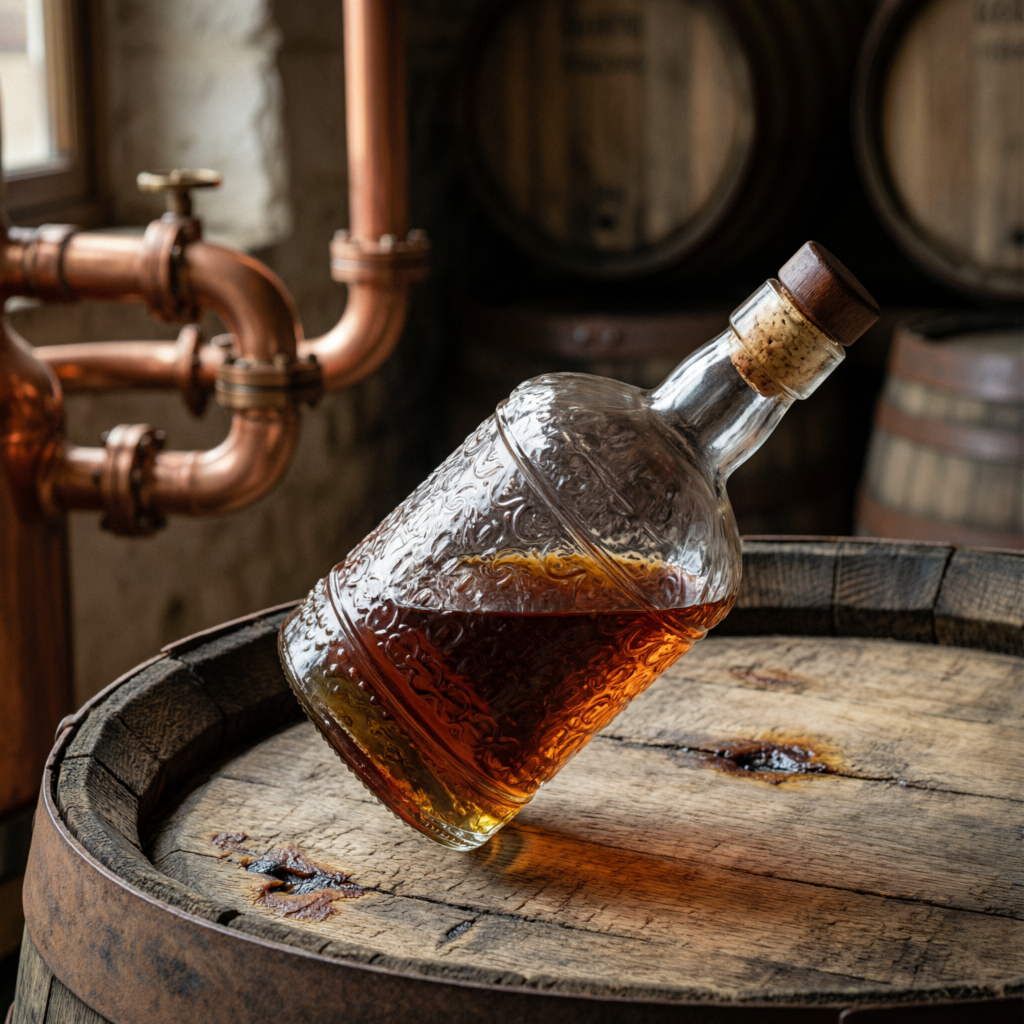
Stand a 12-year-old single malt next to its 18-year-old sibling from the same distillery and the price gap is hard to miss. Same label design, same bottle, same house style. The older one routinely costs two or three times as much, and the gap only widens at 25, 30, or 40 years. That is not marketing. Time does real, measurable things to the liquid, and it costs real money to hold a cask for decades.
Some of the premium is genuine scarcity. Some of it is the cost of capital. And some of it is simple fashion. Knowing which is which is the difference between buying a good bottle and paying for an old label.
What an Age Statement Actually Tells You
An age statement is a legal promise, not a marketing flourish. In Scotland, the European Union, and Canada, the number on the label must reflect the youngest spirit in the bottle. A 12-year-old can contain whisky far older, but never younger.
Here is the part that surprises people new to this. Ageing only happens while the spirit sits in wood. The moment it goes into glass, the clock stops. A bottle of 12-year-old whisky bought today will still be a 12-year-old in thirty years. It will not turn into a 42-year-old. Whatever value it gains later comes from scarcity and demand, not from the liquid getting older.
In Canada, whisky must spend at least three years ageing in wood before it can be called Canadian whisky. That floor is why even entry-level domestic bottles carry a baseline of cask character.
What the Cask Does to the Liquid
While the spirit rests in oak, three things happen at once. The wood gives. The air takes. And the volume shrinks.
Extraction is the most obvious. Fresh distillate runs off the still clear and fiery. Over the years it pulls colour, tannin, and sweetness out of the charred or toasted barrel. A first-fill bourbon cask lends vanilla and honey. An oloroso sherry butt brings dried fruit, spice, and a deeper red colour. This is where most of the flavour you are paying for comes from.
Oxidation is quieter but just as real. Tiny amounts of air move through the wood each year, softening harsh alcohols and rounding the texture. It is slow, unglamorous work, and it cannot be rushed without losing something.
Then there is evaporation, the share distillers call the angels’ cut. Around 2 percent of a cask’s contents disappears every year by the rule of thumb Scottish distillers use. Warmer warehouses lose more, cooler ones less. Either way, the liquid left behind gets scarcer with every year that passes, and that scarcity is a large part of what you pay for in an older bottle.
If you want to see the whole journey from fermented wash to a filled cask, this walkthrough of the distilling side is a good place to start.
Why Every Extra Year Costs the Distillery Money
Holding whisky is expensive long before it becomes valuable. A distillery that fills a cask today will not see a return for a decade or more. In the meantime it pays for the wood, the warehouse, the insurance, and the interest on capital that is locked away. All the while the angels’ share is shrinking the asset.
Then there is the risk that a cask simply turns out badly. Too much oak, a dull spirit, a warehouse that runs too hot. Ageing is a bet, not a guarantee, and the price of older whisky has to cover the bets that did not pay off.
That is the honest answer to why a 25-year-old costs so much more than a 12-year-old. It is not that the older liquid is twice as good. It is that producing it took more than twice the time, lost more volume, and carried more risk. The premium is the cost of waiting, plus a scarcity charge on top.
Age Statements at Auction
Age is one of the clearest drivers of secondary-market price. Sale results from houses such as Bonhams and Sotheby’s, and from specialist online platforms like Whisky.Auction, consistently show older age statements selling for steep premiums over their younger siblings. That pattern held through 2024 and into 2025, even as the broader market for rare whisky came off its recent highs.
The names that keep appearing at the top are predictable. Older Macallan statements, Glenfiddich’s 30-, 40-, and 50-year-old bottlings, and Japanese age-statement releases such as Yamazaki 18 and Hibiki 21 routinely anchor auction catalogues. Karuizawa, a closed Japanese distillery whose remaining stock only ever shrinks, is the extreme case. Every bottle sold is one fewer in existence, and the prices reflect it.
Two forces drive this. Older age statements are rarer because fewer casks survive to be bottled at 25 or 30 years. And they often come from an era of production that cannot be repeated. Closed distilleries, discontinued ranges, and casks never meant to age that long all feed the premium.
If you are reading auction results to decide what to buy, it helps to know how to read a catalogue and how to bid. Our guide to whisky auctions walks through the process.
Older Is Not the Same as Better
Here is what the price tag does not tell you. Age and maturity are not the same thing, and more years do not automatically mean a better dram.
A whisky keeps pulling flavour from the wood for as long as it sits there, but at some point the wood can win. Over-oaked whisky tastes of sawdust and tannin, with the distillery character buried underneath. Some spirits peak at 10 or 12 years. A delicate Lowland malt or a bright, fruity Speyside can lose exactly what made it appealing if left too long.
The bottles people remember are the ones where age and maturity line up. Enough time to build depth and texture, pulled off the wood before the oak took over. That balance, more than the number on the label, is what you are actually tasting.
So let your palate lead. A well-made 12-year-old you genuinely enjoy is worth more to you than a 25-year-old you keep saving for a special occasion. Age is a guide to style and scarcity, not a scorecard of quality.
What This Means If You Are Buying to Hold
If you are buying whisky to hold rather than to pour, age statements matter, but they are only one input.
Brand and distillery reputation carry at least as much weight as the number on the label. An 18-year-old from a famous Speyside house will hold and gain value far more reliably than a 25-year-old from an unknown source. Rarity matters too, and so do condition, provenance, and how well the bottle has been stored.
Age-statement bottles from respected producers are the blue chips of the category, but value builds in other places as well. Cask ownership lets you hold the ageing process itself rather than a finished bottle, and it is where some of the more interesting returns have come from. Our barrel investing guide explains how that works, and our look at rare bottles and casks covers the higher end of the market.
It is also worth watching Canada. The domestic renaissance led by distilleries like Shelter Point, Forty Creek, and Dillon’s, along with older bottlings from Crown Royal and JP Wiser’s, has given Canadian whisky a collector market that barely existed a generation ago. Older age-statement Canadian bottles are still affordable by Scotch or Japanese standards, which is exactly why they interest people who like to buy early. If you want a grounding in what sets the domestic stuff apart, our primer on what makes Canadian whisky different is the place to start.
And if you want more on how the barrel shapes a spirit over time, our piece on how barrels and time work together goes into the mechanics.
Frequently Asked Questions
Does the value of whisky increase with age?
Usually, but with a caveat. Age makes a bottle scarcer, and scarcity is what drives value. Older age statements are rarer because fewer casks survive to be bottled at that age, and evaporation has already taken its cut. But value also depends on the brand, condition, provenance, and demand. A 30-year-old from an unknown distillery in poor condition can be worth less than a pristine 12-year-old from a famous one.
Does whisky keep ageing once it is bottled?
No. Ageing only happens in wood. Once the spirit is in glass, its character is set. A 12-year-old held in bottle for twenty years is still a 12-year-old. Any increase in its value comes from it becoming harder to find, not from the liquid changing. That is why fill level, seal, and storage condition matter so much for older bottles. They protect what is already there rather than improving it.
Is older whisky always better?
No. Age brings depth, colour, and texture, but it can also bring too much oak. Some whiskies peak young and lose their charm if left in the cask too long. The best bottles are the ones where the spirit’s character and the wood’s contribution are in balance. Let your taste, not the number on the label, be the judge.
What makes one bottle gain more value than another?
A few things matter most. The distillery’s reputation, the rarity of the bottling, the age statement, condition, and provenance. Limited releases, closed distilleries, and older age statements from famous houses tend to appreciate most reliably. Market fashion plays a role too, and it can shift. So treat any single bottle as a long hold rather than a short trade, and buy things you would be happy to own even if the market went sideways.