

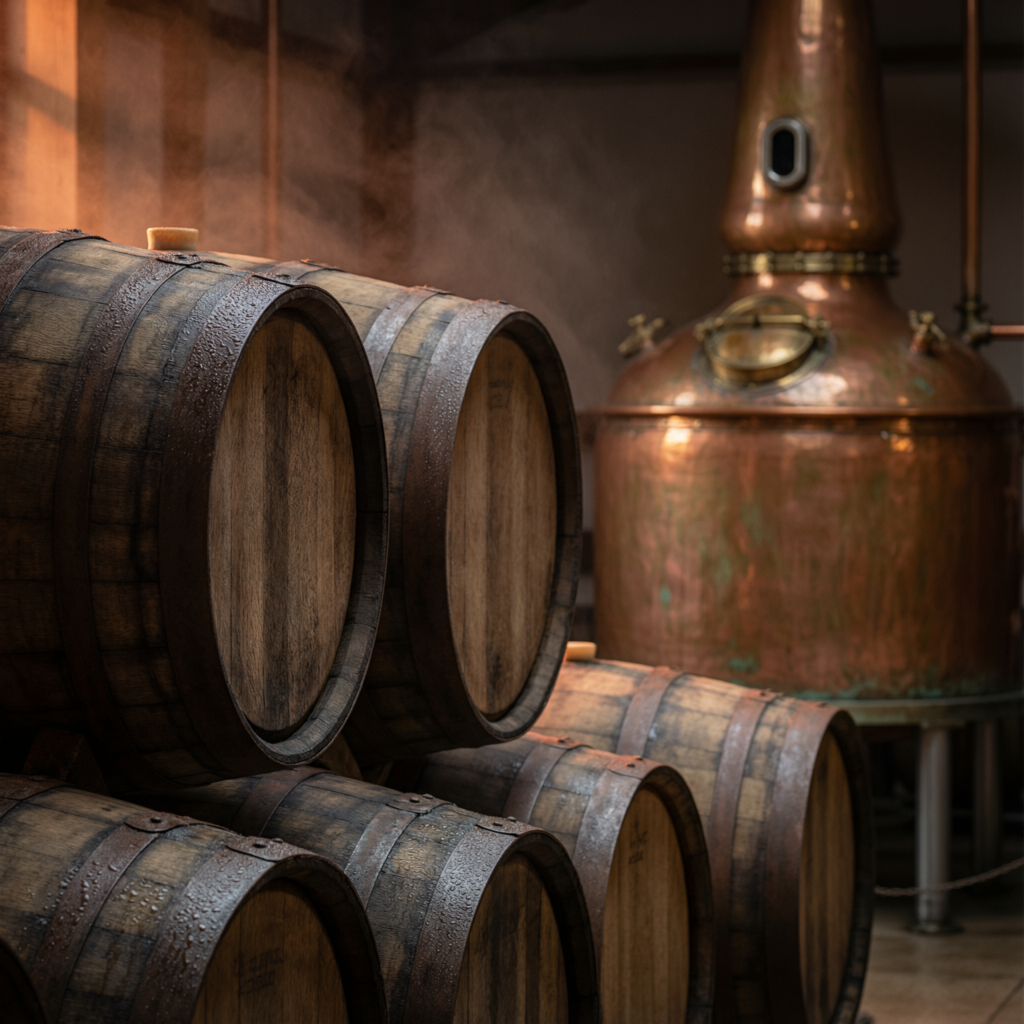
For a long stretch, “new distillery” was almost a contradiction in whisky. The famous names were already famous, the copper already installed, the brand books written. Then Willowbank, the old Dunedin distillery, shut down in 1999 and left a warehouse of orphaned casks behind. Rachael and Mathew Thomson bought a piece of that stock, learned their trade bottling it, and in 2014 opened a distillery of their own. Their single malts now collect international awards that established houses would be happy to have.
The Thomson story is not rare anymore. Since 2015, working distilleries have multiplied across the United States, Canada, Australia, and New Zealand, and the best of the new arrivals no longer compete in the craft category. They compete with everyone. The class of 2024 and 2025 looks different from the first wave too: fewer novelty projects, more houses with serious grain programs and multi-year cask plans. Bourbon’s inventory build-up and the cooling of secondary-market prices through 2024 and 2025 have made hype harder to monetize and quality easier to spot.
Here are the rising stars worth a place on your shelf or your watchlist, and how to think about them if you are inclined to invest.
Thomson Whisky: Bottler First, Distiller Second
Rachael and Mathew Thomson founded their company in 2009 as an independent bottler, carefully choosing casks from Willowbank’s leftover stock. That apprenticeship shaped everything. By the time they fired up their own stills in Dunedin in 2014, they had already spent years studying how New Zealand casks mature whisky, and few new distilleries get that kind of head start.
Their distilling leans on ingredients you will not find in Speyside. Manuka wood smoke stands in for peat in their Manuka Wood Smoke Single Malt, giving it a sweet, herbal smoke that reads unmistakably Southern Hemisphere. The Saison Yeast release, Cask #39, plays with fermentation instead of smoke, and the flagship Awa-moa blend gave the brand a bottle to rally around.
The hardware followed: medals at the World Whisky Awards and the San Francisco World Spirits Competition, and strong word from retailers like The Whisky Exchange. New Zealand barely registers on most whisky maps, yet Thomson made Dunedin a stop on the single malt trail. Provenance, it turns out, comes from what is in the bottle, not where on the map it sits. If the Southern Hemisphere is new territory for you, our guide to emerging whisky regions maps the rest of the scene.
What the New Zealand Approach Got Right
Thomson’s playbook points to three things the best new distilleries everywhere now do well:
- Local character over imitation. Manuka smoke in place of peat, home-grown grain, coastal ageing conditions: they built a style that could only come from Dunedin.
- Experiments that reach the label. Unusual yeasts, wine casks, numbered small cask runs. The experiments ship, so drinkers can taste the progress and compare vintages.
- Award hunting in credible rooms. They entered the international competitions that buyers actually trust, then used the wins to earn shelf space abroad.
That last point matters most for collectors. A young distillery holding a serious medal has a verified product. That is a very different bet from a young distillery with a good Instagram feed.
Canadian Craft Distilleries Worth Watching
Canada’s own renaissance is closer to home. What was a handful of craft names ten years ago is now a coast-to-coast map, and as of 2025 new malt and rye-focused distilleries are still opening every season.
Shelter Point, on Vancouver Island, opened in the Comox Valley in 2011 and has become the standard-bearer for Canadian single malt. Their single cask releases move quickly through collectors’ hands, and their bottles have started appearing in international award results. If you want one Canadian new-distillery success story to study, this is it.
Dillon’s Small Batch Distillers, out of Beamsville in Niagara, fired up a single copper pot still in 2012 and built a loyal following on rye, single malt, and gin that taste like the orchards around them. It is one of Ontario’s best-known craft distilleries, and it got there one honest batch at a time.
Odd Society Spirits, on Vancouver’s North Shore, has quietly built a serious single malt program alongside its liqueur line, while Eau Claire in Calgary and Ironworks in Lunenburg, Nova Scotia round out a scene that barely existed fifteen years ago. Our tour of the Canadian whisky scene maps the whole movement, and it grows every year.
The Bourbon Side: Kentucky Artisan Distillery
The best rising stars don’t all make single malt. In Crestwood, Kentucky, about half an hour from Louisville, Kentucky Artisan Distillery (KAD) has been running since 2013 as one of the state’s go-to custom distilleries.
KAD’s model is unusual. Rather than pushing one house brand, they distill and age bourbon for a roster of client labels, doing the hands-on, small-batch work that automation-heavy plants skip. That makes them the engine behind several sought-after bottles you may have tried without knowing where the liquid actually came from. Contract distilling used to be a dirty word among bourbon fans. KAD turned it into a craft.
They also run cask programs, including their CaskX offering, where buyers can own barrels while they age. That is where the investment question starts.
If the bourbon side is new territory, our guide to American whiskey covers the styles and the rules of the category.
Can You Invest in a Rising Distillery’s Casks?
Yes, but go in with your eyes open. KAD’s CaskX offering is one example of a growing category: distillery-run cask programs where you buy new-make or young spirit in wood and sell it years later, ideally for more than you paid.
The barrel is the asset, and everything depends on it. Cask quality, fill strength, warehouse conditions, and years on wood all drive the final flavour and the final price. Some United States programs, CaskX included, are open to accredited investors only. Liquidity is thin either way: a cask is not a stock, and there is no guaranteed buyer at the end.
Before you wire money for any cask, run the offer through this list:
- Who holds title to the wood? You should be the named owner of a specific, numbered cask, not a pool participant.
- Where does it age, and who insures it? You want a named bonded warehouse and insurance in your favour, not the program’s.
- What is the exit? Does the distillery offer a buyback, an auction route, or a bottling service? A cask with no exit plan is a barrel of promises.
- What do the fees total? Storage, insurance, brokerage, and bottling can quietly eat the upside.
- Track the liquid, not the brochure. Ask for a sample at purchase and periodic strength checks. A cask report beats a projection chart.
Our whiskey barrel investing guide walks through the whole asset class, and it is worth reading before you sign anything. If your interest leans toward the rare and allocated end of the market, investing in rare whiskey and casks covers the mechanics.
How to Judge a Rising Star
Five questions separate the future classics from the future eBay listings:
- Is the whisky actually theirs? Plenty of “new” brands buy young spirit and relabel it. Distillery-distilled, aged on site, and named on the label is the standard. If the back label says produced by someone else, you know.
- Can they age their way out? A great new-make means little if the warehouse program is an afterthought. Ask how many casks they filled last year, and how many they are holding back.
- Do the awards come from credible juries? The World Whisky Awards, the San Francisco World Spirits Competition, and national competitions with published judging panels carry weight. Pay-to-play trophies do not.
- Is there collector behaviour around it? Auction results, allocation lists, and secondary demand for older releases beat any press release. A whisky people re-buy is a whisky people believe in.
- Would you drink it at full price? Investment only works if the liquid has real drinkers behind it. If you would not pour it for friends, do not park your money in it.
The distilleries on this page pass that test. The category overall does not, which is the point of doing the homework. For a broader framework, our whisky investing primer breaks down how bottles and casks earn their keep.
Frequently Asked Questions
Who owns Starlight bourbon?
The Huber family of Starlight Distillery in Borden, Indiana. They have farmed the same land since the 1840s and distilled their way into one of the Midwest’s most respected family operations. Their bourbon line is grain-to-glass in the full sense: estate-grown grain, estate-distilled, estate-aged.
What is the most-awarded distillery in the world?
Glenfiddich makes that claim about itself, and the trophy shelf backs it up: more international single malt awards than any other distillery, by their own count. New distilleries cannot match that ledger yet, but the point of a rising star is trajectory, not totals. A young house winning its first World Whisky Award is doing what the giants did decades ago.
What is new-make spirit?
New-make is the clear, unaged spirit that comes off the still, before it ever touches oak. Every whisky starts there. Distilleries sell it to fund the ageing years and give drinkers a look at the raw distillery character: the grain, the yeast, the cut points, all out in the open. Some of it is rough. Some is impressive enough to bottle on its own. A good new-make tells you where a young distillery is heading, which is exactly the signal a collector wants.
How do you track a new distillery before buying in?
Follow the releases, not the marketing. Note when casks were filled, whether the distillery publishes strength and age data, and whether older releases trade above retail at auction. Distillery-direct allocation lists are a strong signal of real demand. And if you can, visit: a working still room with full warehouse space behind it says more than any pitch deck.
Keep an eye on Dunedin, the Comox Valley, and Crestwood. The next era-defining name is probably ageing in a warehouse in one of those places right now, and the best time to notice a rising star is before the allocation list gets long.