

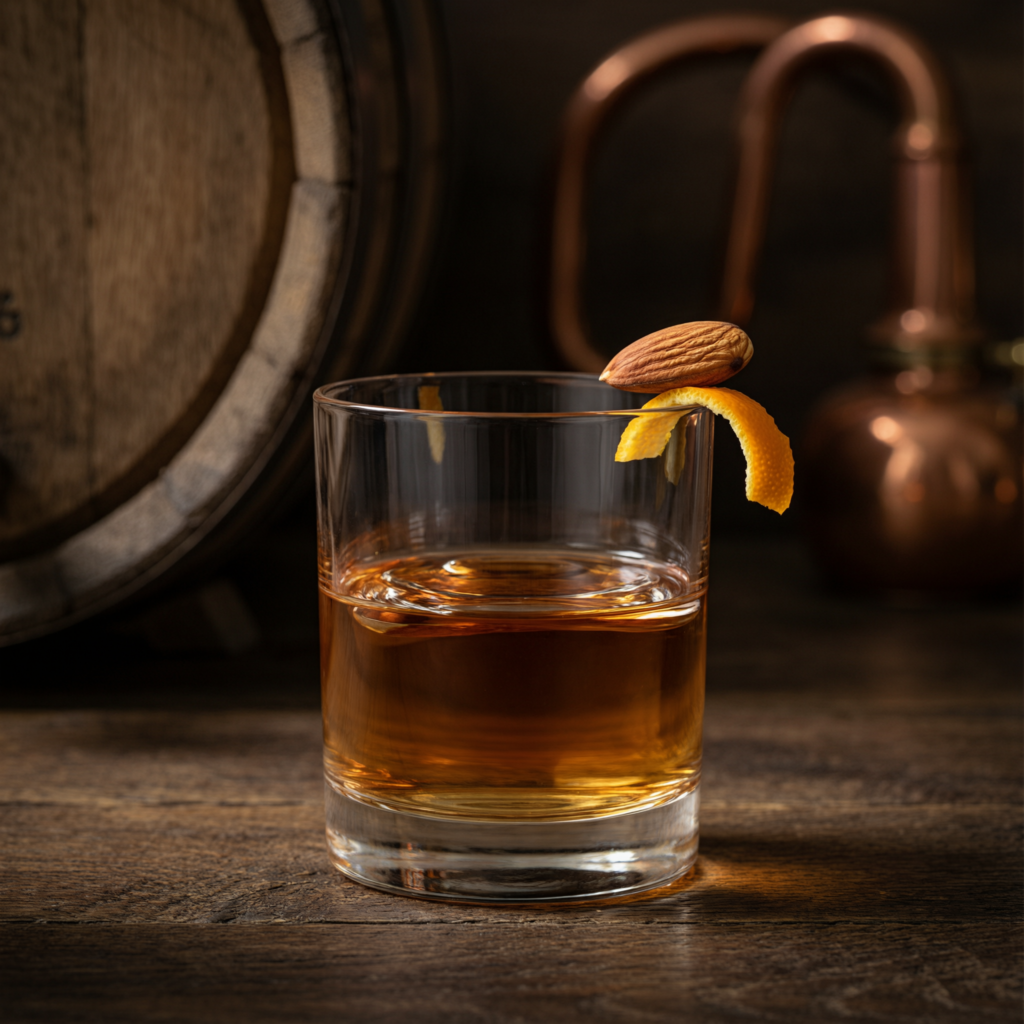
The Godfather is a two-ingredient cocktail that punches well above its simplicity. Scotch and amaretto, stirred over ice, nothing else. And yet the combination of smoky malt whisky and sweet almond liqueur produces something that tastes far more considered than the sum of its parts. If you have ever dismissed simple drinks as boring, this one will change your mind.
Understanding the Godfather Cocktail
The Godfather pairs Scotch whisky with amaretto, an almond-flavoured Italian liqueur. The proportions matter, but they stay flexible. The classic ratio runs anywhere from 2:1 to 4:1 Scotch to amaretto, depending on how sweet you like it. Stirred, not shaken, served over ice in a rocks glass.
This is a strong drink. Even after dilution from stirring, it sits somewhere around 25 to 30% ABV, which means you sip it slowly. That strength is part of the appeal: the amaretto softens the Scotch without hiding it, and the result is rich enough to replace a dessert course.
What makes the Godfather worth your time is how much room it leaves for personal preference. Add more amaretto for sweetness, less for a drier, malt-forward drink. Swap the base spirit and you get an entirely different cocktail, which is exactly where the variations come in.
The cocktail’s origins are murky. Most accounts trace it to the early 1970s, around the time Francis Ford Coppola’s The Godfather film hit theatres, and the drink likely borrowed its name from that cultural moment rather than the other way around. It was codified by the International Bartenders Association and has stayed in rotation ever since.
Essential Ingredients Breakdown
Two ingredients. That’s the whole list. But both deserve attention.
The Scotch
A blended Scotch is the traditional base, and for good reason. Blends like Famous Grouse, Dewar’s, or Monkey Shoulder bring honey, vanilla, and a hint of smoke that complement the almond without competing with it. (Note: if you’re particular about spelling, the difference between whisky and whiskey matters more than you’d think. We break it down in our guide to whisky versus whiskey.)
If you want more body, a Speyside single malt like Glenfiddich 12 or The Glenlivet Founder’s Reserve adds fruit and oak. Go peated, something like Laphroaig 10 or Ardbeg 10, and the cocktail takes on a campfire edge that pairs surprisingly well with the almond sweetness.
The Amaretto
Amaretto is an Italian liqueur flavoured with almonds, apricot kernels, or both. Disaronno is the most widely available and the default choice for most bartenders: sweet, rounded, easy to find at any LCBO. If you want something drier and more complex, Luxardo Amaretto brings a bitter-almond depth that keeps the drink from tipping into cloying territory.
Step-by-Step Preparation Guide
Here’s the recipe, scaled for a single serving:
- Fill a mixing glass or sturdy tumbler about two-thirds full with ice.
- Pour in 60 mL (2 oz) of Scotch whisky.
- Add 15 to 30 mL (one-half to 1 oz) of amaretto, depending on how sweet you want it. Start with 15 mL and adjust next time.
- Stir steadily for about 20 seconds, until the outside of the glass frosts and the liquid is well chilled.
- Strain into a rocks glass over a large ice cube, or serve it straight up if you prefer.
That’s the whole process. No shaker required, no garnish needed. A twist of orange peel is the one optional flourish worth considering, since the citrus oils lift the almond and smoke.
If you’re building out a home bar and want more stirred classics like this one, our guide to whisky cocktails you can make at home covers the rest of the shortlist.
Choosing the Perfect Scotch
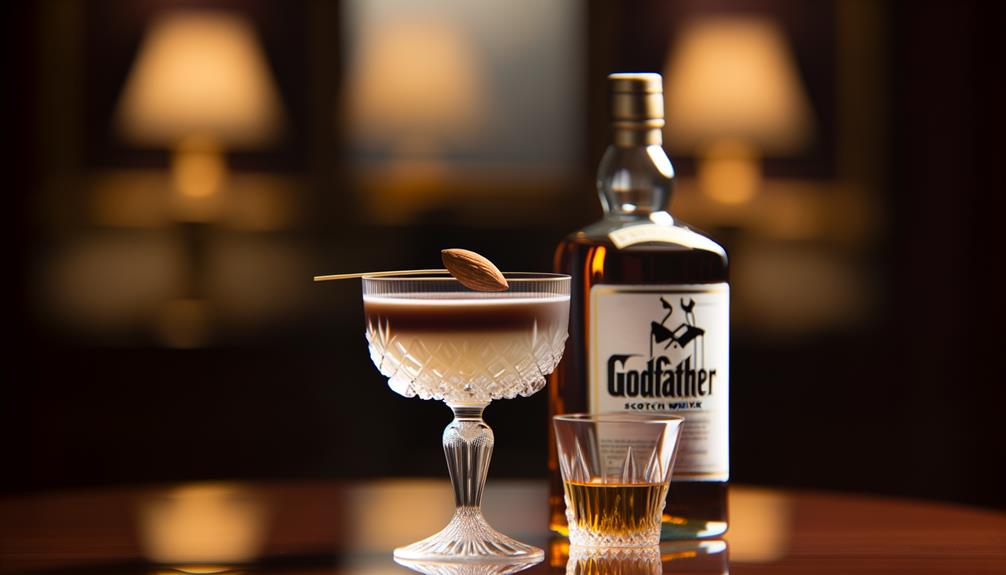
The Scotch you choose sets the direction of the whole drink. Here’s a rough guide:
| Type | Flavour profile | Bottle to try |
|---|---|---|
| Blended Scotch | Honey, vanilla, gentle smoke | Monkey Shoulder or Dewar’s 12 |
| Speyside single malt | Orchard fruit, oak, toffee | Glenfiddich 12 or The Glenlivet Founder’s Reserve |
| Peated single malt | Smoke, brine, medicinal edge | Laphroaig 10 or Ardbeg 10 |
For a first attempt, stick with a blended Scotch. It’s forgiving, inexpensive, and lets the amaretto do its job. Once you’ve found your preferred ratio, branch out. A Speyside malt makes the drink fruitier; a peated malt turns it into something closer to a smoky Old Fashioned. (Note: if you want to stock a shelf worth exploring, our piece on kickstarting your whisky collection is a good place to start.)
Exploring Godfather Variations
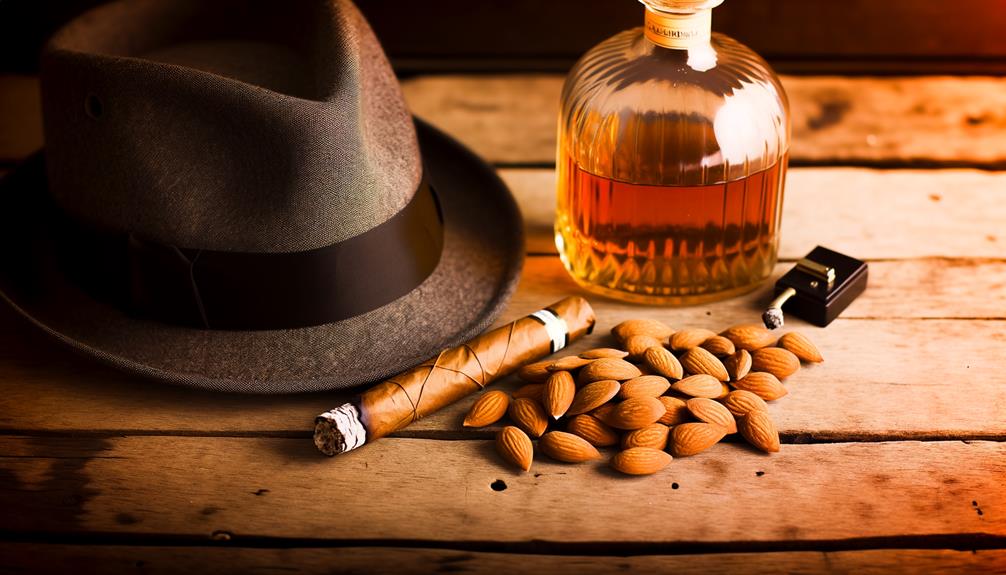
The two-ingredient format makes the Godfather easy to riff on. A few variations worth trying:
- Godchild: swap the amaretto for cream, or half cream and half amaretto. Softer, dessert-like, dangerously drinkable.
- Godmother: replace the Scotch with vodka. Cleaner, colder, lets the amaretto take centre stage.
- The Boss: use bourbon instead of Scotch. The vanilla and caramel notes in bourbon pair naturally with almond.
- Smoky Godfather: build it on a peated Scotch like Laphroaig. The smoke-and-almond contrast is the whole point.
There’s also a Canadian twist worth considering. Swap the Scotch for a Canadian whisky like JP Wiser’s Deluxe or Forty Creek Barrel Select, and the drink takes on a rye-spiced, orchard-fruit character that’s distinctly ours. Canadian whisky tends to be lighter and smoother than Scotch, so you may want to reduce the amaretto slightly to keep things balanced. If you’re new to what makes domestic bottles tick, our primer on what Canadian whisky actually is covers the category, and the Canadian whisky scene piece rounds up the producers worth watching.
However you take it, the Godfather rewards experimentation. Start with the classic ratio, taste, and adjust. The best version is the one you’ll actually make again.