


During Prohibition, Americans crossed the border or ducked into speakeasies for a drink, and bartenders on both sides of the line kept mixing. One cocktail that came out of that era is the Scofflaw, a sharp, fruity rye drink built on dry vermouth, lemon, and grenadine. It tastes brighter than most Prohibition-era cocktails, and it carries a name with a real story behind it.
Where the Scofflaw Came From
The word “scofflaw” was coined in 1924, when the Boston Herald ran a contest to find a term for people who openly flouted Prohibition. The winning entry, “scofflaw,” caught on fast. Bartenders at Harry’s New York Bar in Paris, a famous expat hangout run by Harry MacElhone, mixed a drink to match the mood and named it after the new word. The recipe appeared in MacElhone’s ABC of Mixing Cocktails, one of the key bar books of the era.
The original spec called for rye or Canadian Club whisky, French vermouth, lemon juice, and grenadine. That Canadian Club option is worth a nod. Canadian rye was flowing south across the border throughout Prohibition, and it filled more American glasses during the dry years than just about any other whisky. For a Canadian reader, that makes this cocktail feel less like a museum piece and more like a drink with roots you can trace. If you want to dig into that history, our piece on the Canadian whisky scene covers how the industry built itself during and after those years.
What You Need
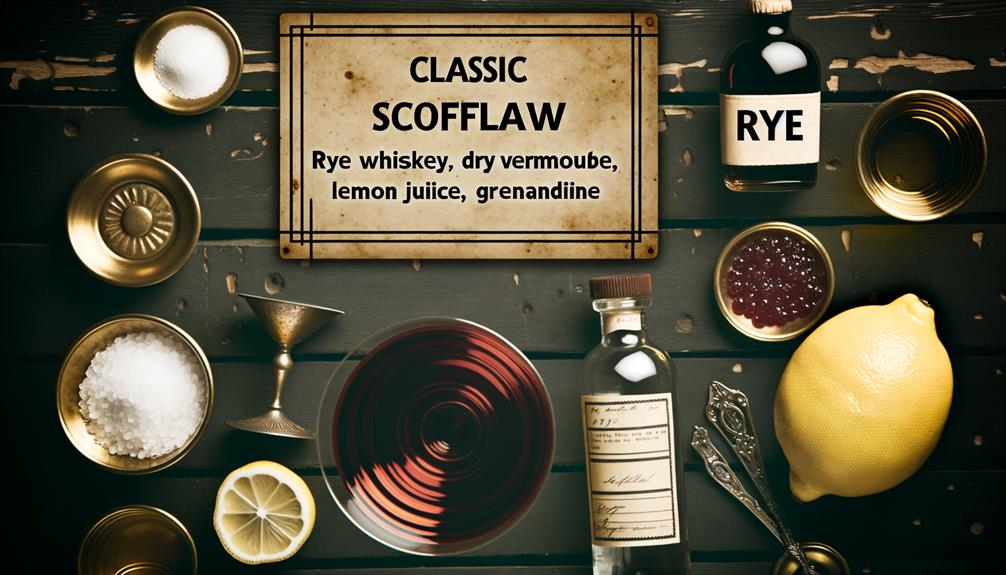
The Scofflaw is a short list of ingredients, which means each one has to earn its place. Here is the spec I use:
| Ingredient | Amount |
|---|---|
| Rye whisky | 2 oz (60 mL) |
| Dry vermouth | 1 oz (30 mL) |
| Fresh lemon juice | 3/4 oz (22 mL) |
| Grenadine | 1/2 oz (15 mL) |
| Orange bitters | 1 dash |
A few notes on the ingredients:
- Rye whisky. Canadian rye works beautifully here. Something like JP Wiser’s Deluxe or Crown Royal Northern Harvest brings the soft spice and vanilla that balance the grenadine. American rye whiskey (with the “e”) will give you a bolder, more peppery drink. Either is correct; they just steer the cocktail in different directions. If you are unsure about the spelling split, our whisky or whiskey explainer sorts it out.
- Dry vermouth. Use a fresh bottle. Vermouth oxidizes quickly once opened, and stale vermouth will flatten the whole drink. Keep it in the fridge and use it within a month or two.
- Lemon juice. Freshly squeezed, no exceptions. Bottled juice has a cooked, flat taste that will show through.
- Grenadine. This is where most people go wrong. Cheap grocery-store grenadine is mostly high-fructose corn syrup and red dye. A pomegranate-based grenadine, store-bought or homemade, makes a real difference. You want fruit, not candy.
- Orange bitters. One dash. It ties the citrus and the spice together without announcing itself.
How to Make It

This is a shaken cocktail, not a stirred one. The citrus juice needs the aeration and chill that shaking provides.
- Fill a cocktail shaker with ice. Add the rye whisky, dry vermouth, lemon juice, grenadine, and orange bitters.
- Shake hard for about 12 to 15 seconds, until the shaker is frosty and too cold to hold comfortably.
- Double-strain into a chilled coupe or cocktail glass. A Hawthorne strainer plus a fine mesh strainer catches the ice shards and pulp.
- Garnish with a lemon twist or an orange twist, expressed over the surface of the drink so the oils land on top.
The result should be a clear, rosy-pink drink with a sharp citrus nose from the garnish. If it tastes too tart, add another teaspoon of grenadine and shake again. Too sweet? A little more lemon. Adjust in small increments.
Garnish and Presentation

The garnish on a Scofflaw is functional, not decorative. A citrus twist expressed over the drink adds aromatic oils that the nose picks up before the first sip. Here is how to do it well:
- Cut a wide strip of peel, about two inches long and an inch wide, using a vegetable peeler or a sharp paring knife. Try to leave the white pith behind, since it is bitter.
- Express it over the glass. Hold the peel skin-side down over the surface of the drink, then squeeze the ends toward each other. You will see a fine mist of oil land on the cocktail. Rub the peel around the rim and drop it in, or discard it.
- Keep it simple. A single twist is all this drink needs. A cherry or a fruit skewer would fight the clean lines of the coupe.
Variations Worth Trying

Once you have the base recipe down, there are a few directions you can take it:
- Bourbon instead of rye. Bourbon makes a rounder, sweeter drink. It loses some of the spicy edge but gains vanilla and caramel notes. A good pick if you find rye too aggressive.
- A longer build. Add a splash of club soda (about an ounce) after straining, over fresh ice in a highball glass. This turns the Scofflaw into a tall, refreshing highball for warm weather.
- Homemade grenadine. Simmer equal parts pomegranate juice and sugar until the sugar dissolves, then cool and add a teaspoon of orange blossom water if you have it. Keeps for about two weeks in the fridge. The difference in flavour and colour is immediate.
- Aged version. Batch the ingredients (hold the bitters) and age the mix in a small oak barrel or with oak spirals for three to four weeks. The oak rounds out the citrus and adds a gentle tannin. This is a fun project if you are into barrel work, and our barrel investing guide explains the broader appeal of cask-aged spirits.
If the Scofflaw has you in a mixing mood, our roundup of top homemade whisky cocktails has plenty more recipes to work through. And if you want to understand why Canadian rye became the backbone of so many of these drinks, start with our guide to what Canadian whisky actually is.