

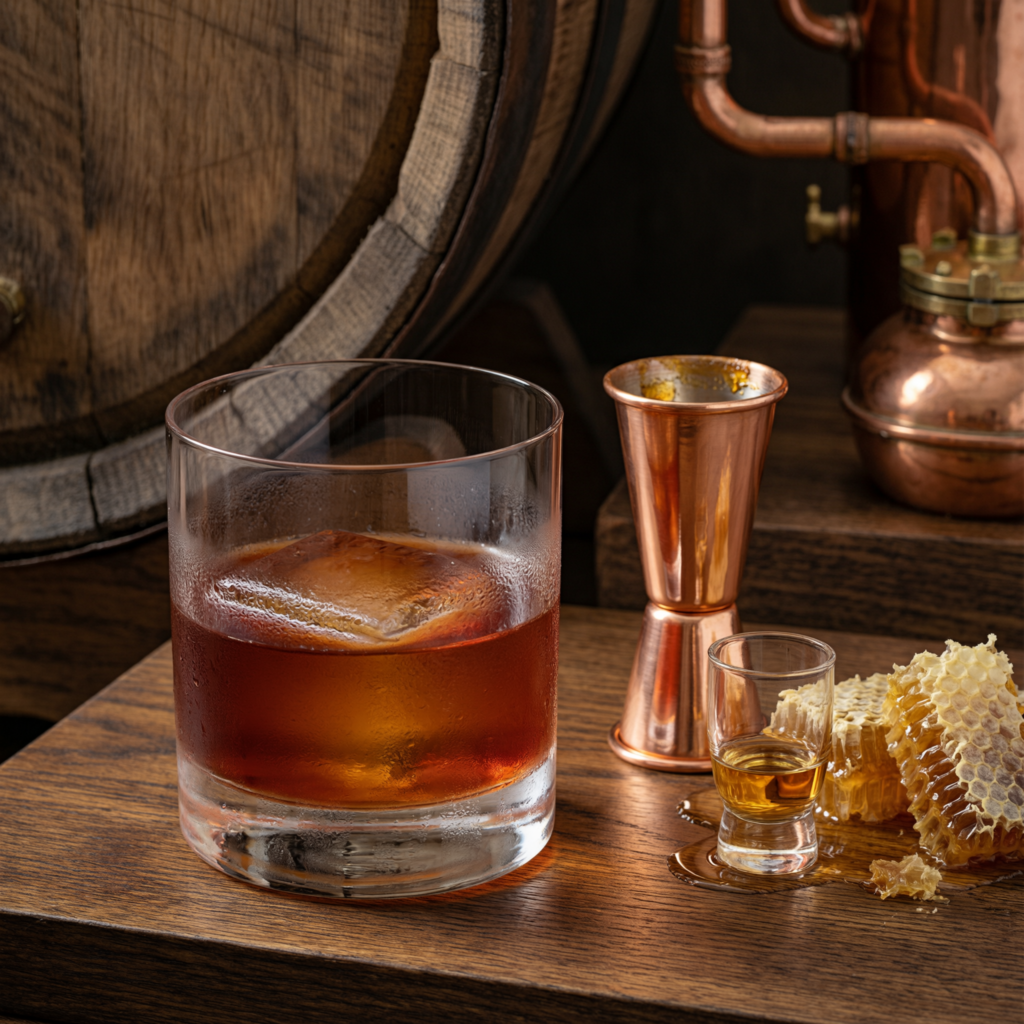
The first time I made a Rusty Nail, I undersold it. Two ingredients, stirred over ice, no shaker drama. It felt too simple to be any good. Then I took a sip and understood why people have been ordering this drink for close to ninety years. Scotch and Drambuie, working together, land somewhere neither reaches on its own: smoky, honeyed, a little herbal, and properly warming.
It now sits near the top of my short list of home-made whisky cocktails, the one I make when I want something quick that still feels considered. Here is how I build it, and how to bend it toward your own taste.
Why the Rusty Nail Endures
Nobody can pin down the Rusty Nail’s birthplace for certain. You will often see 1937 cited as the year it was first stirred, though the story is fuzzy. What is not fuzzy is the 1960s, when the drink caught fire in New York and New Orleans bar rooms. Frank Sinatra and the Rat Pack were reportedly fans, and that association stuck. For a cocktail built on just two pours, it has carried a surprising amount of glamour.
Because it is built on Scotch, this is firmly a whisky cocktail, not a whiskey one. The spelling split trips people up more than it should; our guide to whisky versus whiskey sorts out which spelling belongs to which country.
A Rusty Nail Recipe That Actually Works
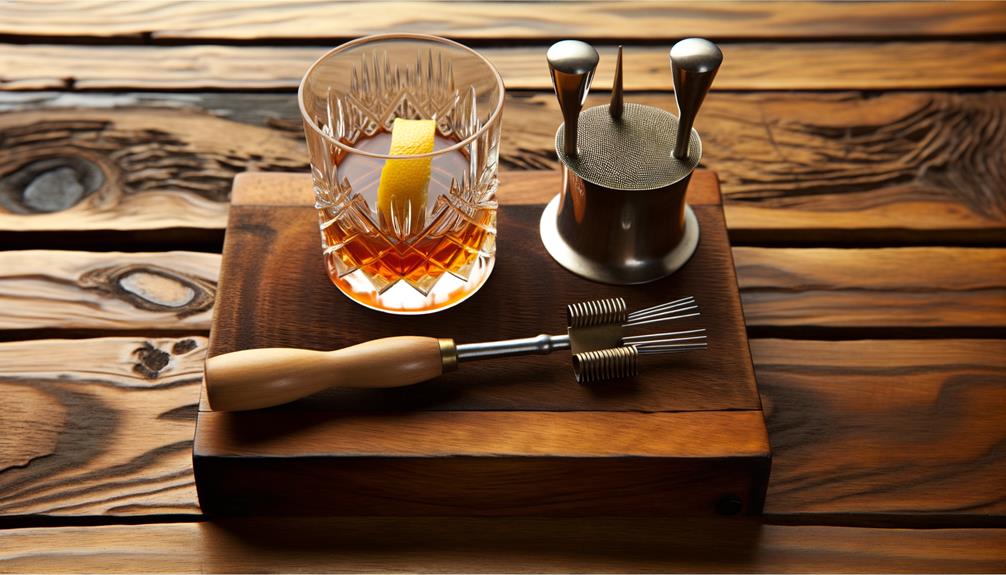
The ratio I keep returning to is two parts Scotch to one part Drambuie. It gives you the honey without turning the drink into dessert. Scotch must be bottled at a minimum of 40% ABV (80 proof) by law, so even an everyday bottle brings real strength, and the liqueur softens the edge without hiding it.
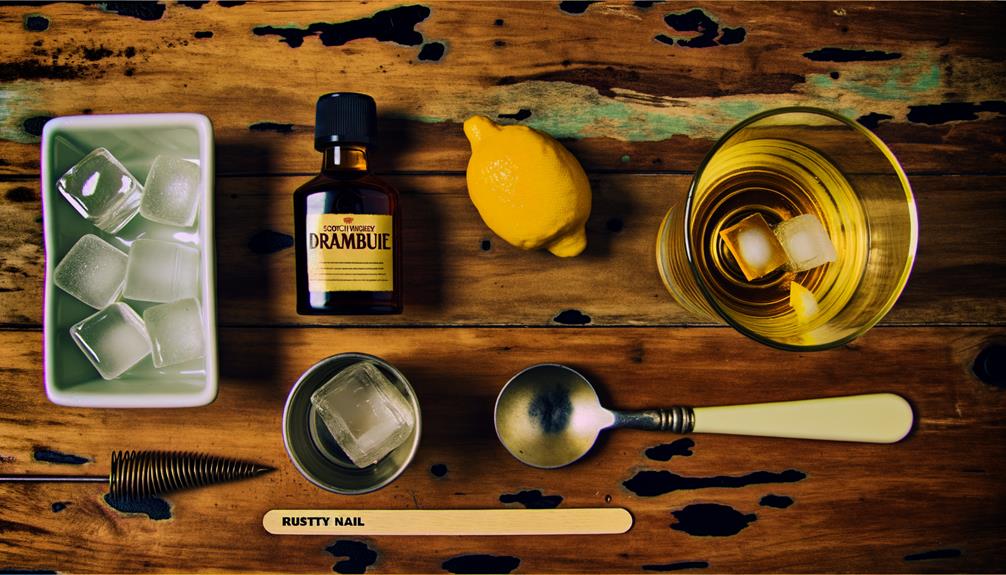
What you need
- 50 ml (1 3/4 oz) blended Scotch, or a lighter single malt
- 25 ml (7/8 oz) Drambuie
- One large ice cube
- A twist of lemon peel to finish
How to make it
- Pour the Scotch and Drambuie into a mixing glass or stirring tin.
- Fill with ice and stir for 20 to 30 seconds, until the outside of the glass turns cold. Stirring, not shaking, keeps the drink clear and silky rather than cloudy.
- Strain into a rocks glass over one large cube.
- Express the lemon peel over the surface, rub it around the rim, and drop it in.
Stir, do not shake. Both ingredients are straight spirits, so there is nothing to aerate; you want them chilled and lightly diluted, not frothed. The big cube matters too, because it melts slowly and keeps the last sip from going watery.
Essential Ingredients, Broken Down
| Ingredient | What it does |
|---|---|
| Scotch whisky | The backbone: smoky, malty, dry |
| Drambuie | Heather honey and spice sweetness that rounds the Scotch out |
| Large ice cube | Chills and dilutes slowly, keeping the drink intact |
| Lemon peel | A lift of citrus oil on the nose |
| Rocks glass | Short and wide, made for slow sipping over ice |
Drambuie is the part most people know least. It is a Scottish liqueur built on a Scotch base and flavoured with heather honey and a blend of herbs and spices the maker keeps closely guarded. It comes from the Isle of Skye, and it is what turns an ordinary pour of Scotch into something softer and more aromatic. A little goes a long way. Pour too much and the drink turns cloying fast.
Choosing the Right Scotch

The Scotch you pick steers the whole drink. My advice is to leave the peatiest, priciest bottle on the shelf. Drambuie will wrestle a heavy Islay malt, and neither side wins.
- A good blended Scotch (the classic call). Famous Grouse or Dewar’s White Label was practically designed for this. A blend has the body to stand up to the liqueur and the softness to fold in clean.
- A lighter single malt. Glenfiddich 12 is my pick. It is fruity and gentle, and it lets a little orchard sweetness through the honey. If you want to know what that distillery does and why it tastes the way it does, our Glenfiddich distillery profile is worth a read.
- A Speyside step up. Glenlivet 12 or Aberlour 12 add more depth without the smoke that clashes with the honey.
Skip anything heavily peated. Laphroaig or Ardbeg will bulldoze the Drambuie and leave you with a smoky, confused glass. Save those for neat pours on a cold night.
Dial In Your Ratio
Once you have made it a couple of times, adjust to taste. The ratios behave roughly like this:
| Scotch to Drambuie | Character |
|---|---|
| 2:1 (50 ml to 25 ml) | The balanced standard; honey and smoke in check |
| 3:1 | Drier and more spirit-forward; suits a fruity single malt |
| 4:1 | Barely sweet, with only a trace of honey |
| 1:1 | Very sweet and dessert-like; worth trying once, rarely a keeper |
A Canadian Turn
Scotch is the traditional base, but Canadian rye makes a genuinely good Rusty Nail, and it is the version I make more often than I should. Canadian whisky runs lighter and a little spicier than Scotch, which sits nicely against the honey. Try it with Forty Creek Barrel Select, Crown Royal Northern Harvest Rye, or J.P. Wiser’s Deluxe. If you are new to what sets the Canadian style apart, our primer on what Canadian whisky actually is covers the basics, and the wider Canadian whisky scene piece makes a good follow-up.
With a rye base, I nudge the ratio a touch drier, closer to 2.5:1, so the spice stays in front of the sweetness.
The Rusty Nail does not ask for much: two bottles, ice, and half a minute of stirring. That restraint is exactly why it has outlasted so many flashier drinks. Make it once with a decent blend, then again with a single malt, and you will feel the difference quickly. Then decide which version earns the rocks glass on your own shelf.