

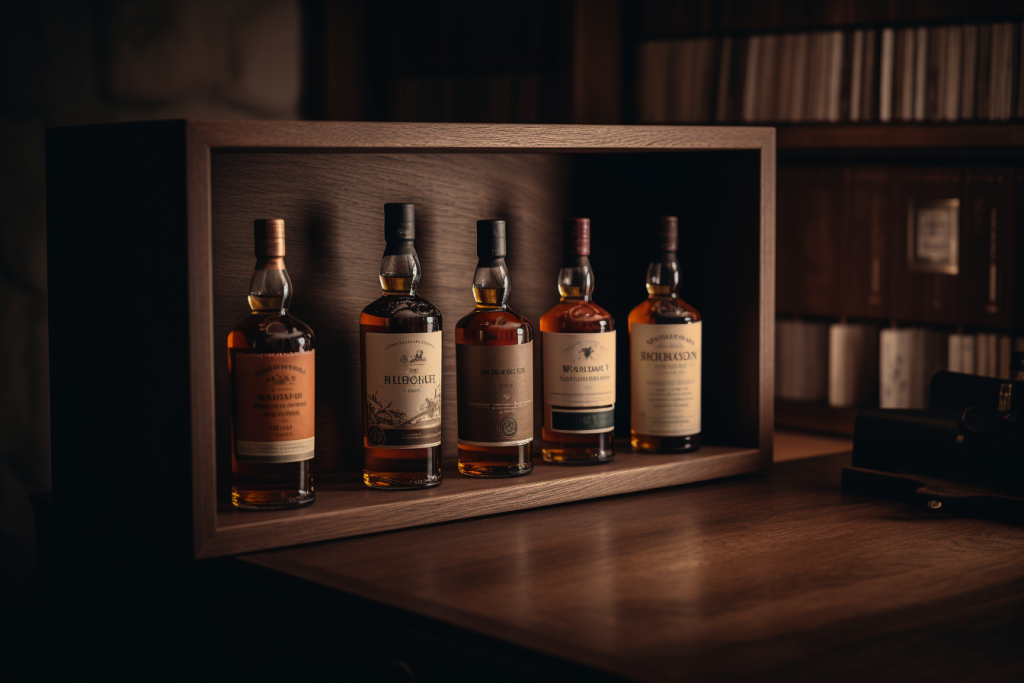
I’ll admit it: I’ve caught the whisky bug, and if you’re reading this, you probably have too. It’s easy to see why. There’s something magnetic about a good dram, from the history in the glass to the people you end up swapping bottles with. And you’re far from alone in it. There’s a large, generous community of collectors out there, and most of them are happy to point a newcomer in the right direction.
The hard part is starting. When I began, I stood in front of a liquor store shelf and felt completely lost. Hundreds of bottles, a dozen countries, price tags ranging from pocket change to a small mortgage. So let’s make this simpler. Here’s a practical way to build a whisky collection you’ll actually enjoy, without draining your bank account or buying bottles you’ll never open.
Figure Out What You Actually Like First
The first step has nothing to do with buying. It’s tasting. You can’t build a collection you care about until you know which styles make you sit up and pay attention.
Spend a little time figuring out your own palate before you spend serious money. Do you lean toward the smoky, peaty Islay Scotches, or do you prefer the softer, honeyed sweetness of a Speyside malt? Do you like the clean grain character of a Canadian rye, or the bold vanilla and oak of a Kentucky bourbon? There’s no correct answer. The point is to find out what you reach for, because a collection built on your real tastes will always beat one built on someone else’s hype list.
Tasting events are the cheapest way to learn this. Most cities run them through the fall and winter, and you can sample a dozen drams for the price of a single bottle. You’ll pick up how different distilleries work, what ageing does to flavour, and which regions speak to you. If you want a structured way to think about what you’re tasting, our guide to what makes Canadian whisky distinct is a good place to start, especially since so many of us begin with the bottles we grew up around.
As your taste sharpens, you may start noticing older bottles and limited runs. That’s natural. Longer ageing tends to bring deeper, more layered flavour, and those bottles often hold their value well. If that side of the hobby starts pulling at you, it’s worth reading up on how whisky investing actually works before you commit real money to it.
Set a Budget You Can Live With
A good collection is built slowly, one bottle at a time, so set a number you’re comfortable spending each month or each quarter and stick to it. The goal is steady progress, not a single big splurge you’ll regret.
It helps to decide what you’re collecting for. Are you chasing rare releases? Focusing on one region or distillery? Or just buying good bottles to drink and learn from? Those are very different budgets, and knowing yours up front keeps every purchase deliberate.
Here’s a rough idea of what entry-level bottles cost at Canadian provincial retailers like the LCBO, SAQ, and BCLDB as of 2024 to 2025. Treat these as ballpark shelf prices, since they move with provincial markups, taxes, and availability:
- Canadian whisky (Crown Royal Deluxe, J.P. Wiser’s Deluxe, Forty Creek Barrel Select): roughly $25 to $45 CAD. This is the best value starting point, full stop.
- Irish whiskey (Jameson, Tullamore D.E.W.): around $35 to $50 CAD.
- Kentucky bourbon (Buffalo Trace, Maker’s Mark): roughly $40 to $60 CAD, though popular allocations can run higher.
- Japanese whisky (Suntory Toki, Nikka From the Barrel): about $55 to $75 CAD when you can find them.
- Entry single malt Scotch (Glenfiddich 12, Glenlivet 12): roughly $60 to $80 CAD.
- Mid-tier Scotch (Highland Park 12, Talisker 10): around $70 to $95 CAD.
You can build a genuinely interesting first half-dozen bottles for well under $300 CAD if you lean on Canadian and Irish expressions and add one Scotch and one bourbon for contrast. Prices are higher in some provinces and lower in others, so check your local board. And remember that a $40 bottle you love is worth more to your collection than a $200 bottle you bought on reputation and never finish.
Starter Bottles Worth Buying First
A well-rounded first collection covers a few different regions and flavour profiles so you can compare them side by side. Here’s a sensible spread to aim for:
- A Canadian rye for everyday drinking and to understand the style closest to home.
- A Speyside single malt (Glenfiddich 12 or Glenlivet 12) as your baseline Scotch.
- A peated Scotch (Laphroaig 10 or Ardbeg 10) to find out whether you love smoke or hate it.
- A bourbon (Buffalo Trace) for that sweet, oaky, corn-driven profile.
- A Japanese whisky (Suntory Toki) to taste a cleaner, more delicate approach.
- An Irish whiskey (Jameson Black Barrel) for smooth, triple-distilled easy drinking.
Buying across regions like this teaches you more than any book can. You start to understand why a coastal Islay malt tastes nothing like a Highland one, and why Canadian whisky has that soft, mixable grain quality. Tasting events help here too, since you can try before you commit a full bottle’s worth of money.
One warning: don’t get swept up in chasing rare allocations before your palate is ready. A hyped bottle that doesn’t match your taste is a disappointment, not a trophy. Build around what you genuinely enjoy, and let the collectible pieces come later. Our rundown of the modern Canadian whisky scene is a useful guide to the bottles worth seeking out closer to home.
Storage and Display, Done Right
Think of your collection like a small indoor garden. Each bottle needs the right conditions to stay at its best, and a little care now saves you ruined labels and flat-tasting whisky later.
The good news is that whisky is far more forgiving than wine. Still, a few basics matter:
- Keep the temperature steady. Aim for a consistent 15 to 18 degrees Celsius. Swings in temperature make the liquid expand and contract, which can push the cork and let air in. A cool interior room works fine; you don’t need a special cabinet to start.
- Keep it out of sunlight. UV light fades labels and can flatten flavour over time. Store bottles away from windows, radiators, and appliances that throw heat.
- Store upright. Unlike wine, whisky should stand up. High-proof spirit will eat a cork if it sits in contact with it for years.
- Watch humidity. Around 50 to 70 percent relative humidity keeps corks from drying out and labels from peeling. A simple hygrometer from a hardware store lets you keep tabs on it.
- Display carefully. If you want your bottles on show, a cabinet with UV-filtering glass and low-heat LED lighting protects them while still looking sharp.
Collecting isn’t only about acquiring bottles. It’s about keeping them in good shape so they taste their best when you finally open them, and so they hold their value if you ever sell. A well-kept collection also earns a little respect from the friends who come over to admire it.
Growing the Collection With Better Finds
Once the basics are in place, the fun begins. This is where you start adding the bottles that give your collection personality, and where you start meeting other people who are just as obsessed as you are.
A few categories worth keeping an eye on:
| Category | Why It Earns a Spot |
|---|---|
| Rare and limited releases | Small-batch bottlings and special editions from respected distilleries often taste great and hold or gain value over time. They’re the bottles people trade stories (and trades) over. |
| International whisky | Great whisky isn’t only Scottish or Irish anymore. Japan, Taiwan, India, and Australia are all producing serious bottles now, and a few of them on your shelf show just how broad the category has become. |
| Cask-strength bottlings | Bottled straight from the barrel with no dilution, these pack serious flavour and aroma. Add a splash of water and they open up in ways standard bottlings don’t. |
If you start eyeing older, pricier bottles, learn how the secondary market works before you bid. Our guide to buying at whisky auctions walks through how to bid without overpaying, and our piece on investing in rare whisky and casks covers when a bottle stops being a drink and starts being an asset. Either way, share the good stuff. A rare bottle opened with friends beats one gathering dust in a cabinet.
Frequently Asked Questions
How do I know a bottle is genuine before I buy it?
Fakes are rare at the everyday level, but they do show up in the secondary market, so it pays to be careful. Buy from reputable retailers and licensed auction houses, and be suspicious of deals that look too good to be true on a hyped bottle. Check the fill level, the label print quality, the capsule, and any tax strips or import stickers. For older or expensive bottles, compare your listing against known examples on a database like Whiskybase before you pay. Joining a collectors’ forum also helps, since experienced members will often vet a listing for you.
Where can I connect with other collectors?
Online communities are the easiest entry point. Reddit’s r/whisky and r/scotch are active and generally welcoming, and Whiskybase doubles as both a database and a forum. Locally, look for tasting groups and whisky clubs in your city; most run regular meetups. Auctions are another way to meet people, since bidders and sellers often share tips between lots. The connections you make there tend to outlast any single bottle.
Are there events or festivals worth attending?
Absolutely. Watch for whisky festivals and tasting events in your region, especially in the fall. They’re a good way to try bottles you’d never buy blind, talk to brand ambassadors, and meet other collectors. Many provinces also run whisky-focused events through their liquor boards. Pair those with online auctions, where you can hunt for discontinued releases you missed in stores. Between the two, you’ll rarely run out of new things to try.
How do I track my collection’s value, and is it really an investment?
Most collections are a hobby first and an investment second, so treat any financial upside as a bonus rather than the goal. That said, you can keep tabs on value by tracking recent sold prices on Whiskybase or auction houses like Bonhams and Sotheby’s, and by keeping your original receipts and boxes. Insure anything genuinely valuable through your home insurer or a specialist policy, and store it properly so condition holds up. For a deeper look at when collecting crosses into investing, see our guide to the fundamentals of whisky investing.
Are there legal rules I should know about?
A few. Alcohol laws vary by province, so check local rules around buying, possessing, and shipping spirits, especially if you purchase across provincial lines or from international auctions. Import duties and provincial markups can add a lot to the cost of a bottle bought abroad. And if you ever resell, know the rules in your jurisdiction; in most of Canada, resale of alcohol is tightly regulated and generally restricted to licensed channels. A little homework here keeps an enjoyable hobby from turning into an expensive mistake.
Final Thoughts
Building a whisky collection is really just a long, enjoyable education. You learn what you like, you meet people who like it too, and you end up with a shelf of bottles that each carry a story. Start with the basics, spend within your means, store everything properly, and let the collection grow at whatever pace suits you. The best collections aren’t the most expensive ones. They’re the ones that get opened, shared, and refilled. Slainte.