

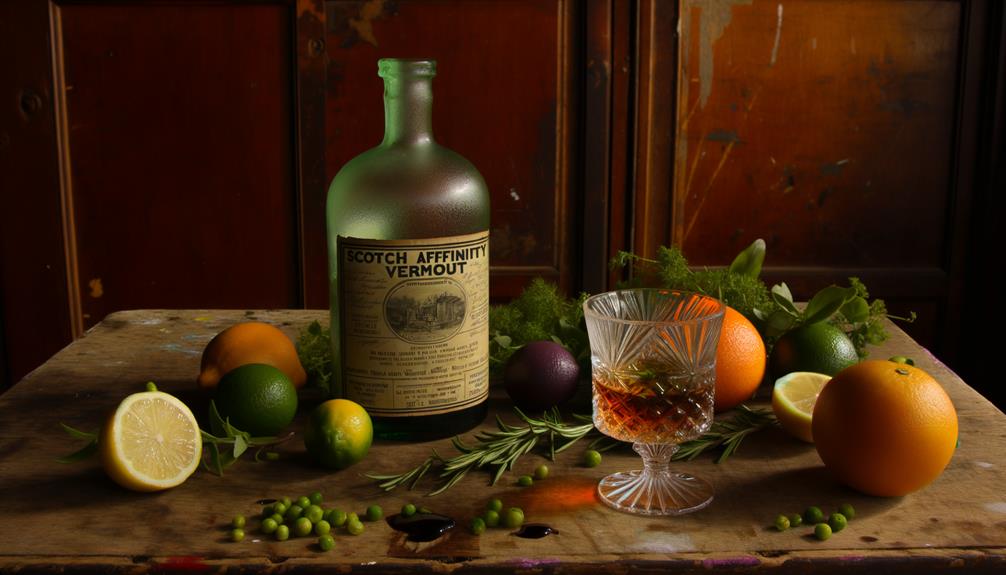
The Affinity is the Manhattan’s smokier, quieter cousin: Scotch whisky, sweet vermouth, and dry vermouth in roughly equal measure, stitched together with a few dashes of bitters and stirred until it goes silky. It dates from an era when a cocktail meant three bottles and some patience, and it has held up better than most things from that period.
If your cabinet already holds Scotch, both styles of vermouth, and a couple of bitters, you’re one stir away from one of the best short drinks of the classic age. Here’s where it comes from, what it tastes like, and how to build it properly.
Where the Affinity Comes From
As far as the printed record goes, the Affinity first appears around 1907, when William T. “Cocktail Bill” Boothby included it in The World’s Drinks and How to Mix Them, his San Francisco bartender’s manual. His version called for Scotch, Italian (sweet) vermouth, French (dry) vermouth, and both orange and Angostura bitters, chilled with ice and strained into a cocktail glass. The recipe spread quickly through the drinks literature of the period, and when Harry Craddock put out The Savoy Cocktail Book in 1930, the Affinity was in it: equal parts Scotch, sweet vermouth, and dry vermouth, a dash each of Angostura and orange bitters.
The name is not subtle, but it fits. Scotch and fortified wine genuinely like each other: the wine rounds off the whisky’s grain-and-smoke edge, and the whisky gives the vermouth a backbone it lacks on its own. Splitting the vermouth sweet and dry puts richness on one side and lift on the other, which is why bartenders call this the “perfect” build. Do the same thing to a Manhattan and it becomes a Rob Roy.
What the Affinity Tastes Like
The drink lands somewhere between a Manhattan and a dry martini. The blended Scotch brings grain, toffee, and a thread of smoke. Sweet vermouth adds dried fruit, baking spice, and a soft, wine-like sweetness. Dry vermouth keeps the whole thing from going heavy, with a crisp, faintly floral edge. The bitters do the seasoning: orange up front, Angostura underneath, and a bar spoon of sugar syrup if you like it the traditional way.
Stirred and properly diluted, the finished drink sits around 22 to 25 percent alcohol, strong enough to sip slowly, soft enough to talk over. It’s an aperitif-weight cocktail with a Scotch backbone, which is a rarer combination than it sounds.
The Recipe
Makes one drink. Serve in a chilled coupe or Nick and Nora glass.
- 60 ml (2 oz) blended Scotch whisky
- 30 ml (1 oz) sweet vermouth (Italian: Carpano Antica Formula, Cocchi Vermouth di Torino, or Martini Rosso)
- 30 ml (1 oz) dry vermouth (French: Dolin Dry or Noilly Prat)
- 2 dashes orange bitters
- 1 dash Angostura bitters
- 1 bar spoon (5 ml) sugar syrup, optional, as the early recipes called for a touch of sugar
- Lemon twist or brandied cherry, to garnish
- Put the Scotch, both vermouths, the bitters, and the syrup (if using) into a mixing glass.
- Fill the glass two-thirds with ice and stir for 20 to 30 seconds. You want proper dilution: the drink should taste round, not like cold ingredients sitting next to each other.
- Strain into the chilled glass.
- Express the lemon peel over the surface to release its oils, drop it in (or use the cherry), and serve right away.
Stir, don’t shake. This is an all-spirits drink, and shaking turns it cloudy and roughs up the texture.
The Scotch choice matters more than you’d think
A soft, Speyside-heavy blend like Monkey Shoulder makes a gentle, easy-going Affinity. A blend with some island or Islay malt in it, Johnnie Walker Black Label being the obvious one, brings a streak of smoke that works surprisingly well against the Angostura. Skip heavily peated single malts as the base: Ardbeg or Laphroaig will steamroll the vermouths. If you want smoke, float a bar spoon of peated whisky on top instead.
And keep the vermouth in the fridge. It’s wine, and once opened it turns on you in a month or two. Flat, oxidised vermouth ruins this drink faster than any other mistake.
Variations Worth Trying
- Drier: build it with 45 ml dry vermouth and 15 ml sweet. This leans toward martini territory and lets the Scotch show through more.
- Richer: use Carpano Antica Formula as the sweet vermouth. It’s rounder and more vanilla-forward than standard rosso, and it stands up to smokier blends.
- Canadian: swap the Scotch for J.P. Wiser’s Deluxe or Crown Royal and you get a softer, rye-spiced version, with that vanilla-and-oak character sliding straight into the build. It’s not an Affinity in the strict sense anymore, but it’s very good. Our guide to what makes Canadian whisky its own thing explains why that profile works here.
- Split base: 45 ml Scotch plus 15 ml rye whiskey splits the difference, smoke on one side, spice on the other.
If this one opens the door, our round-up of whisky cocktails to make at home covers the rest of the standard kit.
Frequently Asked Questions
What cocktail is made from whiskey, sweet vermouth, and bitters?
That’s a Manhattan: American whiskey, usually rye, sweet vermouth, and bitters, stirred and served up with a cherry. Swap in Scotch and it becomes a Rob Roy. The Affinity sits in the same family, but it splits its vermouth sweet and dry.
What are vermouth and bitters, exactly?
Vermouth is a fortified wine scented with botanicals, with wormwood the signature one, along with citrus peel, spice, and herbs. Sweet vermouth (the “Italian” or rosso style) is richer and darker. Dry vermouth (the “French” style) is pale and crisp. Bitters are a concentrated botanical extract, closer to a seasoning than a drink. Angostura and orange bitters are the two bottles to own first.
What’s the difference between a Manhattan and a Rob Roy?
The base spirit. A Manhattan is built on American whiskey, usually rye, so it’s spicier and drier-edged. A Rob Roy is built on Scotch, which makes it softer and smokier. And yes, the spelling changes with the spirit: whisky for the Scotch drink, whiskey for the rye one.
What’s the best vermouth for whisky drinks?
For sweet vermouth, Carpano Antica Formula and Cocchi Vermouth di Torino are the standard recommendations, and worth the price. For dry, Dolin Dry is light and clean, Noilly Prat a little more assertive. Buy the small bottles, keep them refrigerated, and finish them within a couple of months of opening. That last habit matters more than which label you pick.
The Affinity rewards a little attention: fresh vermouth, a decent blended Scotch, thirty seconds of stirring. Get those right, and you’ll wonder why it ever left the standard repertoire.