

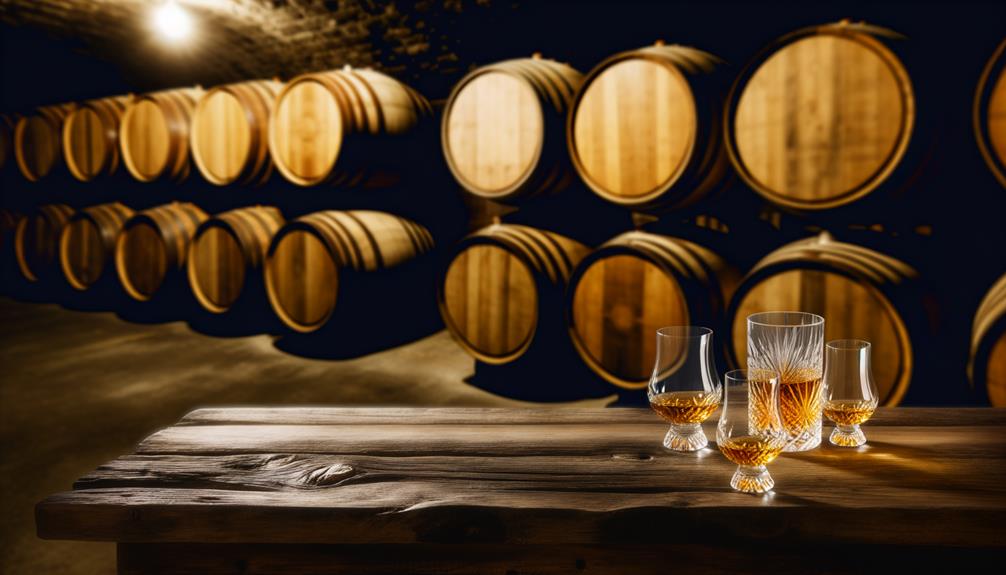
The spirit that comes off a still is clear, hot, and a little rough around the edges. It tastes like raw grain and promise. Everything you actually love about whisky, the amber colour, the vanilla, the dried fruit, the long oaky finish, happens after distillation, inside a wooden barrel.
Maturation is where a distillery’s raw new make turns into something worth collecting. The wood gives the spirit its colour and most of its flavour, and time rounds off the rough edges. This guide covers how the process works, why oak is the wood of choice, and what the cask does differently for bourbon, Scotch, Japanese malt, and Canadian whisky.
Understanding Whisky Maturation
Put new make spirit into an oak cask and three things start happening at once. The spirit extracts compounds from the wood. It slowly oxidises through the pores of the barrel. And a portion of it evaporates every year, which distillers call the angels’ share. All three reshape the liquid.
Distillers commonly estimate that the majority of a finished whisky’s flavour arrives during maturation rather than at the still. The still shapes the base character, but the cask decides whether you taste vanilla or sherry raisins, gentle spice or heavy tannin. That is why two distillates aged side by side in different barrels can end up tasting nothing alike.
The match between spirit and cask matters. A light, delicate spirit can be overwhelmed by an aggressive first-fill sherry butt, so many distilleries rest those in refill bourbon barrels or neutral hogsheads. A heavier, oilier distillate has the shoulders to carry a red wine barrique or a first-fill Oloroso cask. Getting the pairing right is one of the hardest-won skills in a whisky maker’s toolkit.
For the longer version of this story, our piece on whiskey ageing, barrels, and time walks through the whole arc from barrel to glass.
Why Oak Barrels Do the Heavy Lifting
Oak is not the only wood that can hold liquid, but it is the only one the whisky industry trusts, and for good reasons. Oak is strong enough to build a watertight cask from staves alone, with no glue or nails. It is porous enough to let the spirit breathe. And it is packed with flavour compounds that dissolve into alcohol over time.
Two species dominate the trade:
- American white oak (Quercus alba): high in vanillin and oak lactones, which read as vanilla, coconut, and sweet baking spice. Most of the world’s whisky matures in ex-bourbon barrels built from this wood.
- European oak (Quercus robur and Quercus petraea): denser and more tannic, with notes of dried fruit, clove, and dark chocolate. This is the backbone of sherry cask maturation in Spain.
Japanese distilleries add a third option, Mizunara oak, a slow-growing, famously leaky wood that brings sandalwood and incense notes to the spirit. It is temperamental and expensive, which is part of why Mizunara-aged bottles command such prices at auction.
Before a cask is filled, its interior is usually charred or toasted. Charring creates a thin layer of wood charcoal that filters harsh compounds out of the spirit, while heat breaks down the wood’s lignin and hemicellulose into the sugars and vanillin that whisky drinkers know so well. A heavier char pulls more colour and sweetness. A lighter toast keeps things subtle.
The Chemistry of Ageing
You do not need a lab coat to follow what happens inside a cask, but the process is genuinely chemical. Four things deserve attention.
Extraction
Alcohol is a good solvent. Over years it pulls sugars, tannins, lignin breakdown products, and residues from the barrel’s previous life, whether bourbon, sherry, or port, into the spirit. This is where most flavour is born.
Oxidation
Oxygen seeps through the wood’s pores and slowly converts harsh alcohols and sulphur compounds into softer, fruitier esters. A cask that has sat for a decade tastes rounder than the same spirit at year one, largely for this reason.
Evaporation
Barrels lose liquid every year, roughly two percent annually in Scotland’s cool, damp climate, and more in hotter regions like Kentucky. The angels get their share, and what remains grows more concentrated.
Seasonal movement
Wood expands in heat and contracts in cold, so the spirit is pushed into the staves in summer and drawn back out in winter. Each cycle deposits a little more wood character. Scotland’s mild swings mean slow, patient extraction. Kentucky’s hot summers and cold winters drive a faster, deeper cycle, which is one reason bourbon can taste mature at four or five years while a Speyside malt wants twelve or more.
How Different Styles Use the Barrel
Every whisky tradition writes its own rules for cask use, and the rules explain a lot about what ends up in the glass.
Bourbon must, by US law, age in brand new, charred American oak barrels. Fresh oak is aggressive, which is why bourbon picks up bold vanilla, caramel, and toasted coconut notes quickly. Distilleries like Buffalo Trace and Maker’s Mark work that new-wood sweetness into very different house styles. For the full picture of the category, our guide to American whiskey covers the rules.
Rye whiskey, built on a rye grain mash bill and aged in the same charred new oak, comes out spicier and drier. Canada has its own rye heritage. Despite the nickname, Canadian whisky does not have to be made mostly from rye grain, but houses like JP Wiser’s and Crown Royal have made rye-forward blends a national signature.
Scotch almost always matures in used casks, most often ex-bourbon barrels and sherry butts. Refill wood is gentler, which suits long, slow ageing and lets distillery character show through. Compare the honeyed fruit of a Glenfiddich aged mainly in ex-bourbon wood with the dark, raisin-heavy profile of a GlenDronach raised in Oloroso sherry casks. Same process, different wood, completely different drink.
Irish whiskey, usually triple distilled from malted and unmalted barley, favours used oak for a soft, mellow profile. Redbreast’s single pot still line is a good reference point for what ex-bourbon and ex-sherry wood can do at Midleton.
Japanese whisky borrows the Scottish playbook and then improvises. Suntory and Nikka age across a mix of ex-bourbon, ex-sherry, and Mizunara casks, then blend for balance. That layering is where much of Japanese whisky’s signature fruit-and-sandalwood character comes from.
Canadian whisky by law must age at least three years in small wood, meaning barrels under 700 litres, and most of it rests in used bourbon barrels, often with a finishing period in virgin oak, sherry, or wine casks. The result is a lighter, blendable style that has been getting steadily more ambitious. Forty Creek, Shelter Point, and the JP Wiser’s small batch program are good places to watch. If barrel economics interest you from the investment side, our whiskey barrel investing guide breaks down how cask ownership actually works.
Where Barrel Ageing Is Heading
The old customs are not going anywhere, but distilleries on both sides of the Atlantic are experimenting around the edges:
- Finishing casks: whisky started in ex-bourbon wood and finished in port, madeira, rum, or tequila barrels is now a standard release strategy rather than a curiosity.
- Smaller barrels and controlled climates: a handful of newer distilleries age in smaller casks or climate-controlled warehouses to speed extraction. The trade-off is depth, and the jury is still out on how these whiskies hold up at ten years and beyond.
- Wood sourcing and sustainability: good oak takes decades to grow, so cooperages and distillers are investing in managed forests and better cask recycling. Expect more talk about wood provenance on labels.
Cask experimentation also feeds the investment market. Rare single cask releases and full barrel purchases have become a real asset class, though it pays to know what you are buying before money changes hands. Our primer on investing in rare whiskey and casks covers the basics, and the spelling note in our whisky or whiskey explainer will keep your labels straight.
Frequently Asked Questions
What Is Whisky Maturation?
Maturation is the time whisky spends ageing in wooden casks after distillation and before bottling. The spirit extracts flavour and colour from the wood, oxidises slowly, and loses a little volume to evaporation every year. Age statements on labels, like 12 or 18 years, always refer to time in the barrel, never time in the bottle.
Can You Age Whiskey in a Barrel?
You can. Small barrels of two to five litres are easy to find, and a raw spirit or even a neutral base will pick up real barrel character in a matter of weeks. The catch is that small barrels extract very quickly, so taste often, and pull the spirit off the wood before it turns to liquid oak plank.
What Barrels Are Whisky Matured In?
Most of the world’s whisky matures in ex-bourbon barrels made from American white oak, with sherry butts and hogsheads the next most common. Beyond that, distillers use port pipes, rum casks, wine barriques, and, in Japan, Mizunara oak. American law requires bourbon to use brand new charred oak every time, which is why so many good barrels end up in Scotland and Canada for a second life.
What Is the Chemistry of Whiskey Maturation?
Think of it as slow extraction plus slow oxidation. Alcohol pulls sugars, vanillin, tannins, and colour out of the charred wood, while oxygen that seeps through the staves converts harsh compounds into softer esters. Heat speeds both reactions up, which is why the same spirit matures faster in a hot Kentucky rickhouse than in a cool Speyside dunnage warehouse.
Does Whisky Keep Ageing in the Bottle?
No. Once the spirit leaves the cask, maturation stops. A 12-year-old whisky bottled in 1990 is still a 12-year-old whisky today. Bottles can develop subtly with decades of storage, but that is slow oxidation through the closure, not ageing, and it is no reason on its own to pay a premium for an old bottling.