

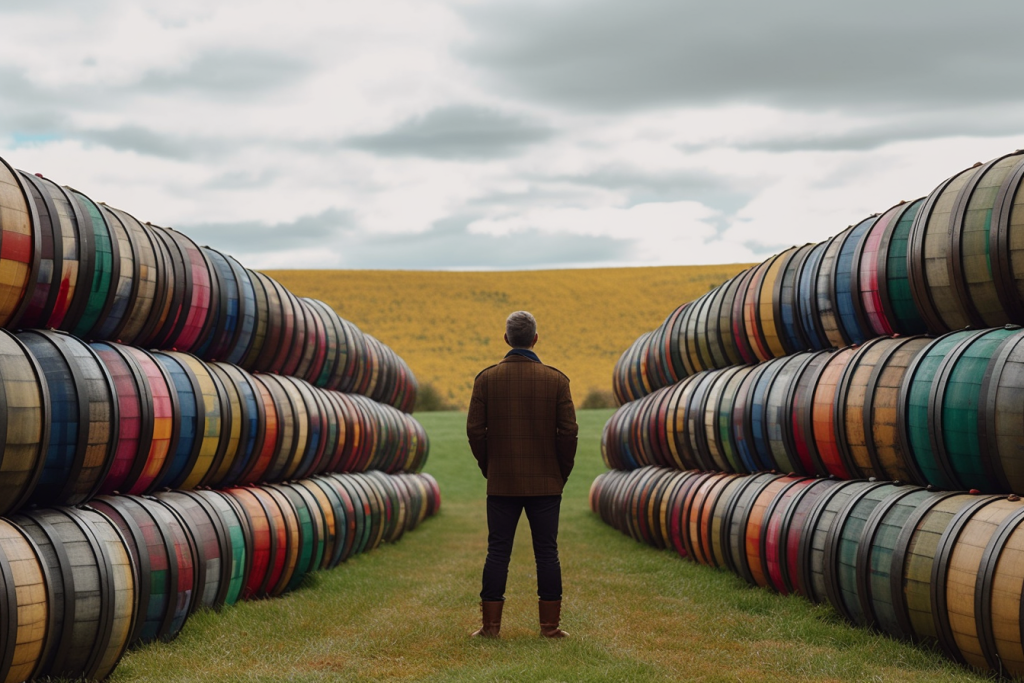
By the time a whisky reaches your glass, it has already drawn on a good deal of energy and water. Farming the grain, heating the stills, running the warehouse, and blowing and shipping the glass all take their toll on the environment. A growing number of distilleries have decided the old way of doing things is no longer good enough, and they are quietly reworking how they farm, distil, package, and ship.
Some of this effort is marketing. Some of it is genuine. The trick for a drinker, a collector, or anyone putting money into casks is telling the difference. This piece looks at what sustainable distilling actually involves, which producers are doing real work, and how to spot the bottles worth your attention and your money.
What Sustainable Distilling Actually Means
Sustainable distilling is the effort to make whisky while drawing less from the environment and putting less back into it as waste. In practice that shows up in a handful of places: the energy that fires the stills, the water used through mashing and cooling, the grain and how it is grown, the glass and packaging, and the fuel spent moving the finished bottle.
A distillery that takes this seriously tends to think in systems rather than gestures. It measures its energy and water use, finds the biggest leaks, and fixes them. It treats spent grain and pot ale as resources to be reused rather than waste to be dumped. None of this makes the whisky worse. In many cases the attention to raw materials makes it better.
Why Sustainability Pays Off for Distillers
The environmental case is the obvious one. Burning less fossil fuel and using less fresh water means a smaller footprint and less strain on local rivers and farmland. For island and rural distilleries in particular, that matters, because the water source and the surrounding land are part of what gives the whisky its character.
The business case is just as strong, and this is where the story gets interesting for investors. Energy is one of the largest running costs at a distillery, so cutting it improves margins year after year. Reusing byproducts turns a disposal cost into a resource. And a credible sustainability record increasingly helps a brand stand out on the shelf and hold the loyalty of drinkers who care where their money goes.
Producers Doing the Real Work
Talk is cheap in this space, so it helps to look at who has actually changed how they operate. A few names stand out.
In Scotland, the Highlands distillery Nc’nean has built its reputation around low-impact production, running on renewable electricity and bottling in recycled glass. On Islay, Bruichladdich has leaned hard into organic and regeneratively grown barley and holds B Corp certification. Glenfiddich, owned by William Grant & Sons, has put delivery trucks on the road fuelled by biogas made from its own distilling byproducts.
Across the Atlantic, Maker’s Mark in Kentucky became a certified B Corporation, a reminder that American whiskey is in the mix too. That spelling distinction is real, by the way, and we cover when to write whisky and when to write whiskey in its own guide.
Canada has stories of its own. Shelter Point on Vancouver Island grows much of its own barley and distils with estate water, while Dillon’s in Niagara leans on locally grown grain and Ontario fruit. If you want a sense of how broad the Canadian effort has become, our tour of the Canadian whisky scene is a good place to start, and our primer on what makes Canadian whisky distinct covers the rules behind the label.
How to Spot a Genuinely Eco-Friendly Bottle
Front-of-pack claims like “green” and “natural” are easy to print and hard to trust, so look for something with teeth behind it. Third-party certifications carry more weight than a distillery’s own marketing. B Corp certification, organic certification, and an ISO 14001 environmental management system are all signs that an outside body has checked the claims.
Beyond the label, look at the details a serious producer will happily talk about: where the grain comes from, how the stills are heated, what happens to the spent wash, and whether the glass is recycled or lighter weight. A distillery that can answer those questions plainly is usually the real deal. One that only offers vague language about “respecting nature” usually is not.
Does Sustainable Whisky Taste Different?
Sometimes, and often for the better. The flavour of a whisky starts with the grain and the water, so producers who fuss over heritage barley varieties, organic farming, and a clean local water source are working with better raw material from the start. Fermentation and distillation choices matter too, and distilleries that pay close attention to one part of the process tend to pay attention to all of it.
That said, sustainability is not a flavour guarantee. A badly run still makes a bad spirit no matter how green the boiler. Treat the environmental story as a sign of overall care, not as a promise in the glass.
A Note for Collectors and Investors
Sustainability is starting to show up in how the market values whisky, and that is worth watching if you buy to hold. Brands with a genuine, verifiable record tend to build stronger reputations, and reputation is what keeps a bottle sought after years down the road. Producers cutting their costs through efficiency also tend to be better-run businesses overall, which matters when you are putting money into casks or cellar-worthy bottles.
If you are thinking about this as an asset and not just a drink, our guide to whisky investing fundamentals covers the basics, and our piece on building a whisky investment strategy goes deeper on the long game.
Frequently Asked Questions
What Are the Environmental Impacts of Whisky Production?
The biggest ones come from energy, water, and agriculture. Distilling takes a lot of heat, which historically has meant burning fossil fuels. Mashing and cooling draw heavily on fresh water. Growing barley, corn, or rye carries its own footprint from fertilizer, land use, and machinery. On top of that, glass production and transport add a meaningful share of a bottle’s total impact.
What Are the Economic Implications of Sustainable Distilling?
Going green costs money up front, especially for renewable energy and new equipment, but it tends to pay off over time. Lower energy and water bills improve margins, turning waste into usable byproducts creates new value, and a strong sustainability record can support pricing and brand loyalty. For larger groups it is also a way to get ahead of regulation and carbon costs that are only heading in one direction.
How Can Distilleries Reduce Their Carbon Footprints?
The highest-impact moves are usually switching to renewable electricity, capturing and reusing heat, and turning wet byproducts like pot ale and draff into biogas or animal feed. Lighter and recycled glass, local grain sourcing, and water recycling all chip away at the total. Even small packaging changes add up when a distillery ships millions of bottles.
What Rules Govern Whisky Production Around the World?
Each major region protects what can legally be called whisky. Scotch is governed by strict UK regulations covering everything from cask type to minimum ageing, American whiskey falls under federal standards of identity enforced by the TTB, and Canadian whisky has its own definition under Canadian food law. These rules do not focus on sustainability directly, but they set a baseline for how the spirit is made, and a growing number of industry bodies have added environmental targets on top.
Where to Go From Here
Sustainable distilling is no longer a fringe idea. The distilleries doing it well are among the most respected names in the business, and the practices are spreading fast. For a drinker, that means better choices on the shelf. For a collector or investor, it means the producers worth backing are increasingly the ones taking the environment seriously.
Start by reading the label with a sceptical eye, asking real questions of the brands you like, and rewarding the ones that can back their claims with evidence. If you are just beginning to build a cellar around producers like these, our guide to kickstarting your whisky collection will get you moving.