

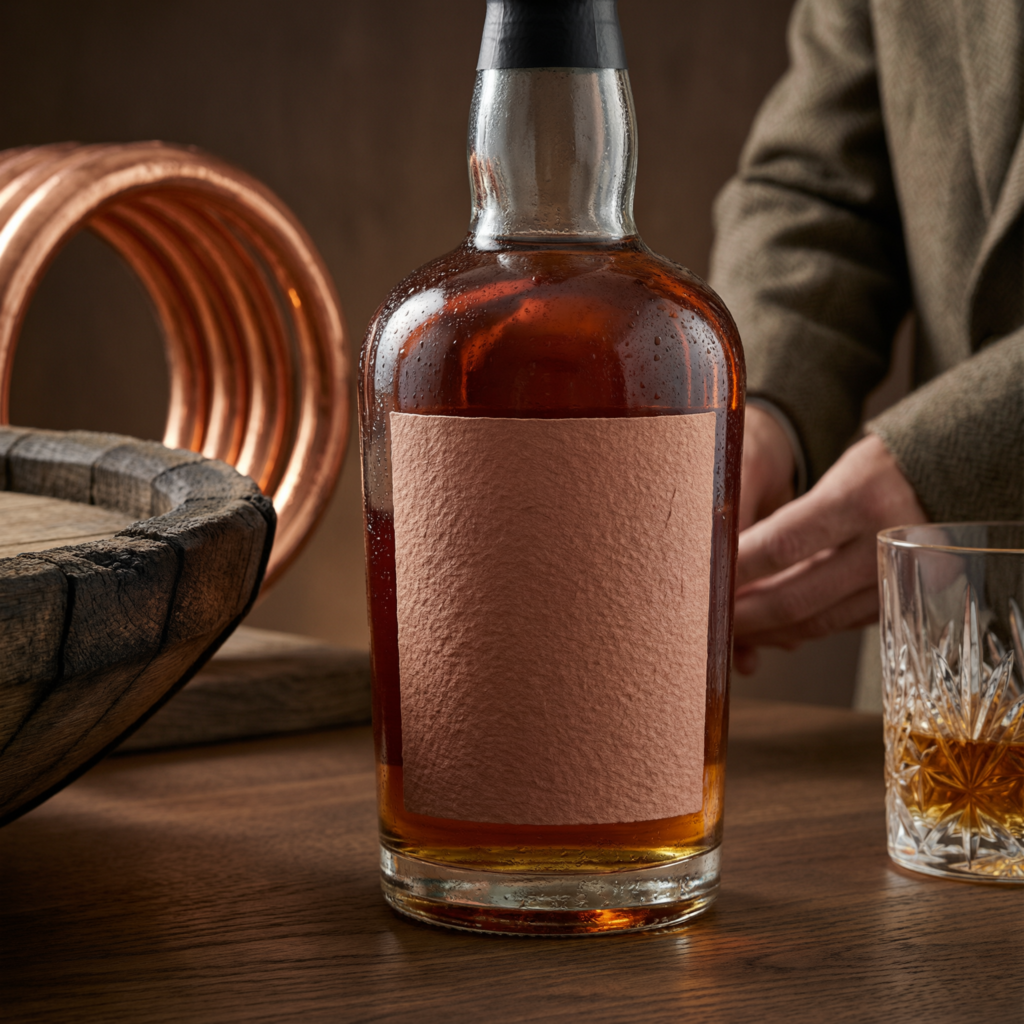
Most people glance at a whisky label, admire the typography, and move on. If you’re buying bottles with an eye on value, that’s a mistake. A label is really a data sheet dressed up in marketing. Terms such as single barrel, cask strength, and bottled-in-bond each carry specific production or legal meanings, and together they tell you how the liquid was made, how old it is, and how scarce it might become. For a collector or an investor, that’s where the money hides. So let’s crack the code, one term at a time. If the spelling on the bottle has ever tripped you up, our guide to whisky versus whiskey is a good place to start.
Understanding Whisky Label Terminology
If you’ve ever stood in a liquor store staring at a shelf, wondering what half the words on the bottle mean, you’re in good company. A handful of terms do most of the heavy lifting, and once you know them, most labels stop being mysterious.
Bourbon is the easiest starting point. U.S. law requires the grain mash to contain at least 51% corn, and the spirit must be aged in new, charred oak barrels. That corn-heavy recipe and the fresh oak are what give bourbon its sweet, vanilla-forward character. For a fuller tour of the category, see our primer on American whiskey.
Bottled-in-bond sounds fancy, but the rules behind it are concrete. Set by an 1897 federal act, the standard requires the whiskey to come from one distillation season at one distillery, to be aged at least four years, and to be bottled at exactly 100 proof, or 50% ABV. It’s a government-backed guarantee of provenance, which is exactly the kind of thing investors like to see.
Small batch, by contrast, has no legal definition at all. It simply signals that the producer blended a relatively small selection of barrels, and one distiller’s small batch could be ten casks while another’s is a hundred. Treat it as marketing until the tasting notes prove otherwise.
Single barrel means precisely what it says: the liquid came from one cask, not a blend of many. Because no two barrels age identically, single-barrel releases vary from bottle to bottle, and that individuality is part of their appeal.
An age statement lists the youngest whisky in the bottle. Why that small detail matters so much is the subject of the next section.
Deciphering Age Statements and ABV
Two numbers on a label tell you more about the liquid than almost anything else: the age statement and the ABV.
The age statement records how long the spirit spent in wood, and in a blend it refers to the youngest component, not an average. Minimum rules differ by region. Scotch whisky must mature in oak for at least three years, as must Irish whiskey. Bourbon has no minimum age at all, though any bourbon aged less than four years must print its age on the label, and straight bourbon requires at least two years in the barrel. Keep those thresholds in mind: a “12 year old” Speyside single malt means every drop has seen a dozen years of oak.
ABV, alcohol by volume, measures the strength of the liquid. American proof is simply twice the ABV, so a 100-proof bottled-in-bond sits at 50%. Standard bottlings usually land around 40 to 43%, while cask-strength releases skip the dilution and frequently run between 50 and 65%. A higher ABV tends to carry more intense flavour and a fuller texture, which many collectors seek out, though strength alone never guarantees quality.
Origin and Distillation: Where Character Comes From
Where a whisky is made shapes it as much as how it’s made. Distillation itself is an old craft, with roots that historians trace back to the alchemists of Hellenistic Alexandria, and centuries of regional practice have since produced the spread of styles we see today.
Place leaves its fingerprints. Bourbon’s identity is written into federal law: a corn-heavy mash, new charred oak, and a minimum bottling strength of 80 proof. Scotch carries its own rules and its famous regional signatures, from the peat smoke of Islay to the honeyed fruit of Speyside. Canadian whisky, often labelled “rye” at home, must be mashed, distilled, and aged in Canada for a minimum of three years in small wood, a patient approach that gives it a smooth, mixing-friendly character. Our guide to what makes Canadian whisky distinct covers the category in depth.
The cask is the final ingredient. A single-barrel whiskey aged in one oak cask tastes different from a small batch blended across many, and a spirit finished in ex-sherry wood will pick up a dried-fruit richness that a bourbon cask simply won’t.
Barrel Types and Why They Matter
The barrel does more of the work than most people realize. The cask drives much of a whisky’s final flavour and colour, and for investors the wood choice is a signal worth reading.
American oak tends to lend vanilla, coconut, and caramel; French oak brings tighter tannins and spice. Ex-sherry casks add dried fruit and richness, port casks leave a berry sweetness, and rum casks contribute tropical notes. Bourbon law requires new, charred oak, which is why the category skews sweet and full-bodied, while Scotch distillers happily refill their casks with ex-bourbon and ex-sherry wood for subtler effects.
A few points worth keeping in mind:
- Cask-strength bottlings, drawn straight from the barrel without dilution, tend to taste bolder and more concentrated because of their higher ABV.
- New charred oak is the standard in bourbon production, producing a rich, sweet, full-bodied spirit.
- Different casks imprint different notes: fruitiness from sherry wood, baking spice from French oak, smoke from a heavily charred barrel.
- The barrel shapes the colour, aroma, and flavour you find in the glass.
Brands lean into their cask choices. Knob Creek is bottled at 100 proof and built around that rich, charred-oak sweetness, while Wild Turkey 101 carries its strength right in the name. If the wood itself interests you as an asset, our barrel investing guide explains how casks work as investments.
Spotting Limited Editions Worth Holding
If you’re buying to hold, learning to recognize a limited edition is a genuine edge. These releases tend to come from established distilleries and famous regions, and they usually stand out through specific cues on the bottle.
Look first at the packaging and presentation. Numbered bottles, single-cask designations, commemorative labels, and unusual bottle shapes all point to a run that was never meant to be repeated. Visual distinctiveness helps a bottle stay memorable on the secondary market.
The label details matter more than the wrapping. Age is a big one: statements of 25, 30, or 40 years and beyond are uncommon and tend to hold their value better than younger releases. A notable cask finish, such as sherry, port, or Madeira, can add further appeal. Provenance rounds it out, because a bottle with its original box, intact seals, and a clear purchase history is far easier to sell than one without.
A dose of realism helps here. Limited editions can rise in value, but they can also stall, and liquidity is thinner than in stocks or funds. Buy bottles you’d be happy to drink if the market never cooperates. When you’re ready to put one under the hammer, our notes on investing in rare whiskey and casks walk through what actually moves at sale.
Frequently Asked Questions
What do whisky labels actually mean?
Terms like bottled-in-bond, small batch, single barrel, and cask strength are more than decoration. Some carry legal weight (bottled-in-bond, bourbon), while others are looser marketing claims (small batch). Read together, they describe how the spirit was made, how long it aged, and how it was bottled, which is the story behind every good glass.
Which whisky is likely to go up in value?
Honestly, nobody can say for certain. Predicting bottle prices has more in common with forecasting weather than reading a balance sheet. That said, limited releases from respected distilleries, older age statements, and well-regarded cask finishes have historically held their appeal. Treat any purchase as something you’d enjoy owning regardless of where the price goes.
How do you determine the value of a bottle?
I weigh a handful of factors. Age and production method come first, along with the casks used and any special finishes. Brand reputation carries real weight, because houses with long track records tend to hold value better. Fill level, label and box condition, and provenance all matter once a bottle hits the secondary market, and a higher ABV often draws a premium from collectors who favour bolder, undiluted expressions. For a structured approach to building value over time, our guide to the craft of whisky investing is worth a read.
How do you read a Scotch label?
I check four things. First, the distillery; its region hints at style, so an Islay name suggests peat smoke while a Speyside one leans toward fruit and honey. Second, the age statement, remembering it reflects the youngest whisky in the bottle. Third, the ABV, with cask-strength versions running noticeably hotter. Fourth, whether it’s a single malt (one distillery, malted barley) or a blend. Get comfortable with those four details and most Scotch labels stop being a puzzle.