

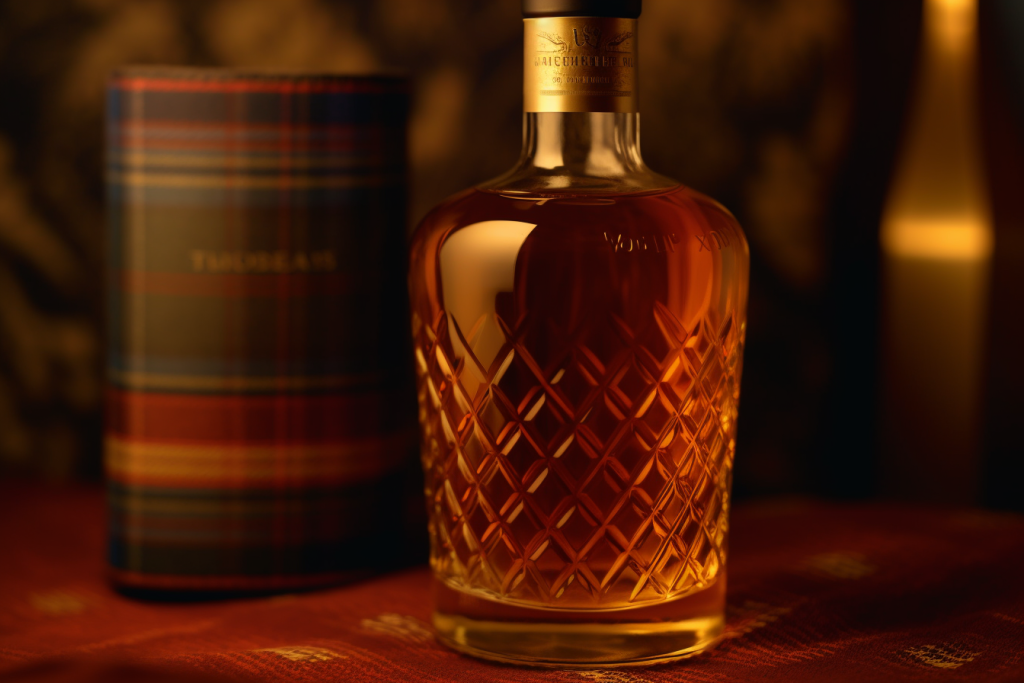
Most people drink whisky. Fewer actually taste it. The difference is attention: slowing down, using your nose before your mouth, and learning what the glass is telling you. This guide walks through the mechanics of tasting, the major whisky styles, and how to build a palate that can tell a Speyside single malt from a Kentucky bourbon across the room.
The Basics of Whisky Tasting
Tasting starts with your nose, not your tongue. The human tongue detects five basic tastes. Your nose can distinguish thousands of aromatic compounds. Most of what you think of as flavour happens above the palate, which is why nosing is the skill that matters most in whisky appreciation.
Use a proper glass. A Glencairn glass, with its tulip shape and narrow rim, funnels aromas toward your nose while letting you swirl without spilling. A copita works too. What you want to avoid is a wide tumbler, which lets the aromatics scatter before you can catch them.
Pour about 25 ml, roughly an ounce. Hold the glass by the base or stem so your hand does not warm the spirit. Swirl gently to release the volatile compounds, then bring the rim just below your nose. Keep your mouth slightly open. It sounds odd, but it stops the alcohol vapour from overwhelming your sense of smell. Take short, gentle sniffs rather than one long inhale.
If you are new to this, our recap of Modern Whisky’s first tasting walks through what to expect when you sit down with a few drams for the first time.
Take Tasting Notes
Write down what you smell and taste, even if the words feel clumsy at first. Note the colour, the nose, the palate, and the finish. Over time, your notes become a personal reference library. You will start noticing that you consistently pick up vanilla in bourbon or dried fruit in sherry-cask Scotch, and those patterns build real knowledge.
Exploring Different Types of Whisky
Every whisky style carries the fingerprint of where and how it was made. Two factors matter most: the distillation process and the barrel ageing.
Scotch Single Malt
Made from 100% malted barley at a single distillery, Scotch single malt is the style most people picture when they hear the word whisky. Regional differences are pronounced. Speyside malts like Glenfiddich tend toward orchard fruit and honey. Islay malts like Laphroaig and Ardbeg are famous for peat smoke and brine. Highland malts span the range, from heathery and floral to rich and sherry-driven.
Bourbon and American Whiskey
By law, bourbon must be made in the United States from a grain mix of at least 51% corn and aged in new, charred oak barrels. That new oak gives bourbon its signature vanilla, caramel, and coconut sweetness. Maker’s Mark uses red winter wheat instead of rye as its flavouring grain, which produces a softer, rounder mouthfeel. Tennessee whiskey, like Jack Daniel’s, adds a charcoal-mellowing step called the Lincoln County Process before ageing.
Canadian Whisky
Canadian whisky tends to be lighter and more mixable than its American or Scottish cousins, though that is changing fast. Producers like Crown Royal, JP Wiser’s, and Forty Creek have pushed the category toward richer, more complex expressions in recent years. If you want a deeper primer on what makes this style distinct, our guide to what Canadian whisky actually is covers the history, the regulations, and the flavour profile.
Irish Whiskey
Irish whiskey is typically triple-distilled, which gives it a notably smooth, clean character compared to the double-distilled Scotch tradition. Brands like Redbreast and Green Spot showcase the heavier, pot-still side of Irish whiskey, while Jameson represents the lighter blended style most people know.
Understanding Flavour Profiles
Once you have nosed a few dozen whiskies, you start recognising recurring families of flavour. Tasting wheels divide these into broad categories: cereal, fruit, floral, peaty, feinty, sulphury, and woody. You do not need to memorise the wheel, but having a shared vocabulary helps when you are comparing notes with others.
Here is a practical way to think about it:
- Sweet: vanilla, honey, caramel, butterscotch. Common in bourbon and sherry-cask Scotch.
- Fruity: apple, pear, dried apricot, citrus. Often found in Speyside and Highland malts.
- Smoky and peaty: campfire, iodine, smoked meat. The hallmark of Islay Scotch.
- Spicy: black pepper, cinnamon, clove, nutmeg. Rye-heavy whiskies and some Highland malts.
- Woody and nutty: oak tannin, almond, walnut. Shows up in older whiskies and those finished in wine casks.
When you taste, let the whisky coat your whole mouth. Pay attention to the attack (the first impression), the mid-palate (how it develops), and the finish (what lingers after you swallow). A long, evolving finish is generally a sign of quality, though plenty of excellent everyday drams are short and sweet.
Developing Your Palate
Palate development is nose training in disguise. The goal is to build a mental library of scents so you can name what you are smelling in the glass.
Start away from whisky. Smell your coffee in the morning and try to identify whether it is nutty, fruity, or chocolatey. Pick up spices in the grocery store and really inhale: cinnamon, clove, star anise, black pepper. Peel an orange and note the difference between the zest and the pith. These everyday exercises sharpen your olfactory memory faster than you might expect.
Then bring that vocabulary back to the glass. When you nose a whisky and catch something sweet, push yourself to be specific. Is it vanilla? Honey? Toffee? The act of naming forces your brain to encode the scent more precisely. After a few months of this, you will walk into a room and identify a whisky by smell alone. Not every time, but often enough to impress your friends.
Add a few drops of water to higher-strength whiskies, anything above 46% ABV. Water breaks the surface tension and releases aromatic compounds that stay locked at cask strength. You will often find a completely different set of flavours hiding underneath.
Joining the Whisky Community
Tasting alone teaches you a lot. Tasting with others teaches you faster. Other people pick up notes you miss, and they introduce you to bottles you would never have found on your own.
Here are practical ways to get involved:
- Join a local whisky club or tasting group. Most cities have at least one. They pool money for bottles members could not justify buying alone, which means you taste a wider range for less per person.
- Attend distillery tastings and tours. Canadian distilleries from Shelter Point on Vancouver Island to Dillon’s in Niagara offer guided tastings that connect the production process directly to what you are smelling in the glass.
- Follow distillers and independent bottlers on social media. Many post tasting notes, cask information, and production details that you will not find on the label.
- Participate in online forums. Communities on Reddit (r/Scotch, r/bourbon) and dedicated sites like Whiskybase have active discussion threads where members share reviews and split bottles.
- Organise your own tasting. Pick a theme (Islay malts, wheated bourbons, Canadian rye) and invite three or four friends. Keep pours to 15 ml each and taste blind. You will learn more in one evening than in a month of solitary sipping.
Frequently Asked Questions
What Is the Best Way to Store Whisky?
Store bottles upright, away from direct sunlight and heat sources. Unlike wine, whisky does not improve in the bottle, and prolonged contact with the cork at high fill levels can degrade the seal. A cool, dark cupboard at a steady 15 to 20 degrees Celsius is ideal. Avoid temperature swings, which cause the liquid to expand and contract and can let air in over time.
Once opened, a bottle will slowly oxidise. A half-empty bottle kept for years will lose some top notes. To slow this, keep the fill level as high as practical and make sure the cap or cork is tight. Decanting into a smaller vessel reduces the headspace of air sitting above the liquid.
Can You Make Whisky at Home?
In Canada, distilling spirits at home without a federal licence is illegal under the Excise Act, 2001. The penalties are real, and home-distilled spirits carry genuine safety risks, including methanol contamination from improper cuts. Brewing beer or making wine at home is perfectly legal, but distillation sits in a different regulatory category.
What you can do legally at home is age spirits. Some enthusiasts buy unaged neutral grain spirit, where provincial rules allow, and age it in small oak barrels or with oak staves to experiment with flavour development. It is not the same as distilling, but it teaches you a great deal about how wood shapes a spirit.
What Is the Difference Between Single Malt and Blended Whisky?
Single malt comes from one distillery and is made entirely from malted barley. Blended whisky combines malt whisky with grain whisky (made from corn, wheat, or unmalted barley) from multiple distilleries. Blends are crafted for consistency and approachability. Think of Johnnie Walker Black Label, which blends dozens of malt and grain whiskies into a consistent house style. Single malts showcase the character of a specific place and production style, which is why they tend to show more variation from cask to cask.
Neither is inherently better. Blending is a genuine craft, and many of the best-selling whiskies in the world are blends. But single malts give you a clearer window into how water source, still shape, and cask selection shape the final dram.
Is There an Age Requirement for Whisky Tasting?
You must be of legal drinking age in your province or territory. In Alberta, Manitoba, and Quebec, that is 18. In Ontario, British Columbia, and most other provinces, it is 19. Distilleries and licensed tasting rooms will check ID, and private clubs typically enforce the same rules.
At tastings, pace yourself. Spit or dump pours you do not want to finish. A standard tasting pour is 15 to 25 ml, and even those add up over five or six drams.
What Is the Best Way to Serve Whisky?
Serve whisky at room temperature or slightly below, around 18 to 20 degrees Celsius. Use a Glencairn glass, a copita, or a small tulip-shaped wine glass. Pour 25 to 30 ml, enough to swirl comfortably without spilling.
Whether to add water or ice is personal preference. A few drops of still water open up the aromatics in cask-strength whisky. Ice mutes flavour, so save it for casual highballs rather than serious tasting. If you are tasting a flight, serve from lighter to heavier styles so the peaty bottles do not flatten the delicate ones.
A solid home bar setup and the right glassware make a bigger difference than most people expect. If you are just starting out, our guide on how to kickstart your whisky collection covers bottles, tools, and budget.