

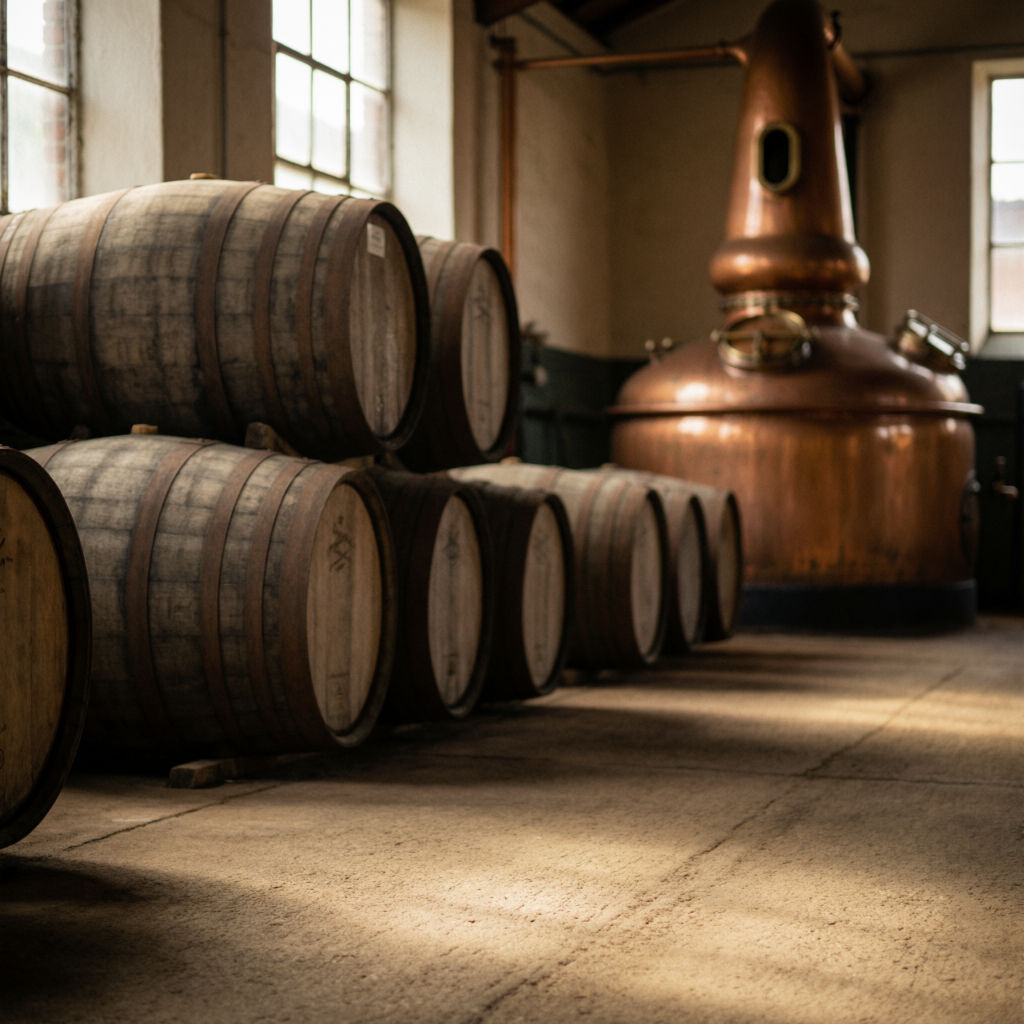
Putting money into traditional whisky distilleries is not the same as buying a bottle off the shelf and hoping for the best. The distilleries that hold their value over decades are the ones with deep roots: generations of craft, consistent quality, and a reputation that outlasts market cycles. Scotland, Ireland, Kentucky, and increasingly Canada all have houses that fit that description. The question is not whether these distilleries produce something worth owning. The question is whether you understand what you are buying, what it costs to hold it, and when to let it go.
Understanding Whisky Investment Basics
Whisky as an asset class has matured considerably over the past fifteen years. What was once a niche pursuit for collectors has attracted serious capital, particularly in Scotch single malts. The mechanics are straightforward enough: you buy whisky, either in bottle or in cask, and you hold it while time and scarcity do their work. What makes it less straightforward is everything around the purchase.
Storage, insurance, provenance, and the reputation of the distillery all affect whether your investment actually returns money. A cask sitting in a bonded warehouse in Speyside is not the same proposition as one stored in an unregulated facility. Age, rarity, and brand recognition drive value, but so do less obvious factors like the original fill date, the type of cask, and whether the whisky has been moved or disturbed. If you are new to this space, start by reading a solid overview of whisky investing fundamentals before committing capital.
This is a long game. Whisky does not liquidate quickly, and the costs of entry and exit can eat into returns if you are not careful. Most experienced investors treat whisky as a small allocation within a broader portfolio, not the whole portfolio. Patience and a clear understanding of your own risk tolerance matter more than picking the flashiest bottle.
Evaluating Whisky Market Trends
The global whisky market has grown steadily over the past decade, driven by rising demand in Asia, a resurgence of interest in aged American whiskey, and a growing collector base in Europe and North America. Analysts at firms like IWSR and Knight Frank have tracked this growth, and their reports consistently show premium and ultra-premium segments outpacing the broader spirits category.
That said, past performance does not guarantee future returns. The market for rare whisky cooled somewhat after the peak enthusiasm of the early 2020s, and some bottles that spiked in price have settled back down. The lesson is not to avoid the market. The lesson is to buy for quality and rarity, not for hype. A 25-year-old Macallan or a closed-distillery bottle from Port Ellen will always have a floor of demand that a limited-edition marketing release simply does not.
Canadian whisky has its own story. Brands like Crown Royal, J.P. Wiser’s, and Forty Creek have built loyal followings, and newer producers such as Shelter Point and Dillon’s are earning international attention. The Canadian whisky scene is smaller than Scotland’s or Kentucky’s, but it is growing, and early investment in the right Canadian distillery could pay off as global recognition catches up. For a primer on what makes Canadian whisky distinct, see this breakdown of Canadian whisky.
Strategies for Whisky Barrel Investment
Cask investment is where the real patience is tested. You are buying whisky that is still ageing, which means your capital is locked up for years before the product is even ready to bottle. The upside is that a well-chosen cask from a respected distillery can appreciate significantly as it matures. The downside is that you are exposed to storage costs, insurance premiums, evaporation loss (the “angel’s share”), and the risk that the whisky does not turn out as expected.
Before buying a cask, research the distillery’s track record. How long have they been operating? Do they have a history of releasing well-regarded single cask bottlings? What are the storage arrangements, and who bears the cost? These questions matter more than the initial price of the cask.
Most cask purchases happen through specialist brokers or directly from distilleries. Firms like Whiskey & Wealth Club and platforms such as Whisky.Auction have made the process more accessible, but accessibility does not remove the need for due diligence. Read through a detailed guide to whisky barrel investing before you write any cheques. And if you are in Canada, check with a tax professional about how the CRA treats cask holdings. Collectibles and investment-grade spirits can have different tax treatment than standard securities.
Exploring Whisky Bottle Investment
Bottle investment is more liquid than cask investment, in both senses. You can buy and sell bottles relatively quickly through auction houses like Bonhams, Sotheby’s, and Whisky.Auction, and you do not have to wait years for the whisky to finish ageing. The trade-off is that bottle values are more sensitive to market sentiment, condition, and provenance. A missing box or a damaged label can knock a meaningful percentage off the price.
Single malt Scotch has historically been the strongest performer in bottle investment. Distilleries like Macallan, Ardbeg, Bowmore, and Springbank have secondary-market demand that few other categories match. That said, American whiskey bottles from Buffalo Trace’s Antique Collection or Pappy Van Winkle have also shown strong auction results. The key is to buy bottles that are genuinely scarce, not just bottles that are marketed as limited.
Here is a rough comparison of the two main approaches:
| Investment Type | Typical Profile |
|---|---|
| Whisky Cask | Longer hold, higher entry cost, value builds with age |
| Whisky Bottle | More liquid, lower entry cost, value driven by rarity and condition |
For a deeper look at rare bottles and casks, this guide to rare whisky and cask investing covers the specifics.
Risks and Rewards of Whisky Investment
Whisky can be a rewarding addition to a diversified portfolio, but it carries real risks. The market is illiquid compared to stocks or bonds. Selling a cask or a rare bottle takes time, and the spread between buying and selling prices can be wide. Counterfeit bottles are a persistent problem, especially at the high end. Storage failures, warehouse fires, and changes in consumer taste can all erode value.
On the reward side, whisky has shown a low correlation with traditional equity markets, which makes it a useful diversifier. It is also a tangible asset. You can hold it, taste it (eventually), and enjoy it in a way that a stock certificate does not allow. For Canadian investors, there is an additional consideration: the CRA’s treatment of collectibles and personal-use property can affect your after-tax returns. Speak with an accountant who understands alternative investments before you commit significant capital.
The best protection against risk is knowledge. Understand what you are buying, why it has value, and who will want to buy it from you in five or ten years. Build a relationship with a reputable broker. Keep your whisky allocation proportional to your overall portfolio. And resist the urge to chase the latest hot release. The distilleries that reward investors are the ones with a long track record, not the ones with the best Instagram campaign.
Frequently Asked Questions
Is Investing in Whisky Profitable?
It can be, but it is not guaranteed. Historically, well-chosen whisky from established distilleries has appreciated over time, particularly single malt Scotch from houses like Macallan, Ardbeg, and Springbank. Returns vary widely depending on what you buy, when you buy it, and how long you hold. Treat any specific return figure with scepticism. The whisky market, like any market, has winners and losers.
What Is the ROI on Whisky Investment?
There is no single answer. Auction data from houses like Bonhams and Sotheby’s shows that some rare bottles have appreciated by several hundred percent over a decade, while others have barely moved or lost value. Cask returns depend heavily on the distillery, the cask type, and the ageing period. Independent indices such as the Knight Frank Luxury Investment Index have tracked whisky as a category, but their figures are averages and do not predict individual outcomes.
What Whisky Is Best for Investment?
Single malt Scotch from established, high-demand distilleries has the longest track record. Macallan, Ardbeg, Bowmore, and closed distilleries like Port Ellen consistently perform well at auction. American whiskey from Buffalo Trace’s Antique Collection also commands strong premiums. In Canada, keep an eye on aged releases from J.P. Wiser’s and limited editions from newer craft distilleries. Whatever you choose, prioritise rarity, provenance, and the distillery’s reputation over marketing.
Can You Buy Whisky Directly From the Distillery?
Yes, and it is often the best way to start. Many distilleries sell casks or limited bottlings directly to collectors. In Canada, operations like Shelter Point on Vancouver Island and Dillon’s in Niagara offer direct purchasing options. Buying from the source gives you clear provenance, which matters enormously when you eventually sell. It also gives you a direct line to the people making the whisky, which is something no broker can fully replicate.