

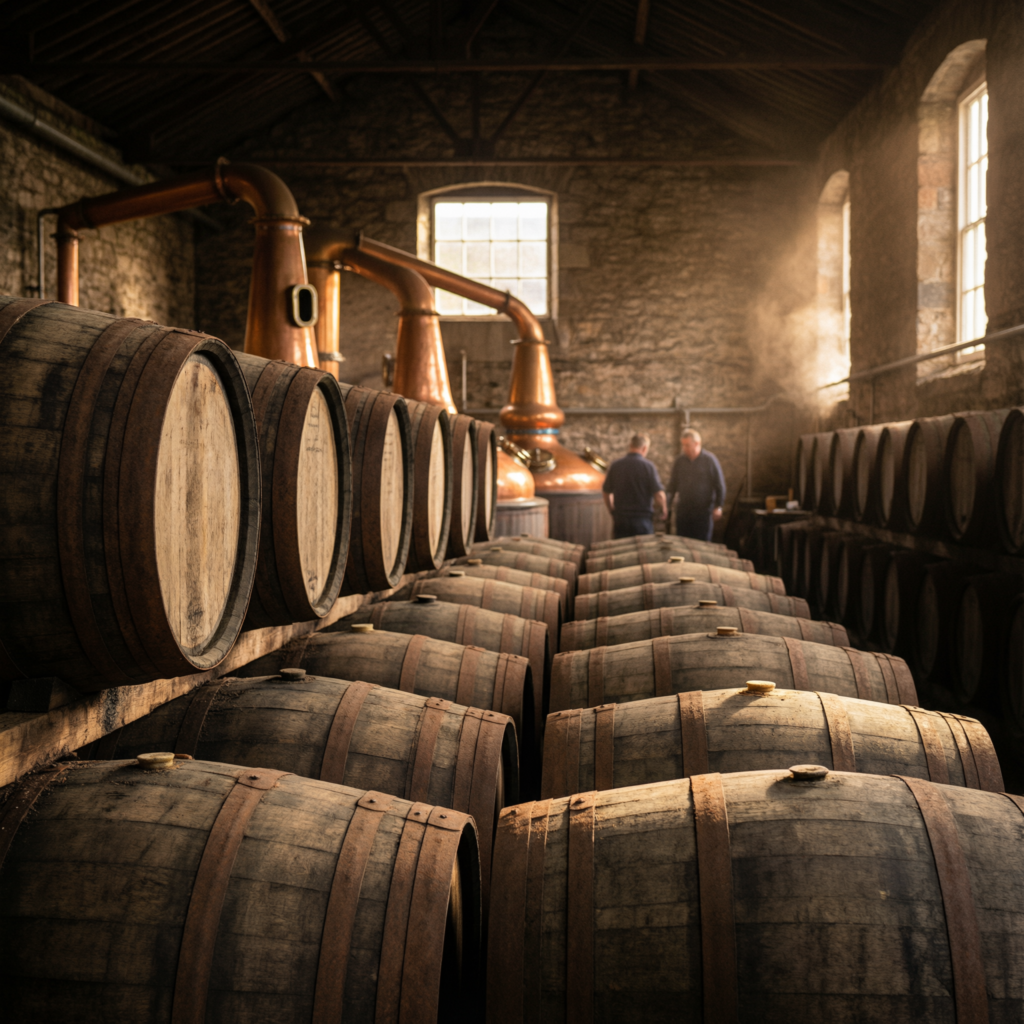
The old warning about not putting all your eggs in one basket applies to whisky as much as it does to stocks. I’ve watched plenty of alternative-investment fads flare up and fade, but Scotch whisky has kept quietly outperforming most of them. It’s tangible, it improves with age (literally), and the best bottles only get harder to find.
Part of the draw is geography. Scotland’s whisky regions each bring something distinct to the glass, from the heavily peated malts of Islay that taste like a peat fire on a cold night to the orchard-fruit sweetness of Speyside. Those regional differences give a collector real building blocks for a strategy, not just a vague hunch.
Wine usually gets the first mention when people talk about investing in drink. Scotch deserves a seat at the same table, and it has a habit of holding up when equities wobble. It isn’t only bottles worth buying, either. Casks are a category of their own, and our whiskey barrel investing guide digs into that side in detail.
Understanding Scotch Whisky Investment
New to treating whisky as an asset? Our primer on whisky investing sets out the fundamentals. The short version: Scotch has earned its reputation as a long-hold asset. It tends to reward patience, it offers some shelter from inflation, and the supply of genuinely old whisky is fixed. Once a cask is emptied into bottles, that’s it; no one can make more of a 30-year-old whisky on demand. That built-in scarcity is what holds the market up.
Demand from younger drinkers in Asia and North America has helped push cask values higher over the past decade. This isn’t froth. It reflects Scotch’s standing as a premium, globally traded spirit. The UK government has also treated the industry as a priority in its trade negotiations, which adds a measure of stability for anyone putting capital in.
A couple of practical points matter if you’re investing from Canada. Exchange rates come first: much of the serious auction trade clears in British pounds, so swings in the CAD-to-GBP rate change your real return. The second is getting bottles into the country, where provincial liquor-board markups and duties can eat into a margin. Run those numbers before you bid, not after.
Scotch isn’t the only spirit with a collector market. American whiskey has built a following of its own, and bourbons such as Maker’s Mark sit at the more approachable end while rarer releases chase bigger prices. The two markets behave differently. Bourbon tends to turn over faster and lean on limited drops, while Scotch rewards long ageing and provenance. If you’re weighing both, start with our overview of American whiskey and this look inside the Maker’s Mark distillery before deciding where your money belongs.
And if you plan to sell as well as buy, learn how the room works first. Our whisky-auction guide walks through buyer’s premiums, reserves, and the mistakes that cost sellers money. One habit worth building: treat any single lot price as a snapshot, not a rule. Values move, so check a current specialist catalogue before you act on a number.
Campbeltown: Small Region, Outsized Reputation

Campbeltown sits on the Kintyre peninsula in the southwest corner of Scotland, and it punches well above its size. At its Victorian peak the town ran more than 30 distilleries and was called the whisky capital of the world. Today just three remain: Springbank, Glen Scotia, and Glengyle. That collapse in numbers is exactly what makes the region interesting to a collector. Scarcity does a lot of the heavy lifting.
The house style is full-bodied and a little oily, with brine, smoke, orchard fruit, vanilla, and toffee all in the mix. Each of the three producers leans in a different direction, which gives you real variety from a very small region.
Springbank is one of the last family-owned distilleries in Scotland and still does its own floor malting on site, a rarity now. Glengyle closed for most of the twentieth century, reopened in 2000, and bottles its malt under the Kilkerran name. Glen Scotia rounds out the trio and has been winning over drinkers with its coastal, slightly sweet take on the style.
At auction, Campbeltown rarely grabs the flashy headlines, but older Springbank bottlings and the peated Longrow and unpeated Hazelburn expressions have a loyal, growing following. With only three distilleries and limited output, supply stays tight, which has generally supported resale values in recent sale seasons. It’s a steadier play than a spectacular one.
The Highlands: Scotland’s Largest and Most Varied Region
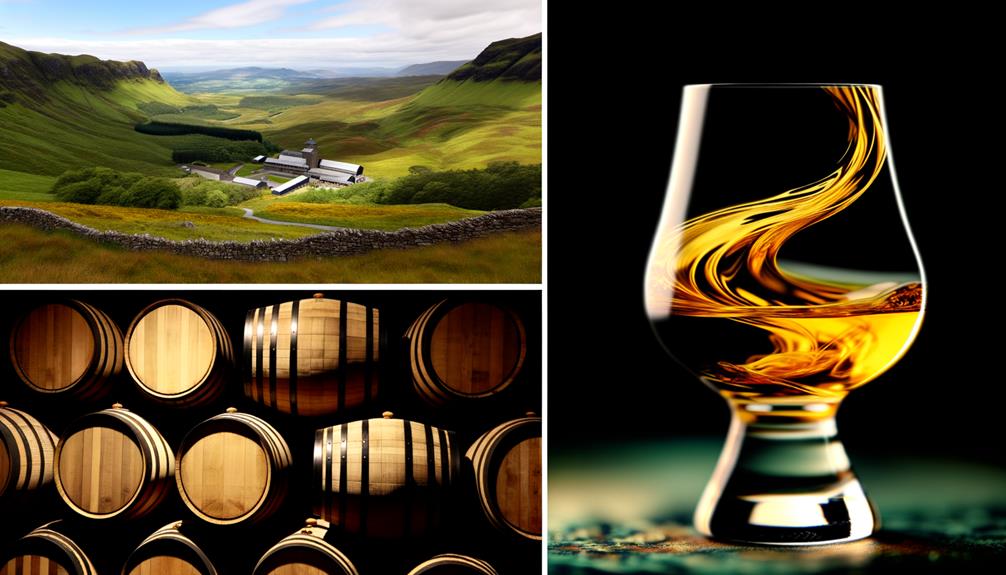
The Highlands are Scotland’s largest whisky region by area, and they’re hard to pin down for exactly that reason. Distilleries are scattered across mountains, glens, and coastline, so the malts run from light and floral to rich and sherried. Cool, soft water and rugged terrain do much of the shaping.
Here’s what makes the region worth a second look:
- Rich, full-bodied malts with heather, honey, and spice, sitting alongside lighter, fruitier coastal styles.
- Distilleries spread across a huge area, each with its own character rather than a shared house flavour.
- Names like Glenmorangie and the Dalmore, both known for experimental cask finishing.
- A sensible approach mixes established houses with smaller, rising producers rather than betting on one.
Because the region is so broad, auction performance splits sharply by name. Older Dalmore releases have drawn serious bids over the years, and Glenmorangie’s limited editions turn up at sale regularly. The lesson for an investor: treat “the Highlands” as a basket of distinct distilleries, not a single bet, and judge each on its own track record.
Islay: The Home of Peated Whisky
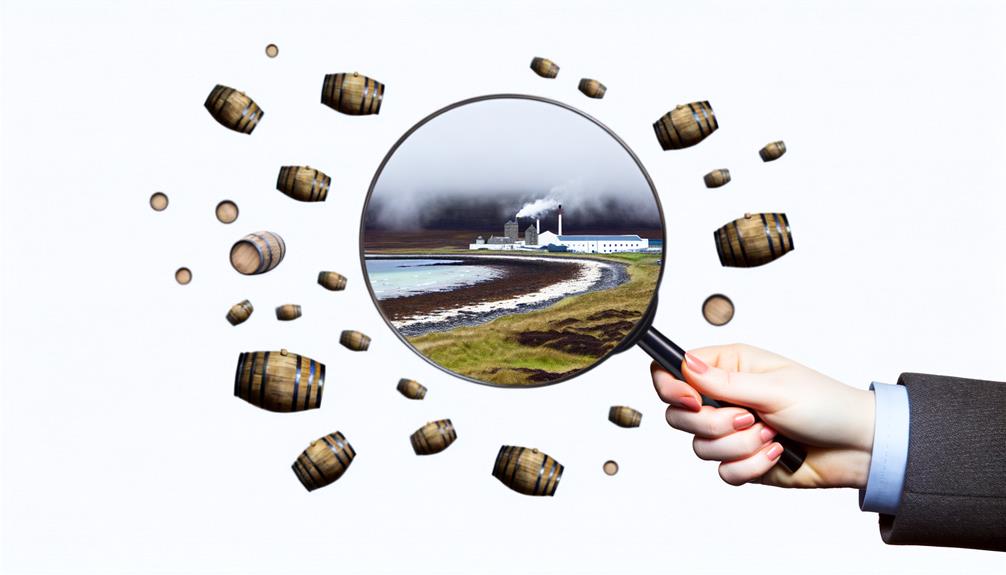
Islay (pronounced “eye-la”) is the southernmost of the Inner Hebrides, and for many drinkers it simply is peated whisky. The island’s malts run from fiercely smoky to soft and unpeated, depending on who’s making them. More than a dozen distilleries operate there now, including Ardbeg, Bowmore, Bruichladdich, Bunnahabhain, Caol Ila, Kilchoman, Lagavulin, and Laphroaig.
Sea air and peat-rich land shape the flavour. You’ll find everything from medicinal smoke to citrus and orchard fruit, often within the same glass. Here are the houses collectors tend to watch, and what draws them:
| Distillery | What Collectors Look For |
|---|---|
| Ardbeg | Heavily peated flagship malts, plus older pre-2000 bottlings |
| Bowmore | The celebrated Black Bowmore 1964 vintage |
| Bruichladdich | The limited Black Art series |
| Bunnahabhain | Older aged statements, including 40-year releases |
| Caol Ila | Both peated and unpeated malts, and aged bottlings |
Islay is where some of the most collected peated malts trade. Older Bowmore, Ardbeg, and the Bruichladdich Black Art releases have all drawn strong interest at sale, and bottles from Port Ellen, the island distillery that went silent in 1983, have become especially prized on the secondary market. Auction prices here swing with vintage, condition, and provenance, so treat any “most expensive bottle” headline with healthy scepticism. If you’re chasing the top end of this region, our notes on investing in rare whiskey and casks cover how to buy safely.
Speyside: Orchard Fruit and Auction Records
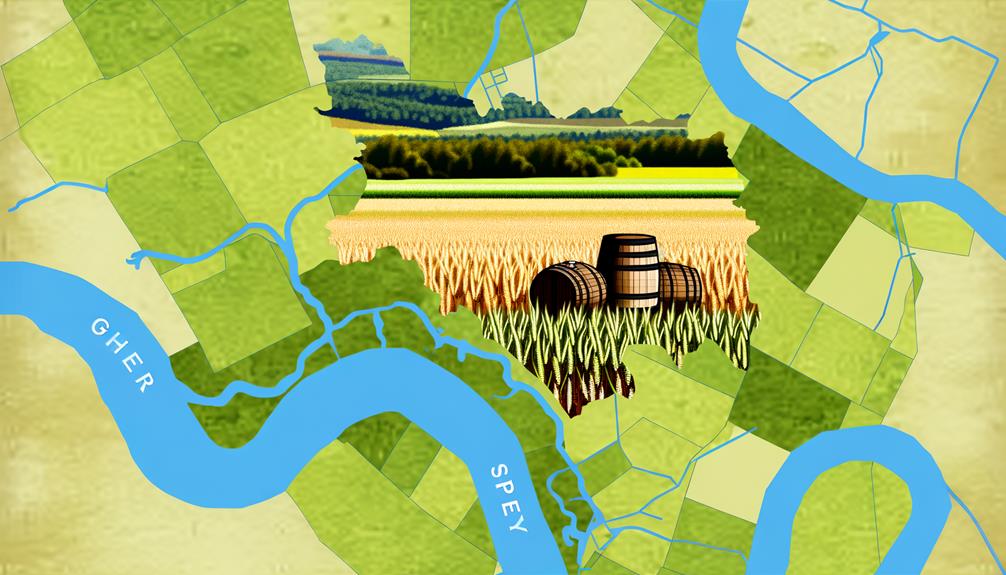
Speyside technically sits inside the Highlands, but it has earned its own category because it packs in the highest concentration of distilleries in Scotland, roughly half of the country’s malt producers. If Islay is smoke, Speyside is orchard fruit: apple, pear, honey, and vanilla, often finished in sherry casks for extra richness.
Here’s what anchors the region for a collector:
- The Glenlivet: one of the best-known Speyside malts on earth, and a reliable benchmark for the style.
- Glenfiddich: the best-selling single malt in the world and a Speyside cornerstone. Our Glenfiddich distillery profile takes you inside it.
- The Macallan: a sherry-cask specialist whose older bottles regularly top auction headlines.
- The Balvenie: prized for honeyed, hand-turned malts and tightly limited releases.
Speyside malts tend to be the easiest to drink and the easiest to sell, which makes them a sensible core holding. Global name recognition supports liquidity, and the region’s long history gives collectors plenty of older and closed-distillery bottles to chase. This is also the region that produces the Macallan, whose older bottles have repeatedly ranked among the priciest whisky ever sold at auction. Alongside it, the Glenlivet and Glenfiddich offer more affordable entry points, while casks from silent Speyside distilleries can carry real premiums.
Frequently Asked Questions
Is It Worth Investing in Scotch Whisky?
Potentially, yes, if you go in with patience. Scotch is a tangible asset that has historically held up against inflation and market swings, and the supply of old whisky is finite. Knowing the regions helps you buy with intent rather than chasing whatever’s hyped. Just remember it’s illiquid: you can’t cash out a cask the way you’d sell a stock.
How Do You Actually Invest in Scotch Whisky?
Two main routes. You can buy bottles from well-regarded distilleries and store them properly, or you can buy casks, hold them in a bonded warehouse, and sell once the whisky has aged into something more valuable. Either way, provenance and storage are everything. A badly stored bottle loses its premium fast.
What Whisky Is Best for Investment?
Single malt Scotch from established, well-known distilleries has tended to hold and grow its value best. Older bottles and limited releases from names like the Macallan, Bowmore, Springbank, and the Dalmore are the usual suspects. When you eventually sell, the story and provenance behind a bottle matter as much as the liquid.
How Do I Know What Whisky to Invest In?
Taste widely, then research harder. I try malts from different regions and dig into how they’re made, their history, and how they’ve performed at auction. Keep an eye on market sentiment, since it moves prices. And buy what you’d genuinely be proud to own, because the best investments in this space are the ones you actually understand.