

Set a smoked Old Fashioned in front of someone and watch what happens. Before the first sip, they lean in. The smoke does half the work before the whisky ever touches their lips.
Smoking the glass (rather than the drink) is one of those bar tricks that looks like pure theatre but runs on simple chemistry. Aromatic smoke clings to the inside of the glass, and every sip pulls that aroma up into your nose on the way down. The move feels modern, but the instinct behind it is old: smoke has flavoured and preserved food and drink for centuries, and Scotch drinkers have been chasing peat smoke in their glasses since long before cocktail bars got hold of the idea.
Here’s where the habit came from, the gear you actually need (less than you think), which woods pair with which whisky, and how to pull it off without setting off the fire alarm.
Where Did Glass Smoking Come From?
The smoked cocktail is a child of the craft cocktail revival. Through the 1980s and 1990s, bartenders like Dale DeGroff began treating classic recipes as something worth studying again, and by the 2000s bars were competing on spectacle as much as flavour. Smoke was a natural next step: cheap to produce, instantly dramatic, and it genuinely changes how a drink tastes.
The specific move of smoking the empty glass rather than the liquid caught on for a practical reason. Dunking a whole drink in smoke tends to flatten it, while a rinsed glass gives you the aroma up front without turning the cocktail into an ashtray. The smoked Old Fashioned became one of the signature serves of that era, and handheld smoking guns like the Breville (formerly PolyScience) Smoking Gun put the technique within reach of home bars sometime in the early 2010s.
The drink underneath the smoke still has to stand on its own, though. Smoke flatters a good Old Fashioned and exposes a lazy one. Get the base right first.
The Gear You Actually Need
Four things: a heat source, a smoke generator, something to burn, and a way to trap it.
- Heat source: a butane culinary torch is the standard. A long lighter works in a pinch.
- Smoke generator: a handheld smoking gun with a hose gives you the most control. A glass cloche or dome traps smoke neatly over the glass. An inverted pint glass or mixing bowl works too.
- Something to burn: food-grade wood chips or shavings. Oak, hickory, maple, cherry, and apple are the usual suspects; herbs, tea leaves, and whole spices all work as well.
- Extras: tongs, a small heat-proof dish to burn the chips in, and a coaster, lid, or silicone mat to cap the glass while the smoke sits.
You don’t need the full kit to start. A torch, a pinch of chips in a metal dish, and an upside-down glass over top will get you most of the effect.
Choosing the Right Wood Chips
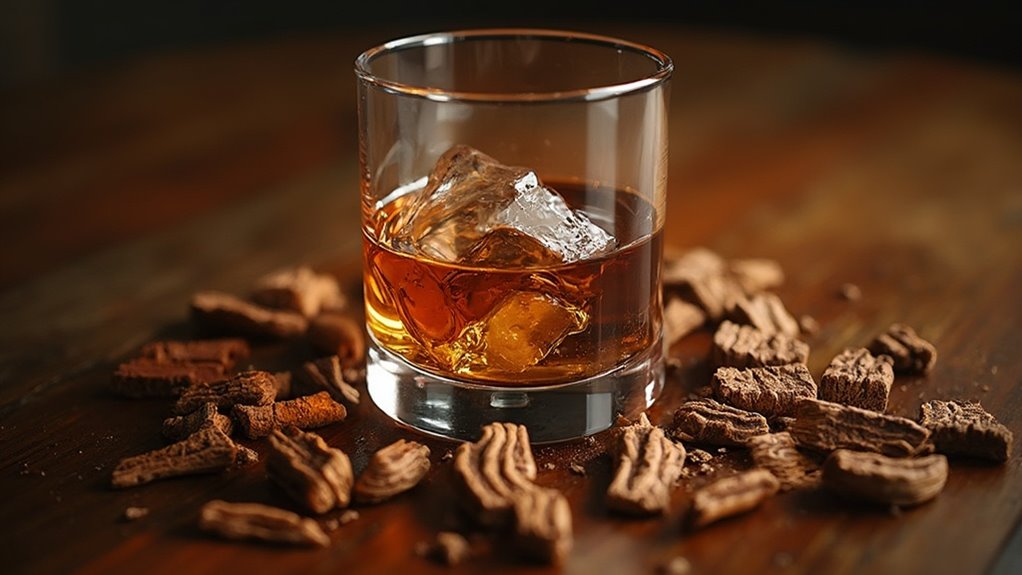
The wood matters more than the tool. Each species carries its own aromatic signature, and pairing works the same way it does with whisky and food: match strength to strength.
- Oak: the classic cask wood. Medium smoke with vanilla and tannic edges, a natural companion to bourbon and to any whisky that spent real time in charred new oak.
- Maple: light, sweet, a little caramel-forward. The obvious pick for Canadian whisky, and a great first chip to try on a smoked Old Fashioned.
- Hickory: the big one. Hearty, bacon-adjacent smoke that stands up to high-rye mash bills, though it will bury a delicate spirit if you’re not careful.
- Cherry and apple: fruity and mild. Good with lighter whiskies, and an easy introduction if you’re smoking for people new to the technique.
Form matters too. Chips and shavings ignite fast and give you the quick burst a glass rinse needs, while pellets burn steadier and suit a smoking gun chamber better than a torch. Buy product labelled food-grade for smoking (not barbecue briquettes or anything treated or stained), and store chips in an airtight container so they don’t absorb pantry smells. Maple, being Canada’s home wood, is a natural place to start, and fruitwoods follow the calendar: apple and cherry in warmer months, oak and hickory once it gets cold. If you like matching drinks to the seasons, our seasonal whisky cocktails roundup is built around exactly that idea.
The Technique, Step by Step
The whole ritual takes under a minute once everything is laid out. Three variables decide the outcome: the wood, the volume of smoke, and how long it sits.
- Build the drink first. Stir your Old Fashioned over ice and set it aside. You smoke the empty glass, then pour.
- Get a thin stream of smoke going. Torch a small pile of chips in a heat-proof dish, or load the smoking gun and fire it up.
- Fill the glass. Funnel the smoke into your rocks glass, then cap it with a coaster or lid. Some people invert the glass over the smouldering chips instead; either way, trap the smoke.
- Give it twenty to thirty seconds. Much past a minute and the heavier combustion notes start to turn bitter.
- Pour, garnish, serve. Uncover, drop in one big ice cube, pour the drink, and finish with a dehydrated orange wheel. The smoke peels off the surface with every sip.
Finding the Right Amount of Smoke
The most common mistake is too much, not too little. A glass rinse should read as a top note over the whisky, not a campfire poured over ice. Start with half the smoke you think you want, taste, and add another short round if the drink can take it. Lighter whiskies (Canadian blends, wheated bourbons) need a feather-touch, while high-rye recipes and peated Scotches can carry a heavier hand. If you’re unsure what’s in the bottle, our primer on what counts as American whiskey sorts out bourbon, rye, and the rest.
Respect the Recipe Underneath the Smoke
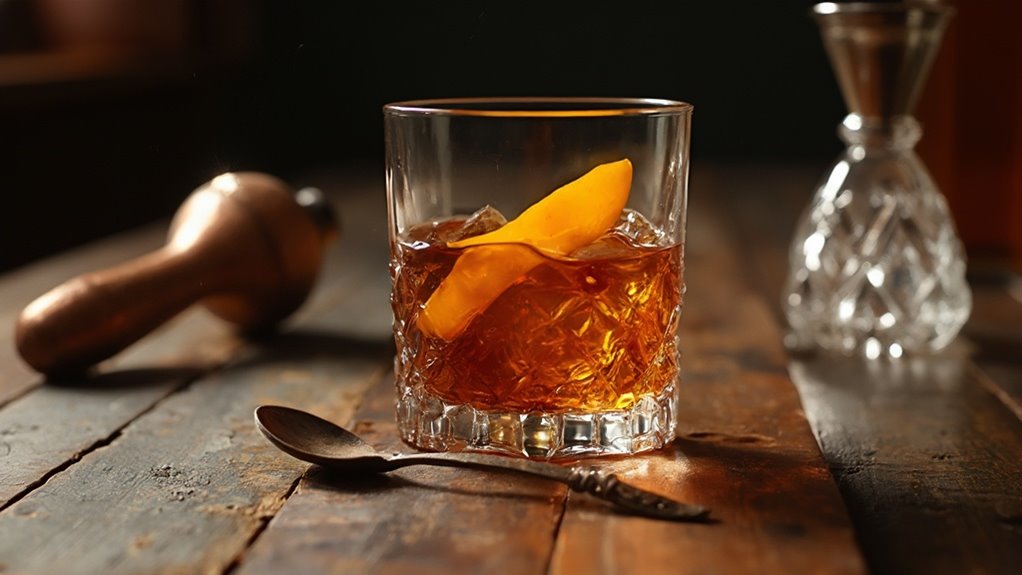
Smoke is a garnish for the nose, and like any garnish, it only works when the drink underneath is solid. A smoked Old Fashioned still needs good whisky, real sugar, and proper bitters. If you haven’t dialled in the base recipe yet, our guide to making the best Old Fashioned walks through it.
A few habits from the classic era make the format easier at home:
- Spirits keep. Whisky above 45% ABV is essentially self-preserving, one reason this drink has survived since the 1800s. Store the base bottle upright, away from light, and it will outlast the trend.
- Prep garnishes in bulk. Dehydrated orange wheels are the signature garnish here: slice oranges thin, dry them at low heat until brittle, and keep them in an airtight jar with a desiccant pack. They last for months and look sharper than fresh peel.
- Batch the base. Stirred drinks batch well. Whisky, bitters, and syrup (hold the dilution) can sit together for weeks, so a smoked Old Fashioned becomes a two-minute serve even on a busy night.
Playing It Safe
Open flame and alcohol fumes deserve respect, but the setup is forgiving if you follow a few basics.
Ventilation and Workspace
- Choose the spot well: clear the counters and work away from curtains, paper towels, and the liquor shelf. A kitchen counter near a window is ideal.
- Move the air: run the range hood or a fan and crack a window. Cocktail smoke lingers more than you’d expect.
- Keep a lid on it: have a pot lid, baking soda, or a small kitchen extinguisher within reach. Never pour water on burning chips or a grease flare.
- Mind the drafts: a strong draft scatters smoke and pushes flame around. You want gentle airflow, not a wind tunnel.
Handling the Torch and Smoking Gun
- Light it clean: a culinary torch or a hemp wick beats a cheap disposable lighter, whose fuel can leave a chemical taste in the smoke.
- Burn less than you think: a teaspoon of chips is plenty for one glass. Piling on more just makes acrid smoke.
- Stay with it: never leave smouldering chips unattended. Let them burn out fully in the dish or snuff them before you walk away.
- Dress for it: tie long hair back, keep sleeves rolled, and give the dish a heat-proof surface to sit on.
Frequently Asked Questions
Can I smoke a cocktail without specialized equipment?
Yes. Three easy ways:
- Torch the garnish: light a rosemary sprig or a cinnamon stick, let the flame die to a smoulder, and lay it across the rim of the glass. Subtle, but it works.
- Skillet smoke: heat a few wood chips in a dry cast-iron pan until they smoulder, then trap your glass over them until the smoke settles.
- The jar method: light chips in the bottom of a large heat-proof jar, cap it, let the smoke build, then pour your drink in and seal it again briefly.
None of these gives you the fine control of a smoking gun, but all three put real smoke into a real drink.
How long does the smoky flavour last?
Not long, and that’s by design. Smoke aroma is loudest in the first few sips and fades steadily from there; by the time you’re halfway through the glass, most of it has dissipated. Colder drinks hold it a little longer, and dense smoke from oak or hickory outlasts light fruitwoods. Treat it as an opening note rather than the whole drink.
Does smoking change the alcohol content?
No. Smoke adds aroma, not ethanol, and the few seconds a drink spends under a dome won’t move the ABV. Your Old Fashioned comes out of the glass at the same strength it went in.
Are there health risks with smoked cocktails?
Burning wood releases the same family of combustion byproducts found in any smoke, and breathing that in isn’t good for your lungs. The dose from one smoked drink is small, but it isn’t zero. Treat these as occasional showpieces rather than an everyday pour, don’t deliberately inhale from the dome, and keep them away from anyone with asthma or smoke sensitivity.
Are smoked cocktails vegetarian or vegan?
The smoke itself always is: wood chips, herbs, tea leaves, and spices are all plant material. The part to check is what’s underneath. Some bitters and maraschino cherries rely on non-vegan colourings or fining agents, so read the label if it matters to you. The whisky, sugar, and smoke are fine.
If smoking one drink pulls you in, the rest of the home bar follows quickly. Our roundups of whisky cocktails you can make at home and seasonal whisky drinks for the whole year are good next stops, and both get noticeably better with a thirty-second glass rinse.