

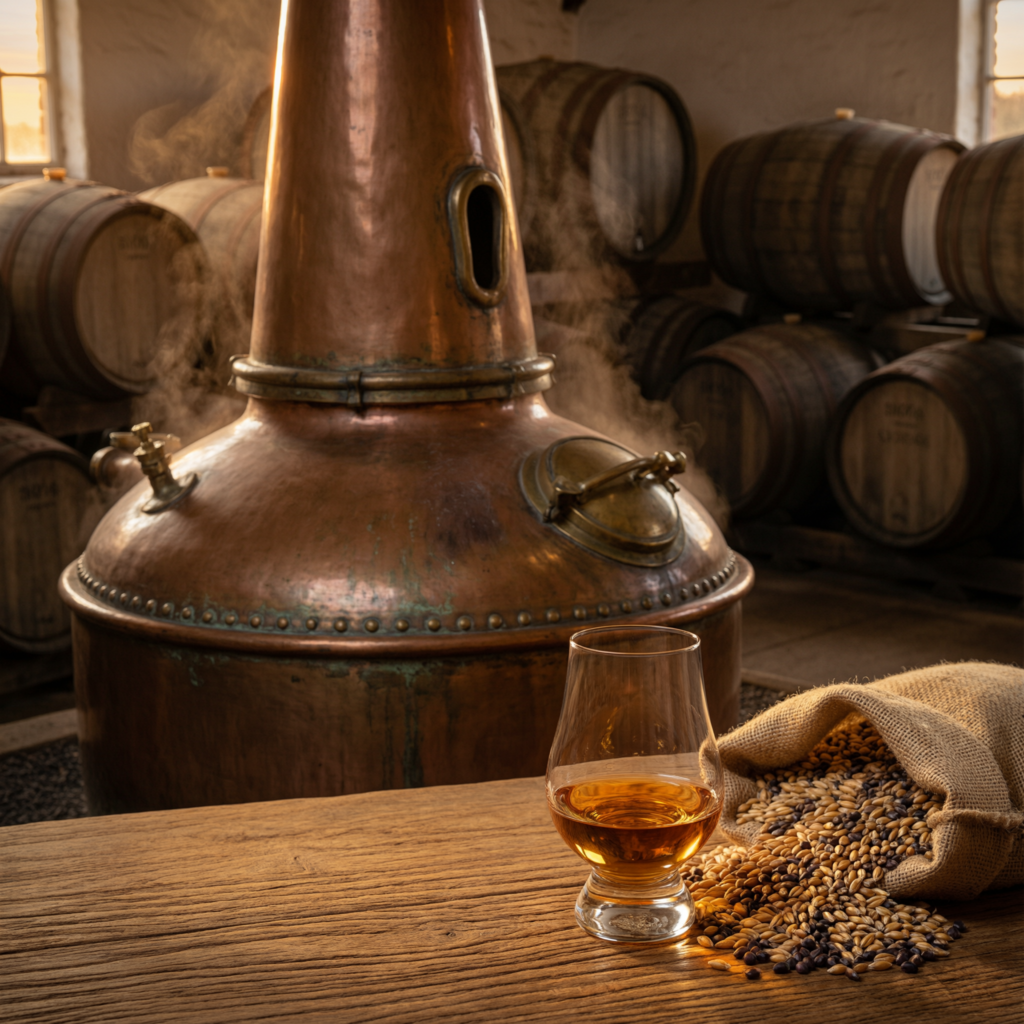
Whisky has a reputation for tradition, and it earns it. But walk through a working distillery today and you’ll see plenty of experimentation alongside the copper stills. Distillers are reaching for unusual casks, heritage and non-traditional grains, and partnerships well outside the spirits trade. A few years ago there was even a burst of whisky-tied NFTs; that fever has largely broken, and what’s left is a clearer focus on what actually ends up in the glass. The interesting part is the tension: how much can you change before a whisky stops feeling like whisky? That balance between the new and the familiar is where the best work is happening right now.
Distillers Pushing the Boundaries
Some distillers treat the rulebook as a suggestion. They trial unusual woods, age casks in extreme conditions, and mash grains that most Scotch or bourbon makers would never touch: triticale, oats, millet, even quinoa. High Wire Distilling Co. in Charleston, South Carolina is a good example. They built a following in the American craft whiskey space by leaning hard on alternative grains, and they’re part of a broader movement that has redefined what American whiskey can taste like.
Their single malt and rye releases lean on grains like triticale and millet, and the difference in the glass is real. Triticale, a rye-wheat cross, tends to bring spice and a fuller body; millet can add a softer, almost creamy note. Swapping even a portion of the grain bill changes the whole character of the spirit.
High Wire has also played with accelerated ageing and experimental yeast strains to compress timelines that normally take years. That kind of tinkering used to be fringe. Now it’s common enough that the big houses pay attention, and the rest of the industry is taking notes.
Reworking How Whisky Is Distilled and Aged
Grain is only half the story. The other half is how the spirit is distilled and, especially, how it’s aged. A growing number of producers are using technology to speed up or steer maturation: smaller casks for more wood contact, controlled temperature swings that push spirit in and out of the oak, and pressure-ageing experiments. The goal is the same as any warehouse manager’s: coax more wood sugars and phenols out of the barrel without leaning on flavouring additives.
Done well, these methods can produce a single malt with genuine depth, the kind you’d expect from a longer stay in wood. Done poorly, the spirit tastes raw and one-dimensional. The physics is sound; the execution is what separates the worthwhile experiments from the gimmicks.
This matters for drinkers and for buyers. A whisky that matures faster can reach the market sooner and at a lower price, but collectors still pay for genuine age and provenance. If you’re thinking about casks as an asset, it helps to understand how ageing actually drives value before you commit. Our whiskey barrel investing guide walks through the factors that matter over time.
Sustainability on the Distillery Floor
Sustainability used to be a footnote. Now it shapes how a lot of distilleries operate, from packaging to water use to where they source grain. Part of it is cost and reputation; part of it is that many distillers genuinely care about the land they farm. A few approaches stand out:
- Lighter, lower-impact packaging. Some brands now sell whisky in cans or refillable bottles to cut glass and transport weight.
- Water stewardship and locally grown grain. Using heritage corn and regional barley trims transport emissions and keeps money in the local farm economy.
- Putting local peat to work. Where peat is available, some distilleries smoke their own malt rather than importing it, which supports nearby suppliers and gives the whisky a distinct regional signature.
- Closing the loop on waste. Spent grain goes to cattle feed, pot ale gets processed into biogas or fertiliser, and very little leaves the site as waste.
Canadian distilleries are worth a look here. Operations like Shelter Point on Vancouver Island grow their own barley and manage their own water, and JP Wiser’s in Ontario has long leaned on locally grown corn. If you want a sense of how far the category has come, our piece on the Canadian whisky scene is a useful starting point.
None of this is charity. Distillers report that tighter sourcing and cleaner processes often make for a more distinctive spirit. Sustainability and quality tend to point in the same direction.
Where Flavour Comes From
Flavour in whisky is built, not found. It starts with the grain bill, shifts through fermentation, gets concentrated in the still, and then develops for years in wood. Distillers can tug on any of these levers.
Take casks. Ageing a blended Scotch in French oak, or finishing it in a sherry or port cask, pulls different compounds into the spirit and changes the finish entirely. Limited runs finished in unusual casks (rum, wine, even ex-beer barrels) have become collector favourites. That collector angle is real: rare and well-finished bottles can hold or grow their value, a point we cover in our guide to investing in rare whiskey and casks.
Grain matters just as much. Blending rye with wheat, or adding a measure of malted barley, changes the backbone of the spirit. The yeast is doing more work than most drinkers realise, too: distillers are selecting, breeding, and in some cases engineering yeast strains to steer fermentation toward specific flavour compounds. Real people are driving a lot of this, distillers like Nicole Austin who have made their name on thoughtful experimentation.
Some producers have gone further, adding botanicals and spices or finishing on unusual wood. It’s a reminder that the flavour map is still being drawn.
Where Whisky Distillation Is Heading
A few directions look set to keep gathering steam.
Irish whiskey is a useful barometer. It’s built on three core styles: single malt, single pot still, and grain. Producers there are reaching for heritage grains and older corn varieties to widen the flavour range.
American whiskey keeps moving too, with more cask finishes and bolder age statements than a few years ago. Younger releases with real character, like well-made three-year-olds, are earning respect that used to be reserved for older bottles.
The grain bill is opening up. Barley, rye, and corn are no longer the whole story, as more distillers trial ancient grains and regional varieties.
And distilleries keep borrowing from outside the industry: music, food, design. Those collaborations keep producing expressions that wouldn’t exist otherwise.
For newer regions pushing this experimentation, it’s worth keeping an eye on our emerging world whisky regions piece. And if you’re ready to put some of this into practice, our guide to kickstarting a whisky collection will point you in the right direction.
Frequently Asked Questions
What Are the Different Ways to Distill Whiskey?
The main tools are the pot still, the column (or continuous) still, and hybrid setups that combine the two. Pot stills tend to give a heavier, more characterful spirit; column stills produce a lighter, higher-proof one. Grain choice and cask then layer on most of the flavour you actually taste.
What Is Triple Distilled Whiskey?
Triple distillation simply means the spirit passes through the still three times instead of the usual two. Each pass raises the alcohol and strips out more congeners, which is why triple-distilled whiskey tends to taste lighter and smoother. Jameson is the best-known example, and the house leans on the method for its clean, approachable style.
What Are the Different Types of Whiskey Preparation?
There are as many approaches as there are distilleries, but the variables come down to grain, yeast, still type, and ageing. Some producers now experiment with engineered yeast and accelerated ageing methods to chase unusual flavour profiles, while traditionalists stick to long, slow maturation.
What Are the Four Essential Phases in the Production of Whisky?
Four steps do most of the work. Mashing converts the grain’s starches into fermentable sugars. Fermentation turns those sugars into alcohol. Distillation concentrates that alcohol and separates out unwanted compounds. Maturation, the long rest in wood, is where the spirit picks up colour, tannin, and most of its final flavour.