

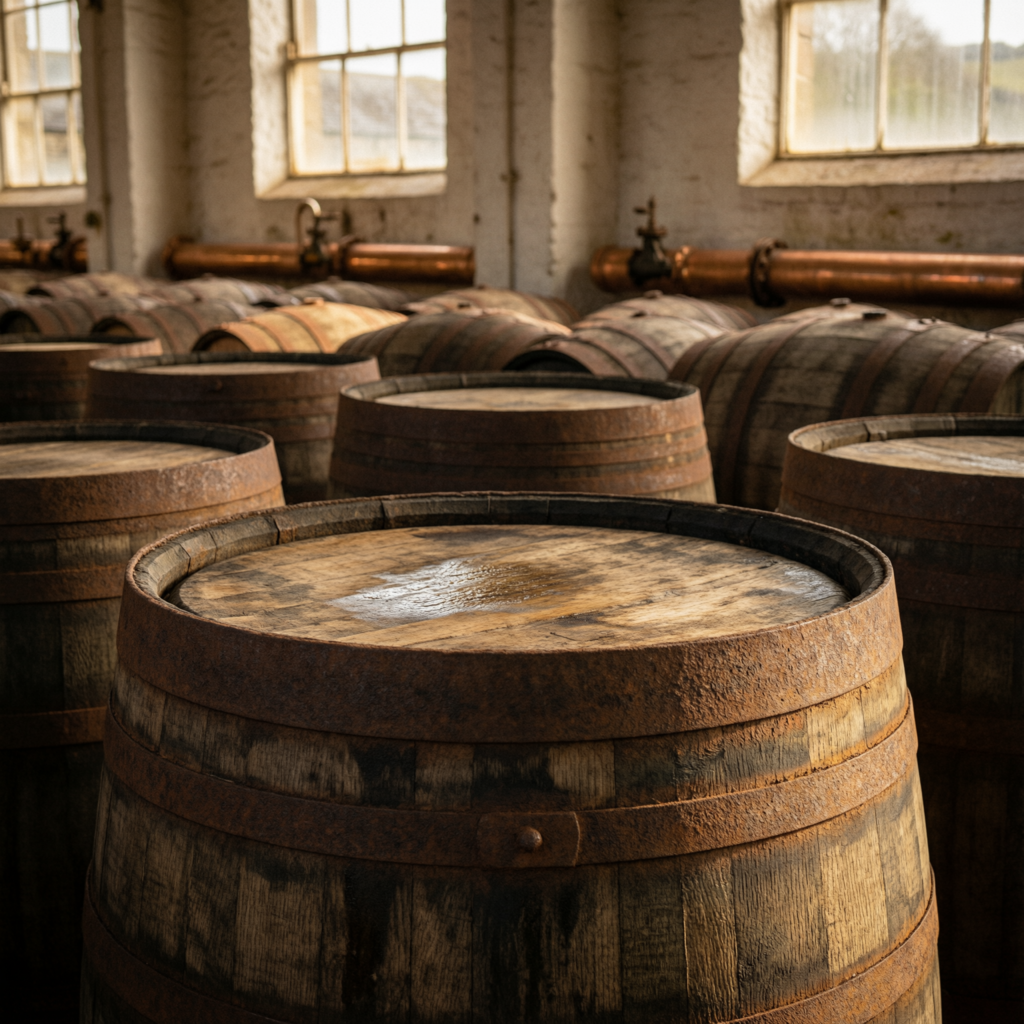
When you buy a whisky cask, you don’t own a bottle, a label, or a spot on a shelf. You own roughly 200 litres of raw, clear new-make spirit sitting in a dark warehouse, years away from being anything anyone would pour at dinner. Everything about this investment, from the day you wire the money to the day you cash out, depends on what happens to that liquid while it rests: the wood it touches, the air around it, the paperwork behind it.
That’s why cask investing is best understood as a storage and management problem wearing a financial costume. Pick a great cask and store it badly, and the value you were counting on can evaporate, sometimes literally. Get the boring parts right, and the whisky does the impressive work on its own.
What Buying a Cask Actually Means
A cask purchase is a bet on time. Distilleries sell casks during maturation because ageing whisky ties up their capital for a decade or more, and selling some of that stock early keeps the stills running. You step in, fund that patience, and hope the matured whisky ends up worth more than you paid for the young spirit.
Most buyers work through a broker or a managed cask programme rather than knocking on a distillery’s door, though a few distilleries do sell directly. The mechanics depend on where the cask lives. In the UK, maturing whisky must sit in an HMRC-approved bonded warehouse, where excise duty and VAT stay suspended until the cask is withdrawn. That suspension is one of the quiet advantages of the asset class: you aren’t paying tax on spirit that isn’t earning anything yet.
If the structure is new to you, our barrel investing guide walks through the whole setup before you commit a dollar.
Choosing the Right Cask
“Rare” on a sales sheet doesn’t mean rare in a warehouse. The factors that actually move a cask’s value are plainer than the marketing suggests:
- The distillery. Demand follows brand. A cask from a distillery with a loyal following and tight release schedules will outpace one from a quiet producer. Newer distilleries can be a smart contrarian play, but only if you genuinely believe in the liquid.
- Cask type and size. Ex-bourbon barrels (about 190 to 200 litres) mature faster because there’s more wood contact per litre of spirit. Sherry butts (around 500 litres) run slower and deeper. Hogsheads (about 250 litres) sit in between. First-fill wood gives more intense colour and flavour than refill.
- Fill date and starting strength. Many distilleries fill at around 63.5% ABV. An older fill date means more ageing has already happened, and you will pay for it.
- Litres of pure alcohol. This is the number that matters, not the total volume of liquid. A 200-litre cask filled at 63% ABV holds about 126 litres of pure alcohol. Where you can, price casks on that figure.
Before you sign anything, learn to read the wood itself. Our piece on barrel quality and maturation explains what separates a cask that will improve for years from one that has already peaked.
What Happens in the Warehouse
Ageing isn’t waiting. It’s chemistry. The spirit pulls vanillin, oak lactones, and tannins out of the wood, while the charred inner layer of the cask slowly scrubs harsher compounds out of the liquid. Meanwhile the staves breathe: warm months push the whisky deeper into the wood, and cool months pull it back out.
Climate sets the tempo. Scotland’s cool, steady weather ages whisky slowly and evenly. Canada swings harder. Hot summers and freezing winters drive the spirit in and out of the oak more aggressively, which is part of why Canadian ryes aged on the Niagara Escarpment at Forty Creek, or in Shelter Point’s maritime rickhouse on Vancouver Island, develop their own character in less time.
If Canada’s cask potential is what brought you here, our overview of the Canadian whisky scene maps out where the interesting distilleries are right now.
Every year, some of the cask simply disappears. Distillers call it the angel’s share: evaporation through the wood. The Scotch Whisky Association puts it at roughly 2% of a cask’s contents each year in Scotland, and warmer climates lose more than that. Over two decades, a full barrel can give up a third of its volume. That concentration builds flavour as it shrinks the liquid, but for an investor it’s a slow leak you should price in from day one.
Strength falls too. A cask filled at 63.5% can drift into the mid-50s after ten years and below bottling strength after thirty, depending on the warehouse. If a cask slips under 40% ABV, it can no longer be bottled as Scotch at all. That’s one reason extremely long holds need active monitoring, not blind faith.
Storage and Insurance: The Boring Part That Protects Your Money
Storage isn’t a line item on a cask investment. It is the investment. A few rules separate safe structures from shaky ones:
- Own the cask, not a promise. In the UK, direct ownership means the cask carries its own number, you hold a warehouse warrant or delivery order in your name, and your holding is registered under WOWGR, the Warehousekeepers and Owners of Warehoused Goods Regulations. You have title to a specific cask in a specific warehouse.
- Beneficial ownership deserves extra scrutiny. Some programmes sell you a share of a pooled holding rather than an identified cask. That structure can be legitimate, but it leaves you weaker if the operator fails. Independent third-party audits should be standard, not an upsell.
- Read the insurance policy, not the brochure. Confirm that coverage is written per cask at an agreed value, check which perils are included, and find out who pays when a cask leaks or a warehouse catches fire. “Fully insured” means little until you’ve seen the terms.
- Ask what happens if the broker disappears. Segregated holdings in a WOWGR-registered warehouse mean your cask survives a broker’s insolvency. Unsegregated stock may not.
Canada has no direct equivalent of the UK’s bonded regime. Canadian casks typically sit in distillery-operated or third-party warehouses under CRA oversight, and excise duty is charged when the spirit is withdrawn and packaged. If you’re a Canadian buying UK casks, add currency risk and cross-border tax questions to your checklist. (Our guide to maintaining a whisky collection covers the home-storage side of things, because casks and bottles follow completely different rules.)
One more thing the brochures skip: this market is largely unregulated, and it has attracted its share of bad actors. The UK’s Financial Conduct Authority has issued investor alerts about unregulated cask schemes promising guaranteed returns. Guaranteed returns and illiquid wooden barrels do not belong in the same sentence, so treat any firm that pairs the two with suspicion.
Getting Out: Exit Strategies That Actually Work
A cask is only worth what someone will pay you on the day you sell, and the exit deserves as much planning as the purchase. The main routes:
- Sell back to the trade. Distilleries and brokers routinely buy mature casks back, especially from stills they know. It’s the fastest route, though rarely the highest-paying one.
- Independent bottlers. Houses like Gordon & MacPhail, Signatory Vintage, Douglas Laing, and Cadenhead’s build their reputations on buying casks and bottling them under their own labels. A good relationship here can be an excellent exit, but research where a bottler’s demand actually sits before you count on it.
- Auctions and exchanges. Bonhams and Sotheby’s both handle whisky at the top end of the market, and dedicated online houses and cask exchanges connect buyers and sellers directly. Fees, commission, and timing all eat into your return, so price them in.
- Bottle it yourself. Possible, romantic, and usually expensive: duty and VAT become payable, and you need a bottling partner, labels, and a route to market. It’s a project, not an exit.
Timing beats almost everything else. There’s no magic age, whatever a sales sheet tells you: many cask investors work with a horizon somewhere between eight and twenty years of total maturation, but the right moment depends on the spirit, the wood, and where demand sits that season. Hold too long and evaporation keeps shrinking your volume while the wood can turn the liquid heavy and bitter. If you’re planning any kind of hold, sketch your exit before you buy, then revisit it yearly against our thinking on whisky investment strategy.
For Canadian holders, the tax side matters as much as the market side. Gains on investment casks are generally treated as capital gains, but the CRA’s rules around collectibles and inventory can bite depending on how actively you trade. Confirm your position with an accountant before you sell, not after.
The rarest, oldest casks live in a different market altogether, closer to fine art than commodity. Our piece on rare-cask investing maps that territory.
Common Questions, Straight Answers
Is cask investing a good idea?
For a patient, well-informed investor with money they can lock away for a decade, it can be a genuinely interesting corner of alternative assets. It’s also illiquid, largely unregulated, and carries real fraud risk, so it suits people who do their homework and can afford to be wrong. If you need access to your cash, or a salesperson is rushing you, walk away.
How much does it cost to invest?
Entry points vary enormously. A young single cask from a smaller or newer distillery can start in the low thousands of pounds or dollars, depending on where the cask sits, while casks from established names with real market demand run into the tens of thousands. On top of the purchase, budget for annual storage and insurance fees, and remember that duty and VAT become payable when the cask is eventually withdrawn.
What kind of return can you expect?
Nobody can promise you one, and anyone who does is selling something. What the market has shown is that time in wood has historically rewarded patient holders: rare, well-chosen casks have appreciated strongly over the past two decades, while mediocre ones have gone nowhere. Benchmarks like the Knight Frank Rare Whisky Index track the top of the market, but that index follows rare bottlings, not average casks. Build your own case from distillery demand, cask quality, and your all-in costs.
Where should you buy casks?
Start with firms that have a long, checkable track record: established brokers and exchanges (Braeburn Whisky and Cask Trade are two long-standing names), auction houses like Bonhams and Sotheby’s, and distilleries that sell directly. Then verify the structure before you send any money. Is the cask identified by number? Is it held in a WOWGR-registered warehouse? Is ownership in your name? The answers to those questions matter more than the whisky does.