

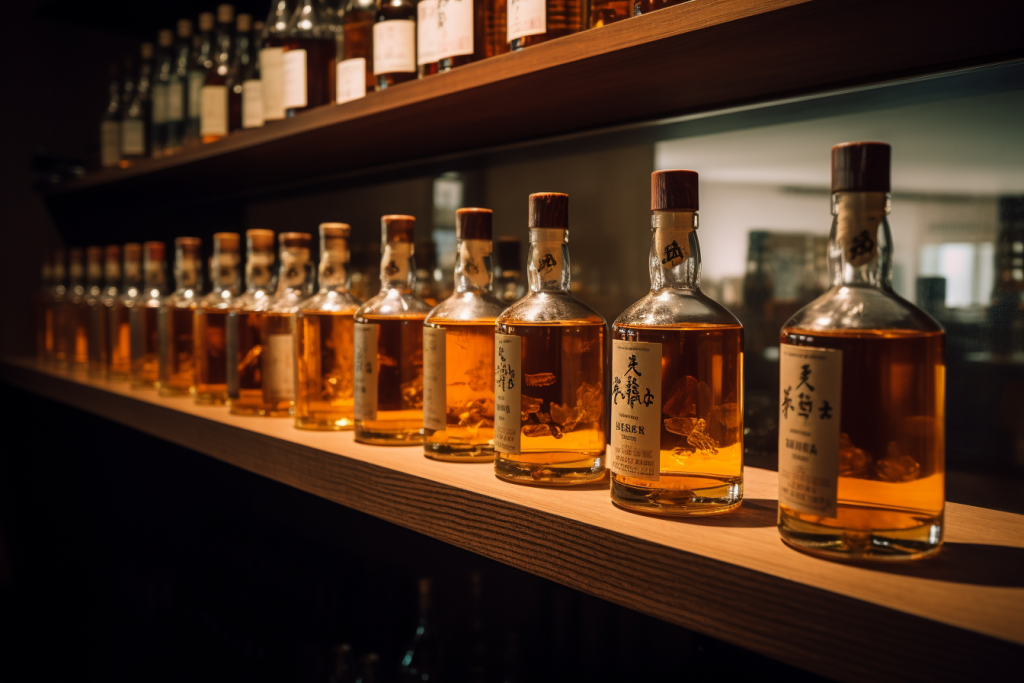
A good Japanese whisky slows you down. It asks for patience in a way few other spirits do, partly because the best of it has spent a decade or more sitting quietly in a warehouse while the world outside got louder. If you have ever paid far too much for a single pour of Yamazaki and felt oddly fine about it, you already understand the pull.
Japan has been making whisky for about a century now, and for much of that time it was content to do things its own way, borrowing the bones of Scotch production and then quietly rebuilding them. The result is a style that tends toward balance and precision rather than brute force. That restraint is a big part of why collectors chase these bottles, and why a sealed expression that cost a few hundred dollars at release can fetch several times that a few years later.
This piece runs through where Japanese whisky came from, how it is actually made, where the big distilleries sit, what to expect in the glass, and how to think about it as an investment rather than just a drink. If you want the broader investment framework first, our whisky investing guide sets the ground rules that apply here too.
The Origins and History of Japan’s Whisky Industry
The story starts with two men who refused to accept that Japan could not make whisky as well as Scotland. Shinjiro Torii, a pharmaceuticals and wine merchant, wanted to build a domestic spirits business. Masataka Taketsuru, a chemist, had actually studied distilling in Scotland and came home in 1923 with notebooks full of practical detail on malting, mashing, and pot stills.
Torii hired Taketsuru, and together they opened the Yamazaki distillery near Kyoto in 1923, on land Torii chose partly for its soft, clean water. The two eventually split: Taketsuru went north to Hokkaido and founded what became Nikka, building the Yoichi distillery in 1934 because its climate reminded him of Scotland. That single disagreement gave Japan its two defining houses, Suntory and Nikka, and a rivalry that pushed quality for decades.
For most of the 20th century, Japanese whisky was a domestic product, blended for the local highball drinker and largely ignored abroad. That changed around 2001, when a Nikka Yoichi single malt took top honours at a major international tasting, and again in 2015, when Suntory’s Yamazaki Sherry Cask was named the world’s best whisky by Jim Murray’s Whisky Bible. Those wins turned a quiet category into a global obsession almost overnight, and the industry has been racing to keep up ever since.
How Japanese Whisky Is Actually Made
The production methods will look familiar to anyone who knows Scotch, because that is where the blueprint came from. Malted barley is mashed, fermented, distilled in copper pot stills, and aged in oak. The differences are in the details, and in a few choices that are distinctly Japanese.
- Mizunara oak. Some casks are made from Japanese Mizunara oak, a slow-growing, porous wood that is notoriously hard to work. Whisky aged in it tends to pick up sandalwood, coconut, and incense-like notes you rarely get from American or European oak. It leaks and it is expensive, which is why it shows up mostly in high-end releases.
- Still shape and heat. Distilleries vary their still shape, the angle of the lyne arm, and whether they fire with steam or direct coal. Suntory runs several still shapes across its Yamazaki and Hakushu sites and blends the different spirits together, which gives the blender a wide palette to work from without buying in outside whisky.
- Where the barrels age. Japan’s climate swings hard between hot, humid summers and cold winters, so whisky matures faster and more aggressively than it would in a cool Scottish warehouse. Some producers move casks between sites at different altitudes to layer in more variation.
One thing worth understanding, especially if you are thinking about value, is that Japanese blenders traditionally held large stocks of imported Scotch to blend into their products. That was normal and legal for decades, but it became a point of controversy as demand surged and labels grew harder to trust. More on why that matters below.
Regions and Distilleries Worth Knowing
Japan does not have formal whisky regions the way Scotland does, so it helps to think in terms of houses and geography instead. The main island of Honshu holds most of the famous names, but good whisky comes from several corners of the country.
- Yamazaki and Hakushu (Suntory). Yamazaki sits near Kyoto and produces rich, often sherry-influenced malt. Hakushu, up in the Southern Alps, makes a lighter, greener, sometimes lightly peated style. Between them they cover most of Suntory’s blending needs.
- Yoichi and Miyagikyo (Nikka). Yoichi, on Hokkaido’s coast, gives a fuller, occasionally peaty spirit. Miyagikyo, near Sendai, is softer and fruitier. Nikka blends the two into expressions like Nikka From The Barrel, a cult favourite that punches well above its price.
- Chichibu. A small, independent distillery north of Tokyo founded by Ichiro Akuto. Its tiny output and strong reputation make Chichibu bottles some of the hardest to find on the secondary market.
- Mars Shinshu and Fuji. Mars’s Shinshu distillery sits high in the Nagano mountains, and Kirin’s Fuji distillery, long known for beer, has pushed harder into single malt in recent years. Both are worth watching.
Distillery tourism has grown alongside demand. Yamazaki and Hakushu run well-organised tours, and smaller operations have opened their doors as the category has boomed. If you are planning a trip, book well ahead; the popular slots fill fast.
Tasting Notes and Flavour Profiles
If Scotch is often about power and personality, Japanese whisky is usually about refinement and balance. That is a broad generalisation, of course, and a peated Yoichi will happily knock that idea over, but as a starting point it holds.
Lighter expressions, like much of Hakushu or an entry-level Hibiki blend, lean toward orchard fruit, honey, green tea, and a clean, delicate finish. Heavier and older bottles bring dried fruit, dark chocolate, oak spice, and, in Mizunara-aged releases, that distinctive sandalwood and incense character. Peated versions exist but are less common than in Scotland.
At the table, the lighter styles go beautifully with sushi, sashimi, and grilled fish, where they will not bulldoze the food. A richer, sherried Yamazaki can stand up to grilled meats and aged cheese. And then there is the highball: whisky, cold soda water, plenty of ice, maybe a twist of lemon. It sounds too simple to matter, but in Japan it is treated with real seriousness, and it is the best introduction to how a good blended malt drinks long and refreshing. For more ways to use a bottle at home, our home whisky cocktail guide has a few ideas worth trying.
The Shortage: Why Good Japanese Whisky Is So Hard to Find
Here is the part every collector feels in their wallet. Japanese whisky has been in a genuine supply squeeze for years, and it is not marketing. It is arithmetic.
Whisky takes a long time to age. The global demand explosion hit in the 2000s and 2010s, but the spirit people wanted to buy in 2015 had to have been distilled a decade or more earlier, during the years when almost nobody outside Japan cared about the category. Distilleries had kept production modest through that quiet period, so there simply was not enough mature stock to go around. You cannot fast-forward ten years of ageing to chase a trend.
The pressure showed up on shelves around 2015, when Suntory pulled several age-statement expressions, including older Yamazaki and Hibiki bottlings, from regular sale and shifted them to limited allocation. Nikka made similar moves with its own age-stated lines. Since then, the sought-after bottles have largely lived on allocation or on the secondary market rather than in ordinary liquor stores.
Regulation also tightened. Japan’s spirits industry body, the Japan Spirits & Liqueurs Producers Association, introduced labelling standards in 2021 that set out what can actually be called “Japanese whisky.” Under those rules, to carry the label, the spirit must be made from malted grain and water, distilled, aged, and bottled in Japan, using Japanese water. The transition window for products made under the older, looser conventions closed on April 1, 2024. Before those rules, it was common for bottles labelled as Japanese whisky to contain a significant share of imported Scotch or other foreign spirit, which had frustrated enthusiasts for years. The new standards cleaned that up, but they also formalised a tighter definition of supply.
The practical upshot for buyers: the well-known age-statement names stay scarce, allocation releases sell out fast, and secondary prices for sealed bottles of Yamazaki, Hibiki, and Chichibu have generally stayed well above their original retail. Scarcity is doing a lot of the heavy lifting on value.
Collecting and Investing in Japanese Whisky
Scarcity plus strong demand is the basic recipe for an investable bottle, and Japanese whisky has both. That makes it one of the more interesting corners of the spirits market right now, provided you go in with your eyes open.
A few things drive value more than others:
- Limited and allocation releases. Expressions produced in small runs, or pulled from regular sale, tend to hold and gain value. Discontinued age statements are a classic example.
- Age statements that are no longer made. An 18- or 21-year-old bottle that a distillery has stopped producing becomes a fixed, shrinking supply. That is exactly what happened with several older Yamazaki and Hibiki bottlings.
- Provenance and condition. For investment purposes, a sealed bottle in good condition, with box and paperwork, is worth materially more than a loose one. Fill levels and label condition matter at the top end.
- Recognition. Bottles that have won major international awards, or that come from a distillery with a strong critical reputation, carry a premium.
The honest caveat: the Japanese whisky market has already had its meteoric run, and the easy money was made by people who bought before 2015. Buying today means paying scarcity prices, so the returns depend heavily on buying the right bottles at the right price rather than grabbing anything with a Japanese label. If you are weighing this against buying whole casks or rarer spirits, our guide to investing in rare whiskey and casks lays out how those approaches compare.
When you do buy or sell, how you transact matters as much as what you buy. Auction houses and specialist platforms each take different fees and reach different buyers, so it pays to understand the process before you commit a bottle. Our walkthrough of whisky auctions covers what to expect, and our piece on building a whisky investment strategy helps you think about the whole portfolio rather than one bottle at a time.
Frequently Asked Questions
How do Japanese whisky regulations differ from Scotland or the United States?
For a long time, Japan had no legal definition of “Japanese whisky” at all, which is why imported Scotch could legally end up in a bottle carrying that label. That changed with the industry association’s labelling standards introduced in 2021, with full compliance required from April 1, 2024. Those rules now require the whisky to be distilled, aged, and bottled in Japan from Japanese water. Scotland and the United States have had strict, legally enforced definitions for much longer, so Japan spent decades operating with far more freedom, and only recently tightened up.
What local ingredients set Japanese whisky apart?
Two stand out. First, soft, clean water from mountain sources, which Yamazaki and others have built their reputations on. Second, Mizunara oak, a Japanese-grown wood that is difficult to cooper but gives whisky a sandalwood, coconut, and incense character you will not get from American or European oak. Add Japan’s hot, humid summers, which push faster maturation, and you get a flavour profile that is genuinely its own.
What are good ways to drink Japanese whisky?
Start neat or with a little water to open up the aromas, especially for older or cask-strength bottles. For everyday drinking, the highball is hard to beat: whisky over plenty of ice, topped with cold soda water, with a lemon twist if you like. It is the way most Japanese people actually drink their whisky, and it shows off a lighter blend beautifully. With food, try lighter expressions alongside sushi and sashimi, and reserve richer, sherried bottles for grilled meats.
Has the global demand boom caused problems for the industry?
Yes, in a couple of ways. The most obvious is the supply shortage described above: distilleries simply could not mature stock fast enough to meet demand, which pushed up prices and drove allocation sales. There are also legitimate questions about sustainability, from the energy and water used in distilling to the pressure on Mizunara oak, which grows slowly and is in short supply. The bigger distilleries have been investing in new capacity and longer-term stock, but maturing whisky takes time, so tight supply is likely to be a feature of the category for years to come.
Are there notable women or underrepresented groups in Japanese whisky?
The industry has historically been male-dominated, but that is slowly changing. Rumiko Shinomiya became a well-known figure at Suntory as a senior blender and global ambassador for the house. There is a growing, if still small, presence of women across distilling, blending, and brand work in Japan, and the international whisky community around them has broadened considerably. It is an area worth watching as a new generation of makers comes up.
Japanese whisky earned its reputation the slow way, by making balanced, carefully crafted spirit for decades before the world caught on. The shortage is real, the prices reflect it, and the best bottles are as hard to find as ever. For drinkers, that means savouring what you can get. For investors, it means doing the homework, buying for the long term, and not confusing a Japanese label with a guaranteed return. Either way, pour it slowly.